





How to Manage Indoor Humidity in a Baltimore Area Home During Summer

Quick Answer
Knowing how to manage indoor humidity in a Baltimore area home during summer starts with understanding that Baltimore's proximity to the Chesapeake Bay and Patapsco River pushes outdoor relative humidity well above 70% on many summer days — and that moisture finds its way inside fast.
Here are the most effective steps to control it:
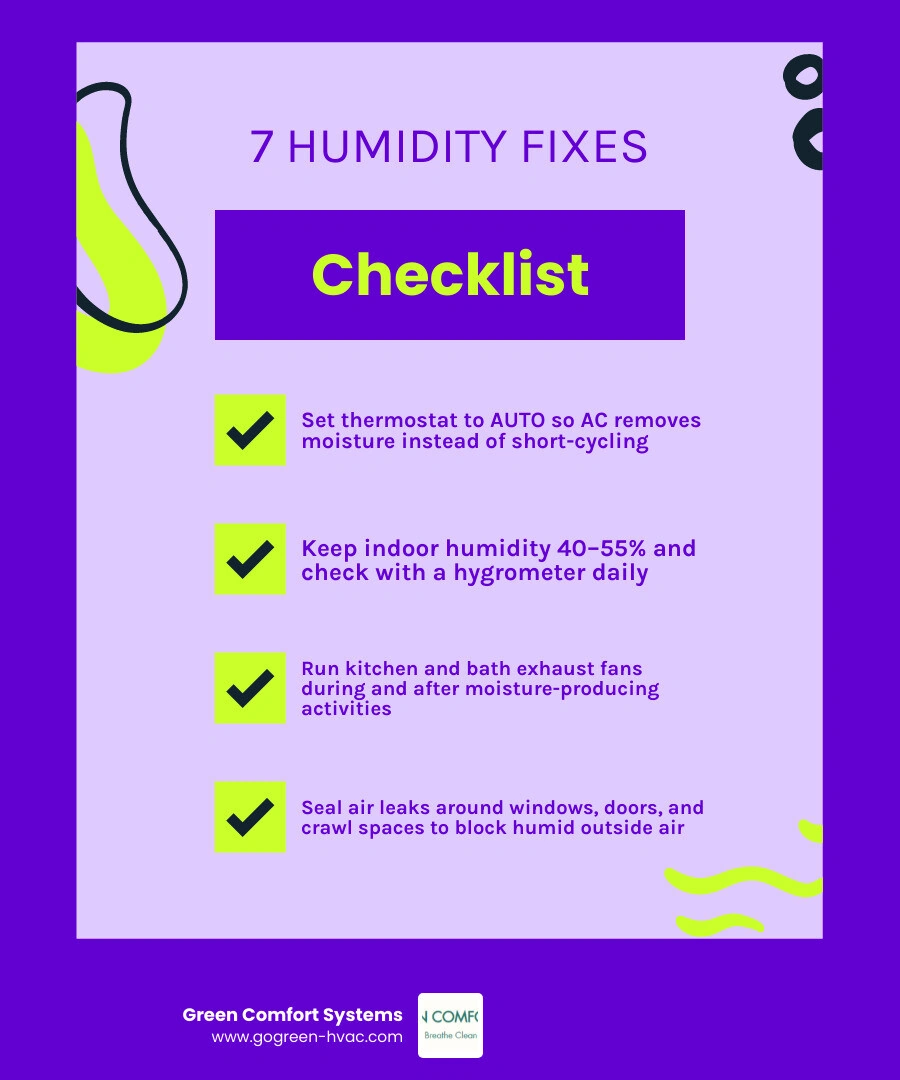
- Set your thermostat to "auto" mode so your AC runs full cycles and removes moisture properly.
- Keep indoor humidity between 40–55% — use a hygrometer to monitor levels daily.
- Run bathroom and kitchen exhaust fans during and after showers and cooking.
- Seal air leaks around windows, doors, and your crawl space to stop humid outdoor air from sneaking in.
- Add a dehumidifier — portable for problem rooms, whole-house if humidity stays above 60% consistently.
- Schedule AC maintenance to ensure your evaporator coil and condensate drain are working correctly.
- Encapsulate your crawl space if you have one — it's one of the biggest hidden moisture sources in Maryland homes.
If your home still feels sticky and heavy despite running the AC, you're not alone. Many Baltimore-area homeowners deal with this every summer — and the fix usually involves more than just cranking down the thermostat.
Baltimore summers are genuinely tough on homes. The combination of high outdoor humidity, older housing stock, and common HVAC sizing mistakes means that excess indoor moisture is one of the most frequent comfort complaints in the region. Left unchecked, high humidity doesn't just make your home uncomfortable — it encourages mold growth, feeds dust mites, warps hardwood floors, and can quietly damage your home's structure over time.
The good news is that most humidity problems are fixable with the right combination of habits, maintenance, and equipment. This guide walks you through exactly what to do.
Understanding the Maryland Moisture Challenge
Living in the Baltimore metropolitan area means enjoying beautiful waterfronts, but it also means dealing with a humid subtropical climate. Because we are situated so close to the Chesapeake Bay and the Patapsco River, our local air is naturally packed with moisture. During the peak summer months of July 2026, outdoor relative humidity in Maryland regularly climbs past 70% to 80%.
Relative humidity measures how much water vapor the air is holding compared to the maximum amount it could hold at that specific temperature. Because warm summer air expands, it can hold significantly more physical moisture than cold winter air. When this hot, moisture-laden outdoor air makes contact with your home, it tries to force its way inside.
This migration of moisture is accelerated by a building science phenomenon known as the "stack effect."
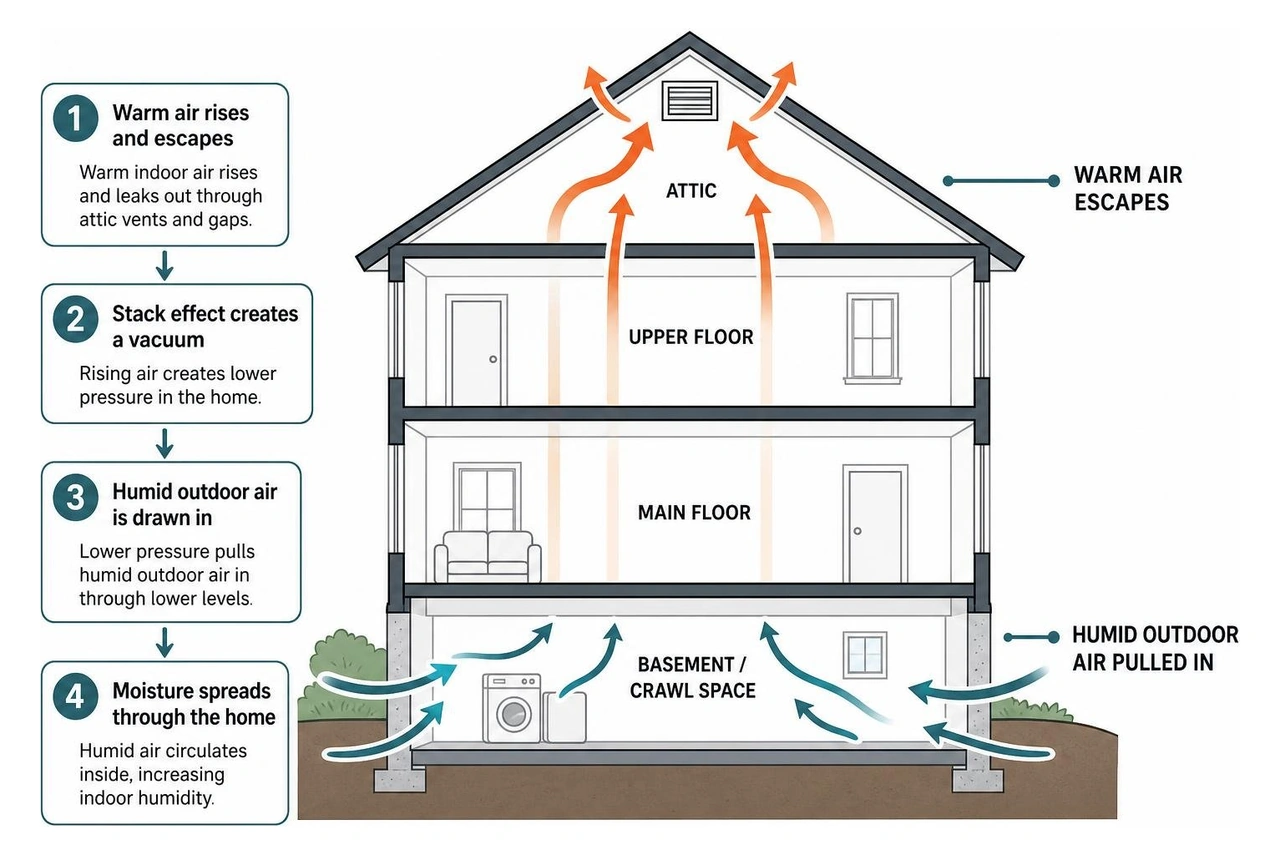
As cool air from your air conditioner settles at the bottom of your home, warm air rises and escapes through tiny cracks in your attic or upper floors. This escaping air creates a vacuum that pulls sticky, humid outdoor air in through your basement, crawl space, windows, and ground-level doors.
When your indoor relative humidity levels consistently hover above 60%, your home becomes a breeding ground for biological pollutants. Mold and mildew thrive in these damp environments, releasing spores that can degrade your indoor air quality and trigger respiratory issues. Dust mites also multiply rapidly in high humidity, and volatile organic compounds (VOCs) from household materials are released more quickly into damp air.
To combat this constant influx of moisture, your home relies heavily on professional Air Conditioning Services to keep you cool and dry.
Why It Is Crucial to Learn How to Manage Indoor Humidity in a Baltimore Area Home During Summer
Managing indoor humidity isn't just about avoiding that sticky, muggy feeling on your skin. It is a critical component of maintaining your home’s structural integrity and protecting your family's health.
According to ASHRAE Standard 55, which defines the thermal comfort envelope for human occupancy, indoor relative humidity should ideally remain between 30% and 60%. The Environmental Protection Agency (EPA) recommends a narrower target range of 30% to 50% to prevent indoor mold growth. For Maryland homes during the summer, keeping your indoor humidity between 35% and 45% (or up to 55% for general comfort) is the sweet spot.
When your indoor relative humidity rises above the 60% threshold, you will start to notice several warning signs:
- Condensation on Surfaces: Water droplets forming on your windows, toilet tanks, or metal supply vents indicate that the indoor air is saturated and hitting its dew point.
- Musty Smells: Damp, earthy odors in your basement, crawl space, or near your floorboards are a clear sign of hidden mold or mildew growth.
- Cupped or Buckling Hardwood Floors: Wood is a porous material that absorbs moisture from the air. High humidity causes wood floors to expand, leading to cupped edges or buckling.
- Sticky Air at Comfortable Temperatures: If your thermostat reads a cool 72°F but you still feel warm, clammy, and uncomfortable, high humidity is preventing your sweat from evaporating, which alters your perception of temperature.
Practical Steps on How to Manage Indoor Humidity in a Baltimore Area Home During Summer
Managing indoor moisture requires a combination of daily habits, minor home improvements, and professional HVAC maintenance. The first step for any homeowner is to buy a simple digital hygrometer. These inexpensive devices measure both indoor temperature and relative humidity, allowing you to track exactly how well your home is managing moisture throughout the summer.
Once you have a way to monitor your humidity, you can take direct action to prevent moisture from entering or lingering in your home:
- Seal Air Leaks: Use caulk and weatherstripping to seal gaps around windows, exterior doors, and plumbing penetrations. This prevents humid outdoor air from being pulled inside by the stack effect.
- Encapsulate Your Crawl Space: Vented crawl spaces are major contributors to indoor humidity in Maryland. Ground moisture continuously evaporates into the crawl space, while humid summer air flows freely through the vents. Encapsulating your crawl space with a thick, 10-mil vapor barrier and sealing the vents stops this moisture transfer entirely.
- Address Basement Moisture: Basements stay naturally cooler than upper floors, which often keeps their relative humidity about 5% higher. Seal basement walls with waterproof coatings and ensure your gutters and downspouts direct rainwater at least six feet away from your foundation.
If you notice moisture pooling near your HVAC vents, or if your system is struggling to keep up with the summer heat, it may be time to schedule a professional Baltimore AC Repair to restore your system's efficiency.
Using Your AC System: How to Manage Indoor Humidity in a Baltimore Area Home During Summer
Your central air conditioner is actually a highly effective dehumidifier. As your system draws warm, humid indoor air across the cold evaporator coil, the moisture in the air condenses onto the coil as liquid water. This water drips into a condensate pan and drains safely out of your home through a condensate line.
However, your AC can only remove moisture while it is actively running a cooling cycle. To maximize this natural dehumidification, you must use your system correctly:
- Keep the Thermostat Fan Setting on "Auto": If you set your thermostat fan to "On," the blower motor will run continuously, even when the system isn't actively cooling. This blows air over the wet evaporator coil between cycles, evaporating the collected water right back into your home. Leaving the fan on "Auto" ensures the blower only runs during cooling cycles, giving the moisture time to drain away.
- Avoid Oversized AC Systems: Many older homes in the Baltimore area suffer from oversized air conditioners. An oversized system cools your home too quickly and shuts off. This "short-cycling" doesn't give the system enough time to draw moisture out of the air, leaving your home cool but incredibly muggy.
- Upgrade to Variable-Speed Technology: Modern HVAC systems with variable-speed air handlers or two-stage compressors are excellent at humidity control. They can run longer, gentler cycles at lower speeds, which continuously extracts moisture from the air while consuming less energy.
If your home suffers from uneven temperatures or poor airflow that limits moisture removal, check out these tips for Solving AC Airflow Problems.
Ventilation and Source Control Strategies
Everyday household activities generate an incredible amount of moisture. For example, boiling a single pot of pasta can release up to a quart of water vapor directly into your kitchen air. To keep this moisture from raising your home's relative humidity, you need targeted ventilation and source control:
- Use Kitchen Exhaust Fans: Always run your range hood while cooking, and make sure it vents directly to the outdoors rather than recirculating the air back into the kitchen.
- Run Bathroom Fans Properly: Keep your bathroom exhaust fan running during your shower and for at least 20 minutes afterward. To make this easier, you can install a simple timer switch. Ensure your bathroom fans vent directly outside, and never into your attic, where trapped moisture can rot wood framing and ruin insulation.
- Consider an Energy Recovery Ventilator (ERV): Modern, tightly sealed homes can trap stale, humid air inside. An ERV introduces fresh outdoor air into your HVAC system while pre-treating it—removing a significant portion of the incoming moisture and heat before it reaches your living spaces.
- Keep Air Ducts Clean and Sealed: Leaky ductwork running through unconditioned spaces like attics or crawl spaces can suck in hot, humid air and spread it throughout your home. Scheduling professional Duct Cleaning Services and sealing duct joints ensures that only clean, dry air circulates through your home.
Dehumidifier Solutions: Portable vs. Whole-House Systems
When your air conditioner alone isn't enough to keep indoor humidity below 50%—especially during the mild, damp "shoulder seasons" of spring and early summer when you don't need much cooling—adding a dedicated dehumidifier is the best solution.
You have two primary options: portable units and whole-house systems.
Portable Dehumidifiers
Portable dehumidifiers are standalone units designed to treat single rooms, such as a damp basement or a humid master bedroom. They are highly accessible and require no professional installation. However, they have limited pint capacities (the amount of water they can extract in 24 hours), require you to manually empty their water buckets daily, and typically only last about three years. They can also be noisy and consume a significant amount of electricity.
Whole-House Dehumidifiers
A whole-house dehumidifier is professionally installed directly into your existing HVAC ductwork. It monitors the relative humidity of your entire home and automatically turns on to pull moisture out of the air, draining the water directly into your home's plumbing system. These systems are incredibly quiet, highly energy-efficient, and can last 10 to 15 years with basic maintenance.
To help you decide which system fits your home, consider this comparison:
| Feature | Portable Dehumidifiers | Whole-House Dehumidifiers |
|---|---|---|
| Coverage Area | Single room or small basement (up to 1,500 sq. ft.) | Entire home (up to 5,000+ sq. ft.) |
| Installation | Plug-and-play | Professional HVAC integration required |
| Maintenance | Manually empty bucket daily; clean filter monthly | Annual professional filter change and drain check |
| Lifespan | 3 to 5 years | 10 to 15 years |
| Energy Efficiency | High energy draw per pint of water removed | Extremely efficient; lowers AC workload |
| Noise Level | Moderate to loud fan noise in living space | Virtually silent (unit is located in utility room/attic) |
Dehumidifier capacities are rated in pints of water removed per day. As a general rule of thumb, a 500-square-foot damp space needs a 30-pint unit (drawing about 300 watts), while a 2,500-square-foot home requires a 70-pint capacity unit (drawing up to 700 watts) to manage moisture effectively.
Frequently Asked Questions About Summer Humidity in Maryland
What is the ideal indoor humidity level for a Baltimore home in the summer?
For optimal comfort, health, and structural protection, Baltimore-area homeowners should aim to keep their indoor relative humidity between 35% and 45% (or up to 55% on exceptionally hot days). This matches the EPA's recommended comfort range of 30% to 50% and prevents mold spores from germinating while keeping your skin and respiratory passages comfortable.
Why does my house feel humid even when the air conditioner is running?
This common issue is usually caused by one of three things: an oversized AC unit that is short-cycling (turning on and off too quickly to remove moisture), a thermostat fan set to "On" instead of "Auto," or severe air leaks (the stack effect) pulling humid outdoor air inside faster than your AC can extract it.
Can a dirty air filter cause high indoor humidity?
Yes. A dirty air filter restricts airflow through your HVAC system. When airflow is restricted, your evaporator coil can become too cold and freeze over. A frozen or restricted coil cannot efficiently condense and remove water vapor from the air, which quickly leads to rising indoor humidity and poor cooling performance. Always change your air filters every 30 to 90 days.
Conclusion
Managing indoor humidity during a sticky Baltimore summer is essential for keeping your home comfortable, protecting your family’s health, and preserving your property. By combining smart thermostat habits, targeted ventilation, air sealing, and regular HVAC maintenance, you can easily keep your indoor air crisp and dry all summer long.
At Green Comfort Systems, based in Rosedale, MD, we are proud to provide expert heating, cooling, and air quality solutions to our neighbors throughout the Baltimore area. Whether you live in Catonsville, Dundalk, Ellicott City, Forest Hill, Glen Burnie, Halethorpe, Joppa, Middle River, Perry Hall, Severna Park, or Towson, our experienced team is here to help you achieve perfect indoor comfort.
We are committed to eco-friendly operations. Through our proud partnership with One Tree Planted, we plant a tree for every service we perform. Plus, our Green Guardian Club maintenance plan makes it easier than ever to keep your cooling system running at peak efficiency year-round.
If you are ready to banish that sticky, muggy feeling from your home, contact us today to explore our professional Indoor Air Quality Services and find the perfect humidity control solution for your home!
Book Expert Service Or Contact Us
Other Blogs


Get Financing Today
Get the comfort you deserve, without the financial stress.

Latest Blogs
Why Fast Access to Replacement Parts Matters for Your Rosedale Heating Repair

Pre-Winter HVAC Inspections: Finding the Hidden Wear and Tear Before the November Rush

Choosing Between Emergency Weekend Repair and Monday Scheduling for a Failing Heat Pump in Severna Park
