





Diagnosing a Blower Motor Failure When Your Furnace Runs but Produces No Air

Why Your Rosedale Furnace Ignites but Won't Blow Warm Air
Here in Rosedale MD, facing a sudden heating emergency during a chilly autumn night can be incredibly stressful. When you are diagnosing a blower motor failure when your furnace runs but produces no air, the first thing you notice is the immediate sense of panic as the house remains cold despite the system sounding like it is working. Your thermostat clicks, you hear the familiar rumble of the burners igniting in the basement or utility closet, but as the minutes tick by, your home remains freezing because absolutely no air is coming from the vents. This is a highly common and frustrating scenario that our team sees homeowners face, particularly during the first major temperature drops of the fall season.
In Rosedale, our early fall weather often features rapid overnight temperature drops plunging into the 40s. This sudden shift puts an immediate, heavy demand on a heating system that has been sitting completely dormant all summer. When you activate the thermostat for that crucial October heating-startup, you expect instant warmth. Instead, a failure in the system's sequence of operations at the blower motor stage leaves you with a furnace that is generating heat but entirely unable to distribute it throughout your living spaces.
As an award-winning team—recently named Baltimore Magazine's "Best of Baltimore" HVAC 2025—providing professional HVAC services, we cannot stress enough that this specific symptom should never be ignored. A furnace that fires its burners without a functioning blower motor is not just an inconvenience; it is a developing safety hazard. The heat being generated inside the unit has nowhere to go, which can quickly lead to severe internal overheating. Understanding exactly why this happens requires looking inside the cabinet to see how your furnace is actually designed to operate.
The 60-Second Delay: Understanding Your Furnace's Sequence of Operations
To understand why you hear the furnace running before you realize the blower has failed, you have to understand the built-in sequence of operations. Modern gas furnaces do not turn everything on all at once. They follow a strict, step-by-step mechanical checklist to ensure safe combustion before any air is circulated into your home.
1. The Thermostat Call: Your thermostat detects a drop in room temperature and sends a low-voltage signal to the furnace control board requesting heat.
2. The Inducer Draft Motor: Before any gas is released, a small fan called the inducer motor turns on. This clears leftover gases from the heat exchanger and ensures the exhaust flue is completely clear.
3. The Igniter Activation: Once the control board confirms the inducer is running safely (via a pressure switch), it sends voltage to the igniter, which begins to glow bright orange or sparks.
4. The Gas Valve Opens: With the igniter ready, the gas valve opens, releasing fuel into the burners where it immediately ignites. (If you are interested in troubleshooting gas valve issues, this is the stage where those problems typically appear).
5. The Blower Motor Delay: After combustion is confirmed, the control board initiates a built-in thermal delay—usually 30 to 60 seconds—before finally sending voltage to engage the main blower motor.
Why the Delay Exists
This 60-second waiting period is a deliberate thermal comfort design. If the blower motor turned on the exact second the burners ignited, it would blast a volume of cold, unheated air through your ductwork and directly onto you. The delay allows the furnace's heat exchanger to reach an optimal operating temperature. The exact moment of failure in our scenario occurs right at the end of this sequence: the control board sends the command and the voltage for the blower motor to wake up, but the motor completely fails to respond. Hearing the burners ignite is actually a positive sign that your primary combustion sequence is functioning safely; the failure is isolated entirely to the air distribution phase.
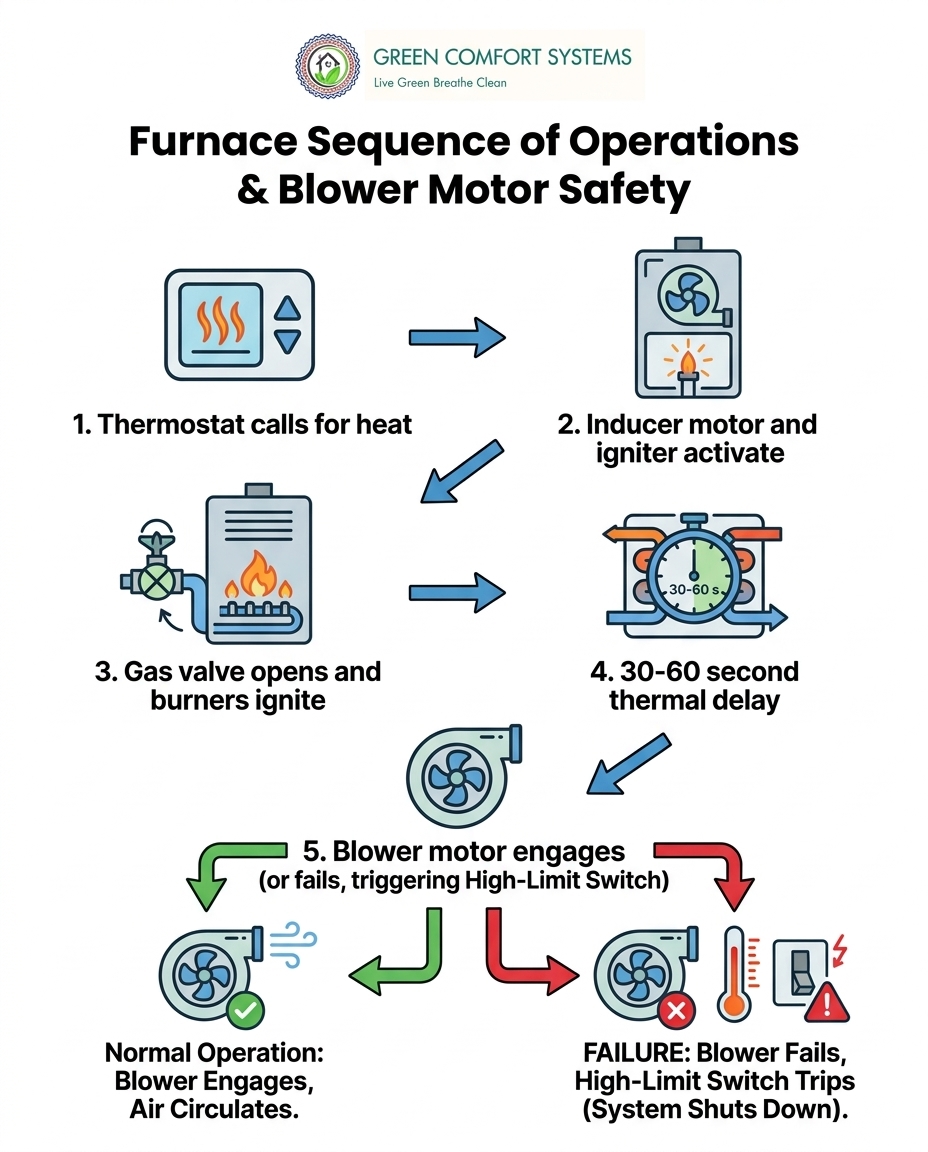
How the High-Limit Switch Prevents Overheating When the Blower Fails
The Problem: When your furnace successfully ignites its burners but the blower motor fails to engage, the system creates a massive amount of thermal energy that is effectively trapped inside the metal cabinet. The heat exchanger—the core metal component that separates the breathable air in your home from toxic combustion gases—begins to heat up rapidly. Without the blower motor continuously moving cool return air over the heat exchanger to absorb and carry that heat away, internal temperatures will quickly spike to dangerous levels.
The Cause: Furnace manufacturers anticipate the possibility of a blower failure, which is why every modern unit is equipped with a critical safety device known as the high-limit switch. This temperature-sensing probe sits directly in the airflow path above the heat exchanger. Its sole job is to monitor the internal cabinet temperature. When the blower motor fails to spin, the ambient temperature inside the furnace skyrockets within minutes, pushing past the safe operating threshold.
The Solution (System Defense): Once the temperature exceeds the safe limit, the high-limit switch automatically trips, instantly cutting power to the gas valve and shutting down the burners. This immediate shutdown prevents a catastrophic fire hazard and protects the heat exchanger from warping or cracking under extreme thermal stress. However, if the thermostat is still calling for heat, the furnace may wait to cool down, reset the limit switch, and try to fire again, only to overheat and shut down once more. This destructive loop is called "short cycling." In our experience operating under MD HVAC Master License #78268 and serving local families since 2016, allowing a furnace to repeatedly short cycle due to a dead blower motor will inevitably cause permanent, irreversible damage to the heat exchanger.
Safe Troubleshooting Steps Before Calling a Professional
While diagnosing the internal electrical components of a blower motor requires professional expertise, there are several safe, basic checks a homeowner in Rosedale MD can perform to rule out simple external issues before scheduling a service call.
• Check the thermostat settings: Ensure your thermostat is firmly set to "HEAT." Next, try toggling the fan setting from "AUTO" to "ON." If the blower motor turns on independently of the heating cycle, the motor itself is functional, and the issue likely lies within the control board or a specific heating relay.
• Inspect the air filter: A severely clogged, neglected air filter can restrict airflow so heavily that it mimics a total blower failure. In extreme cases, the restricted airflow causes the furnace to overheat and trip the high-limit switch, even if the blower motor is technically trying to spin. Replace any dark, heavily soiled filters immediately.
• Verify power at the breaker panel: Occasionally, the blower motor is wired to a separate circuit, or a failing motor drawing high amperage may have tripped a breaker. Check your home's main electrical panel and reset any tripped breakers labeled for the HVAC system.
• Check the furnace door switch: Most furnaces have a safety switch on the blower compartment panel. If the door is loose or wasn't securely fastened after a recent filter change, the switch will prevent the blower from operating.
The Dangers of DIY Electrical Testing
We must explicitly warn homeowners against opening the blower compartment to test internal electrical components. Furnace run capacitors store lethal amounts of electrical energy, even long after the main power to the unit has been shut off at the breaker. Attempting to test a capacitor or verify motor voltage with a multimeter requires specialized safety gear, insulated tools, and professional training. Touching the wrong terminal can result in a severe, potentially fatal electrical shock. Always leave electrical diagnostics to a licensed professional.
Recognizing the Sounds and Smells of a Seized Blower Motor
When you are dealing with an October heating-startup failure, your senses are often the best preliminary diagnostic tools. Paying attention to exactly what you hear—and smell—after the 60-second ignition delay can provide critical clues about the nature of the blower motor failure.
The Humming or Buzzing Sound: If you stand near the furnace and hear a distinct, low-pitched humming or vibrating buzz coming from the lower cabinet, it usually indicates that the motor is receiving electrical voltage but lacks the torque to start spinning. This is the classic symptom of a failed run capacitor. The capacitor acts like a battery, providing the necessary jolt of energy to get the heavy blower wheel turning. When it fails, the motor just hums helplessly until it overheats and trips its internal thermal overload protector.
The Burning Electrical or Ozone Smell: A sharp, acrid smell resembling burning plastic, melting wire insulation, or an "ozone" scent is a severe warning sign. This typically occurs when the blower motor is physically seized due to failed bearings, or when the internal copper windings have shorted out completely. If you smell burning electrical components, turn off the furnace at the thermostat and the breaker immediately.
Complete Silence: If the 60-second delay passes and the lower cabinet remains completely, eerily silent with no humming whatsoever, the motor is likely receiving zero voltage. This points toward a failed relay on the main control board, a broken wire harness, or a completely dead motor that has suffered a severed internal connection.
Precision Diagnostics: Why We Don't Just Guess and Swap Parts
The internet is full of generic DIY advice telling homeowners to just "try replacing the capacitor" whenever a blower motor fails to start. While a bad capacitor is a common culprit, blindly swapping parts is a frustrating gamble that often wastes time and money without resolving the root cause of the failure.
Operating as a family-owned business since 2016 and holding MD HVAC Master License #78268, our approach at Green Comfort Systems relies on precision diagnostics. When our licensed technicians arrive, we don't guess. We utilize professional-grade multimeters to test the exact microfarad reading of the capacitor. We measure the precise amp draw of the blower motor to see if it is overworking due to internal friction. We verify that the main control board is actually outputting the correct voltage to the motor relays, and we physically inspect the blower wheel bearings for signs of mechanical failure.
This methodical diagnostic process pinpoints the exact electrical or mechanical fault. If the issue is a simple, degraded capacitor, we replace it and restore your heat. However, if we discover that the motor's internal windings are completely burnt out, we can have an honest conversation about the next steps. On a newer unit, replacing the motor makes sense. But if the burnt-out motor is attached to a 15-year-old furnace that is already showing signs of heat exchanger fatigue, it may lead to a broader discussion regarding a full furnace installation. We provide free installation estimates to ensure long-term safety and reliability for your family. Additionally, federal tax credits and local utility rebates may apply to qualifying high-efficiency furnace or heat pump installations, though we always recommend verifying current programs with your utility provider or a tax professional.
Preventing Sudden Blower Motor Failures During Fall Temperature Swings
The Problem: Blower motors endure an incredible amount of mechanical torque and thermal stress throughout the year. The transition from summer cooling to winter heating is particularly brutal. During the summer, the blower runs at specific speeds to manage air conditioning. When Rosedale's unpredictable fall weather hits, the motor sits idle on mild days, only to be suddenly subjected to intense, prolonged workloads during freezing nights.
The Cause: Over time, this stop-and-start seasonal stress causes wear and tear. Motor bearings lose their lubrication, increasing physical friction. Run capacitors slowly degrade, losing their ability to store the necessary startup energy. Dust and debris bypass cheap filters, accumulating on the blower wheel blades and throwing the entire assembly off balance, which forces the motor to work twice as hard to move the same amount of air.
The Solution: The most effective way to prevent a sudden blower motor failure on a freezing October night is through proactive, pre-season inspections. During a comprehensive fall tune-up, a licensed technician will test the capacitor's electrical storage capacity, lubricate any applicable moving parts, clean the blower wheel, and measure the motor's operating amperage to catch signs of excessive wear before a total failure occurs. Consistently changing your air filters also drastically reduces static pressure, extending the lifespan of the motor. For complete peace of mind, investing in routine preventative maintenance ensures your system is professionally calibrated to handle whatever temperature swings the season brings.
Frequently Asked Questions About Furnace Airflow Issues
Why is my furnace running but no air is coming out of the vents?
This happens when the furnace successfully completes its combustion sequence but the blower motor fails to activate. The burners ignite to create heat, but without the blower fan spinning, that heated air cannot be pushed through your ductwork. This is a sequence failure that requires immediate attention, as it will cause the furnace to overheat and shut down for safety.
How do I know if my furnace blower motor is bad?
A failing blower motor often gives off distinct sensory clues before it dies completely. You might hear a loud humming or buzzing sound coming from the unit, notice a burning electrical smell, or hear screeching metal, which indicates failing bearings. If the furnace ignites but the blower compartment remains entirely silent and motionless, the motor or its electrical supply has likely failed.
Will a furnace run if the blower motor is bad?
It will run for a very short period of time before shutting itself down. The burners will ignite, but because the blower isn't moving air over the heat exchanger to cool it down, the internal temperature will rapidly spike. The furnace's high-limit safety switch will detect this dangerous overheating and immediately cut the gas supply to prevent a fire hazard.
What causes a furnace blower motor to stop working?
The most common cause is a failed run capacitor, which provides the electrical jolt needed to start the motor. Other primary causes include burned-out internal motor windings from age and overheating, seized bearings due to lack of lubrication, or a faulty relay on the furnace's main control board that fails to send power to the motor.
Can a clogged filter cause my blower motor to fail?
Yes, a severely clogged air filter is one of the leading causes of premature blower motor failure. A dirty filter chokes off the return air supply, drastically increasing the static pressure inside the system. The blower motor has to work much harder and run much hotter to pull air through the blockage, eventually leading to electrical burnout or thermal overload.
What factors affect the repair of a furnace blower motor?
The requirements to resolve a blower motor issue vary widely depending on the exact point of failure and the type of motor your system uses. If the problem is simply a failed capacitor, the repair is relatively minor. However, if the entire motor needs replacement, the process will depend on whether your furnace uses a standard PSC motor or a highly efficient, variable-speed ECM motor, as well as whether the part is still covered under the manufacturer's warranty.
Restore Your Home's Heat Safely and Efficiently
Experiencing a furnace that runs perfectly fine at the burner level but produces absolutely no warm air is a clear sign of a sequence failure that demands expert attention. When the blower motor refuses to engage, your home not only stays cold, but your heating equipment is subjected to dangerous internal overheating that threatens the integrity of your heat exchanger. While checking your thermostat and replacing a dirty filter are great first steps, any mechanical or electrical silence from the blower compartment means it is time to call in the professionals.
Under our MD HVAC Master License #78268, backed by a 4.9★ rating and over 480 Google reviews, we know exactly how to safely test and diagnose these complex electrical systems. Our licensed technicians can quickly identify whether you are dealing with a simple run capacitor issue, a faulty control board relay, or a motor that requires full replacement. Don't let a sudden sequence failure leave your family shivering in the cold. Reach out to our local team for expert furnace repair—including after-hours emergency repair available when you need it most—and let us restore reliable, safe comfort to your home today.
Book Expert Service Or Contact Us
Other Blogs


Get Financing Today
Get the comfort you deserve, without the financial stress.

Latest Blogs
Diagnosing a Blower Motor Failure When Your Furnace Runs but Produces No Air
The Anatomy of a Fast Towson Furnace Repair: How We Diagnose Ignitor Failures
Clearing the Air: How We Handle Lingering Musty Odors During Your October Heating Startup
