




Home Maintenance Tips and Troubleshooting: Answering Your Fall Heating Startup FAQs

Is Your Heating System Ready for the First Chilly Night?
Are you searching for reliable home maintenance tips and troubleshooting advice as you prepare to switch your thermostat to "heat" for the first time this season? Turning on your furnace during a mid-fall October heating startup in Rosedale MD often brings unexpected surprises, from sudden burning odors to strange operational noises. This initial test run represents a critical decision point for homeowners who want to ensure their household remains safe and comfortable as temperatures drop. You must determine whether these early-season quirks are simply normal signs of a system waking up from summer dormancy, or red flags indicating a mechanical failure that requires immediate attention.
Navigating this transition smoothly prevents mid-winter emergencies and gives you confidence in your equipment's reliability. Acknowledging the anxiety of wondering if your system will survive the upcoming winter is the first step toward proactive care. Distinguishing between harmless seasonal dust burn-off and actual mechanical faults is essential for protecting your property. Securing expert evaluations early in the season ensures that minor wear and tear does not escalate into a complete system breakdown during a freezing night. If you discover that your system needs expert care, you can rely on our professional HVAC services or explore flexible HVAC financing options to keep your home comfortable without the stress of unexpected out-of-pocket burdens.
Why Does My Heater Smell Like Burning Dust?
The short answer is: Dust and microscopic debris settle on your heat exchanger during summer dormancy, and this material incinerates when the burners ignite for the first time, producing a distinct burning dust smell. This temporary odor typically burns off within the first one to two hours of your initial mid-fall October heating startup.
While a brief burning dust smell is entirely normal, it is vital to differentiate this temporary inconvenience from dangerous odors that demand immediate action. Understanding these distinctions is a cornerstone of effective home maintenance tips and troubleshooting.
• Burning Dust: Smells similar to a dusty radiator heating up. Fades quickly and does not return after the first few cycles of the season.
• Electrical Burning: Smells like melting plastic, hot metal, or ozone. This indicates overheating wires, a failing blower motor, or a compromised circuit board. Shut the system down immediately.
• Rotten Eggs: Utility companies add a chemical called mercaptan to natural gas to give it a distinct sulfur or rotten egg smell. If you detect this, evacuate the house and call your gas provider immediately, as it indicates a dangerous gas leak.
A reliable diagnostic process is vital for any HVAC anomaly. For instance, when our team at Green Comfort Systems responds to lingering odor complaints in Rosedale MD, we often find that a smell persisting beyond the initial burn-off period points to a failing blower motor or electrical issue rather than simple dust. Our technicians know that professional identification is always the safest route. Keeping your internal units clean through regular professional maintenance minimizes the volume of dust that accumulates, significantly reducing these startup odors.
What Causes Early-Season Furnace Short-Cycling?
Short-cycling occurs when a heating system turns on, runs for only a few minutes, and then shuts down abruptly before the home reaches the temperature set on the thermostat. This rapid on-and-off sequence prevents the home from reaching a comfortable, consistent temperature and places immense mechanical strain on the system's moving parts.
In our years of serving Rosedale MD and surrounding Baltimore County, the team at Green Comfort Systems has seen firsthand how Mid-Atlantic fall weather creates unique operational stress on HVAC systems during October. With temperatures swinging wildly from mild 70s during the day to chilly 30s or 40s at night, dormant heating systems face unpredictable demands. These rapid environmental shifts often lead to thermostat confusion, causing the system to engage and disengage erratically as it struggles to interpret the fluctuating indoor climate.
Beyond environmental factors, mechanical and airflow restrictions are the primary culprits behind early-season short-cycling. Applying basic home maintenance tips and troubleshooting can help you understand the root cause:
• Severely Clogged Air Filters — How It Causes Short-Cycling: A dirty filter blocks cold return air from flowing over the heat exchanger. The heat exchanger rapidly overheats, tripping the high-limit safety switch, which shuts the burners down to prevent a fire. — Severity Level: Moderate (Requires immediate filter replacement)
• Dirty Flame Sensor — How It Causes Short-Cycling: The flame sensor detects whether gas has successfully ignited. If coated in carbon buildup, it fails to sense the flame and shuts the gas valve off within seconds as a safety precaution. — Severity Level: High (Requires professional cleaning or replacement)
• Improper Thermostat Placement — How It Causes Short-Cycling: If the thermostat is located near a drafty window, a heat register, or in direct sunlight, it will misread the room's temperature and signal the furnace to shut off prematurely. — Severity Level: Low to Moderate (May require professional relocation)
Understanding when short-cycling is a simple airflow issue versus a failing internal component saves time and frustration. If replacing a dirty air filter does not resolve the rapid cycling, the issue lies within the mechanical or electrical safety systems.
Which Home Maintenance Tips and Troubleshooting Steps Are Safe?
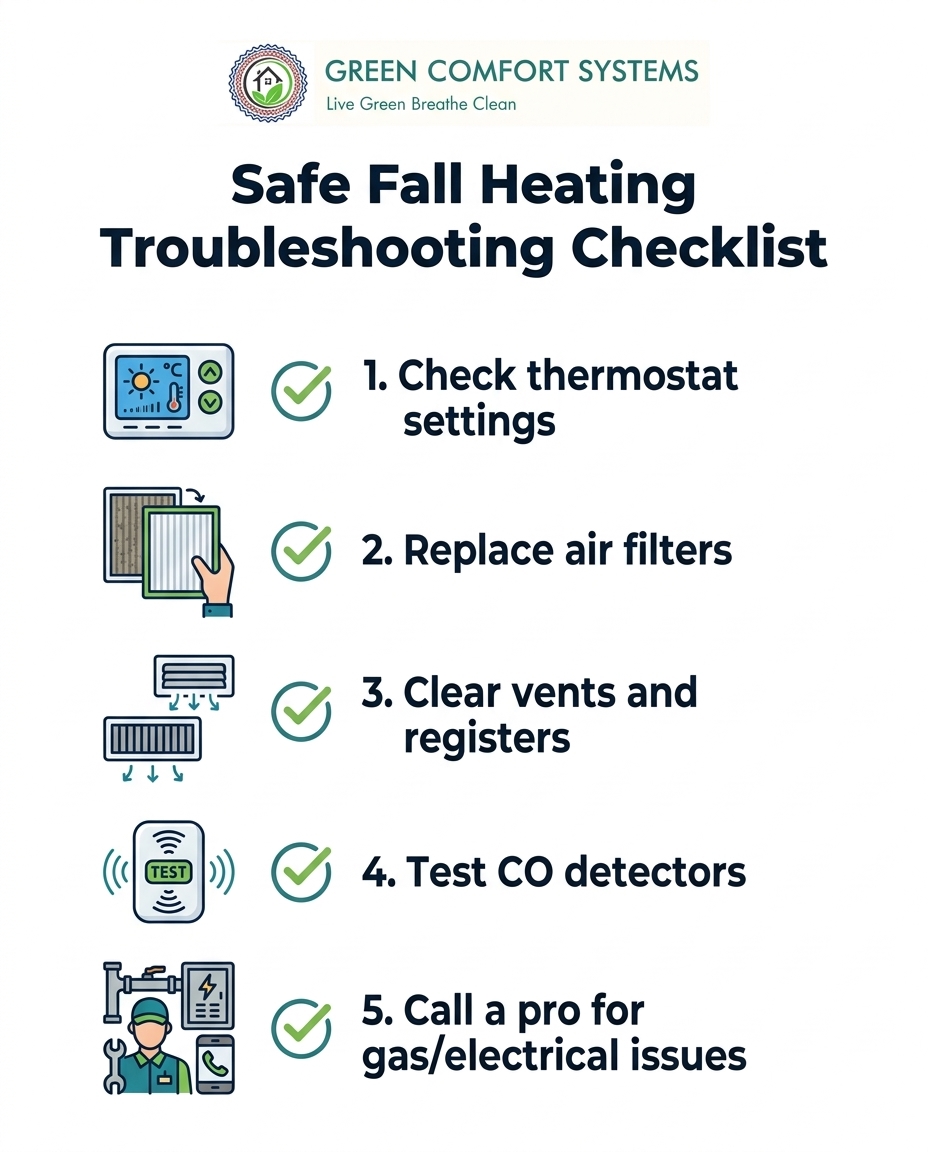
Homeowners play a vital role in preparing their heating systems for winter, but drawing a strict line between safe homeowner tasks and dangerous DIY repairs is critical for your safety. Before scheduling a mid-fall October heating startup inspection, there are several safe, actionable steps you can take to ensure your system has the best chance of operating smoothly.
• Verify thermostat settings: Ensure the thermostat is explicitly set to "Heat" and that the fan is set to "Auto." Replace the batteries in digital thermostats, as low power can cause communication failures between the thermostat and the control board.
• Replace dirty air filters: Pull out your current air filter and hold it up to a light source. If you cannot see light passing through the media, it is severely restricted and must be replaced. A clean filter is the single most important factor in preventing overheating.
• Ensure all vents and registers are unblocked: Walk through every room in the house and verify that supply registers and return grilles are fully open. Move rugs, furniture, or heavy curtains that might be obstructing airflow. Closing vents in unused rooms actually increases static pressure and damages the blower motor.
• Test carbon monoxide detectors: Before the heavy heating season begins, press the test button on every CO detector in your home. Check the expiration date printed on the back of the unit—most detectors expire after five to seven years and must be completely replaced, not just given new batteries.
The critical safety warning: Never attempt to open the furnace cabinet to inspect internal components, handle electrical wiring, or attempt gas line repairs. Modern heating systems utilize high-voltage electricity and combustible gases. Bypassing safety switches or tinkering with the gas valve poses a severe risk of explosion, fire, or fatal carbon monoxide leaks. Any task beyond basic airflow management and external thermostat checks strictly requires a licensed professional.
When Should I Call a Professional for Heating Noises and Smells?
Knowing exactly when to stop troubleshooting and call for professional diagnostics is the most valuable skill a homeowner can develop. While minor dust odors are expected, certain mechanical noises and persistent smells indicate underlying failures that threaten the safety of your home across Rosedale MD and surrounding Baltimore County.
Decoding Unusual Furnace Noises
Modern heating equipment is designed to operate quietly. If your mid-fall startup is accompanied by disruptive sounds, a mechanical fault is actively occurring. Screeching or squealing noises typically point to a failing blower motor bearing or a deteriorating fan belt. Loud banging or booming sounds when the furnace ignites are particularly concerning; this often indicates delayed ignition, where gas builds up in the combustion chamber before finally catching a spark, creating a miniature explosion. Ignoring a booming furnace can eventually crack the heat exchanger.
Evaluating Persistent Odors
If the standard burning dust smell lasts longer than the first day of operation, professional intervention is required. Furthermore, any scent of melting wire casing or acrid electrical burning means a component is drawing too much amperage and actively overheating. Shut the system down at the thermostat and the breaker panel immediately to prevent an electrical fire.
The National Fire Protection Association (NFPA) consistently reports that heating equipment is a leading cause of home fires. This data underscores the severe safety risk of ignoring persistent symptoms. An October inspection allows certified technicians to diagnose underlying wear and tear before it escalates into a hazardous situation. True peace of mind comes from knowing a qualified expert has thoroughly verified the safety and integrity of your combustion systems.
How Can a Pre-Winter Inspection Prevent Emergency Failures?
Positioning a pre-winter tune-up as your primary defense against early-season heating anxieties is the smartest approach to home comfort. While basic home maintenance tips and troubleshooting handle the external airflow, a professional inspection addresses the complex internal mechanics that keep your family safe.
During a comprehensive pre-winter inspection, a licensed technician performs critical safety and performance checks that homeowners cannot safely execute. They visually inspect the heat exchanger for microscopic cracks that could leak carbon monoxide into your living spaces. They test all high-limit safeties and rollout switches to ensure the furnace will shut down automatically if it overheats. Additionally, they measure the electrical draw on the inducer and blower motors to identify components that are working too hard and are likely to fail soon.
Extreme temperatures quickly expose hidden system vulnerabilities. Just last season, our team at Green Comfort Systems responded to a local homeowner whose furnace began throwing error codes on the very first chilly October night due to a neglected, failing inducer motor. By catching issues like this during a routine pre-winter inspection rather than a midnight emergency, we can restore safe function quickly and proactively diagnose the rest of the system. This hands-on, rapid-response approach is essential for a smooth mid-fall October heating startup. Catching a worn igniter or a failing motor bearing in October is vastly preferable to suffering a complete, sudden breakdown during a deep winter freeze in January. We encourage readers to contact our team to secure their seasonal maintenance before the schedule fills up entirely.
What Are the Best Options if My Heating System Fails?
Sometimes, despite diligent troubleshooting and regular tune-ups, an older system simply cannot safely operate for another winter. Heat exchangers rust, blower motors seize, and control boards degrade over decades of use. If your professional inspection reveals that your furnace poses a safety hazard or requires repairs that exceed the value of the unit, exploring replacement options is the next logical step.
Upgrading to a modern heating system drastically improves safety, efficiency, and overall home comfort. Newer units feature advanced combustion technology, multi-stage heating, and variable-speed blowers that eliminate cold spots and reduce energy consumption. While the prospect of replacing a major appliance can feel daunting, navigating these replacements does not have to be overwhelming.
When a local family recently needed help understanding the paperwork and options for financing a purchase, our staff at Green Comfort Systems effectively explained the necessary details, including how generic federal tax credits or local utility rebate programs might apply to their qualifying high-efficiency installation. The customer understood the financing process clearly and felt their time was respected. We apply this same transparent, supportive approach to every installation. Furthermore, our team actively helps older adults navigate the complexities of HVAC upgrades by combining state energy initiatives with exclusive HVAC discounts for older adults to make vital safety upgrades more accessible for residents throughout Rosedale MD and surrounding Baltimore County.
Frequently Asked Questions About Fall Heating Startup
Why does my heater smell like burning dust when I turn it on?
During summer dormancy, dust and debris naturally accumulate on the surface of your furnace's heat exchanger. When you initiate your mid-fall October heating startup, the burners ignite and incinerate this settled dust, producing a distinct burning odor. This is a normal burn-off process that typically dissipates within a few hours.
How do I safely troubleshoot my heating system?
Safe troubleshooting begins with checking your thermostat to ensure it is set to "heat" and has fresh batteries. Next, replace dirty air filters to guarantee proper airflow, and walk through your home to ensure all supply and return vents are fully open and unblocked by furniture.
When should I call a professional for furnace noises?
You should contact a professional immediately if you hear loud banging, squealing, grinding, or booming noises coming from your heating equipment. These sounds strongly indicate mechanical failures, failing motor bearings, or dangerous ignition issues that require a licensed expert to resolve safely.
Why is my furnace turning on and off so quickly?
This rapid cycling is often caused by restricted airflow from severely dirty air filters, which causes the internal components to overheat and trigger a safety shutdown. It can also be caused by a faulty, dirty flame sensor that fails to detect the burner flame, or improper thermostat placement near a heat source.
What HVAC maintenance can I do myself?
Homeowners should strictly limit their maintenance to external tasks: changing air filters regularly, keeping the physical area around the indoor unit clear of clutter, and testing carbon monoxide detectors. You must avoid any internal mechanical or electrical work, as opening the cabinet poses severe safety risks.
How long should the burning smell last during fall startup?
The standard burning dust smell typically dissipates within 1 to 2 hours of continuous operation during your first heating cycle of the season. If the smell persists beyond the first day, or if it smells like melting plastic or rotten eggs, shut the system down immediately and call for professional diagnostics.
Secure Your Comfort Before Winter Arrives
Feeling secure heading into the coldest months of the year is the ultimate goal for any homeowner in Rosedale MD and surrounding Baltimore County. By applying these home maintenance tips and troubleshooting strategies, you can confidently navigate the transition into the heating season. Never ignore clear warning signs like persistent electrical smells, loud banging noises, or continuous short-cycling. Take action today to protect your home by scheduling a comprehensive pre-winter inspection or discussing flexible HVAC financing options with a local expert to ensure your system is entirely safe and ready for the freezing temperatures ahead.
Book Expert Service Or Contact Us
Other Blogs


Get Financing Today
Get the comfort you deserve, without the financial stress.

Latest Blogs
Home Maintenance Tips and Troubleshooting: Answering Your Fall Heating Startup FAQs
Understanding the Senior HVAC Initiative & Fall Heating Startups: Common Questions Answered
How Proper Air Balancing Fixes Hot and Cold Spots in Two-Story Maryland Homes
