




Furnace Maintenance Tips: Troubleshooting the First October Startup

The Anxiety of the First Fall Heating Startup
You turn your thermostat from cool to heat, listen for the click, and suddenly find yourself searching for home maintenance tips and troubleshooting guides because something just does not smell or sound right. That initial switch to heating mode often brings a wave of unease. Your furnace has been sitting dormant for months, and asking it to suddenly warm your entire house can expose hidden quirks. You might notice a strange burning odor drifting through the vents, or you might hear the system turn on and off faster than it should. These early symptoms immediately trigger a stressful decision point: is this just a harmless seasonal quirk, or a failing component that requires urgent attention before freezing weather arrives?
Understanding exactly how your system behaves during the October first heating startup is the key to protecting your home and your peace of mind. A little bit of knowledge helps you separate normal operational sounds from genuine mechanical red flags. By learning what to look, listen, and smell for, you can take practical, safe steps to ensure your equipment runs reliably all season long. If you want to skip the guesswork entirely, our team at Green Comfort Systems is always ready to step in. You can rely on our professional heating services to get your system safely prepared for the months ahead.
Decoding Furnace Startup Smells: Normal Dust Burn-Off vs. Danger
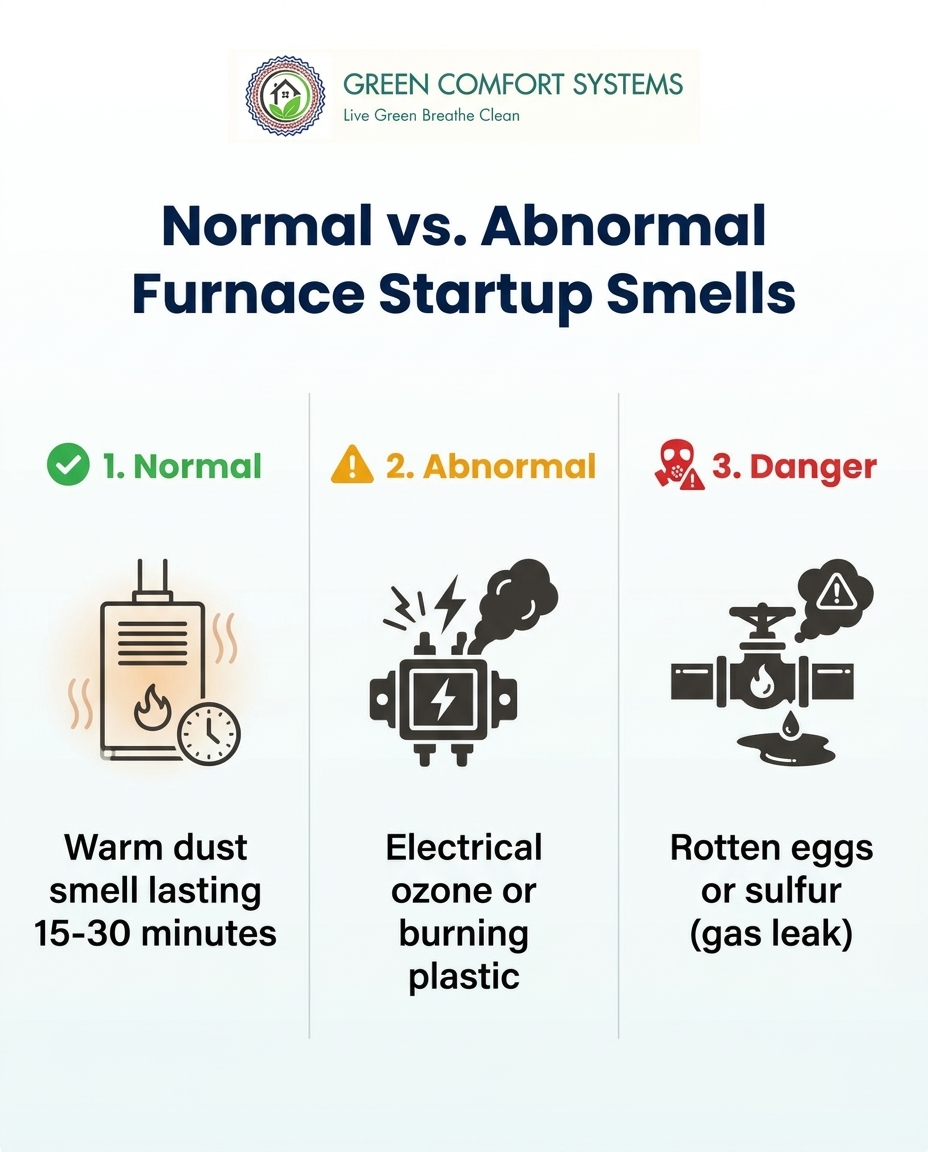
When our technicians respond to early fall service calls across Rosedale, the most common cause for alarm during the October first heating startup is an unexpected burning smell. Because your furnace sits idle throughout the spring and summer, airborne particles naturally settle inside the unit. When the burners ignite for the first time, they heat up those settled particles, creating a distinct odor that flows right through your ductwork. Knowing how to categorize these smells prevents unnecessary panic and helps you act quickly when real danger is present.
The 30-Minute Harmless Burn-Off
We often reassure our customers that during the off-season, everyday household dust accumulates directly on your furnace's heat exchanger. When you finally call for heat, those metal components get incredibly hot, incinerating the thin layer of dust. This process creates a warm, slightly dusty burning smell.
• What it smells like: A dry, warm, dusty odor, similar to a space heater being turned on.
• How long it lasts: This harmless burn-off typically resolves itself within 15 to 30 minutes of continuous operation.
• What you should do: Open a few windows to ventilate the house. You do not need to shut the system down unless the smell persists for hours or grows significantly stronger.
Warning Signs That Require Immediate Action
While dust burn-off is perfectly normal, other odors signal serious mechanical or safety issues. If you detect an electrical ozone smell, it often means a blower motor is overheating or a wire is melting. A burning plastic smell usually indicates that a foreign object has fallen into the ductwork or a crucial internal component is failing.
The most critical warning sign is the smell of rotten eggs or sulfur. This indicates a natural gas leak. If you smell sulfur, do not wait to see if it dissipates. Shut off your heating system immediately, evacuate the house, and call your gas provider. Later, you will need a professional to handle tasks like troubleshooting furnace gas valve issues to restore safe operation.
• Warm, dry dust — Likely Cause: Summer dust burning off the heat exchanger — Required Action: Ventilate the home; wait 15-30 minutes.
• Electrical ozone — Likely Cause: Overheating motor or melting wires — Required Action: Turn off system; call a professional.
• Burning plastic — Likely Cause: Foreign object in vents or melting component — Required Action: Turn off system; inspect visible vents; call a professional.
• Rotten eggs (sulfur) — Likely Cause: Natural gas leak — Required Action: Evacuate immediately; call gas company.
How Autumn Temperature Swings Stress Your Heating System
In our years of maintaining HVAC equipment in Rosedale MD, we've seen firsthand how damp, cold autumns and the highly unpredictable weather pattern often called the "October Swing" affect local homes. During these transitional weeks, it is completely normal to need your furnace running overnight to combat a chilly 45-degree low, only to switch the air conditioning back on by two in the afternoon when the sun heats the house. This constant back-and-forth puts a unique type of mechanical stress on your HVAC system.
The problem: Intermittent early cycling forces your heating system to start and stop rapidly. Every time a furnace turns on, it draws a surge of electricity and forces the ignition sequence to run. When the system only runs for a few minutes before the morning sun warms the house enough to satisfy the thermostat, the furnace never reaches its steady, efficient operating temperature.
The cause: This erratic demand is driven by the specific climate conditions of Rosedale MD. Furthermore, autumn air is often heavy and damp. High indoor humidity makes the air feel colder than it actually is, prompting homeowners to push the thermostat higher. The furnace then has to work harder to heat dense, moisture-laden air, increasing the wear and tear on the blower motor and heat exchanger.
The solution: Monitor your system closely during these transitional weeks. Try to maintain a steady, moderate thermostat setting rather than drastically swinging the temperature up and down. If you notice the furnace turning on for just two minutes and then shutting off repeatedly, this intermittent cycling might be masking an underlying mechanical issue that needs professional calibration before the deep winter freeze sets in.
Safe DIY Furnace Maintenance Tips for Homeowners
Before you call our team for help during that October first heating startup, there are several safe, highly effective maintenance steps you can take on your own. Handling these basic tasks ensures your system has the airflow it needs to operate safely, and it often resolves minor performance hiccups without requiring a service visit. Remember, any task involving internal wiring, gas lines, or sealed mechanical parts must be left to a licensed professional.
1. Inspect and replace the air filter: This is the single most critical step our technicians recommend. A dirty, clogged filter restricts airflow. When airflow is blocked, the furnace retains too much heat, which can trip the high-limit safety switch and shut the system down. Start the season with a brand-new, high-quality pleated filter.
2. Check thermostat settings and batteries: A surprising number of "broken furnace" calls we receive are actually just dead thermostat batteries. Swap out the batteries, ensure the system is explicitly set to "Heat," and verify that the programmed schedule matches your current autumn routine.
3. Verify all vents and return registers are open: Walk through every room in your house to check the floor, wall, and ceiling vents. Ensure no heavy furniture, thick rugs, or heavy drapes are blocking the airflow.
4. Clear the area surrounding the indoor unit: Over the summer, it is easy to stack boxes, holiday decorations, or cleaning supplies near the furnace. Clear a perimeter of at least two to three feet around the unit to ensure safe operation, proper ventilation, and easy access for future servicing.
Maximizing Airflow and Efficiency
Many homeowners mistakenly believe that closing vents in unused guest rooms or storage areas will save energy by forcing the warm air into the rooms they actually use. In reality, modern heating systems are precisely balanced for a specific amount of airflow. Closing vents increases the static pressure inside your ductwork. This excess pressure forces the blower motor to work substantially harder, driving up your energy usage and significantly increasing the risk of the system overheating. We always advise keeping all your vents open to maintain proper balance and protect your equipment.
When to Stop Troubleshooting and Call a Professional
While changing filters and clearing vents are excellent ways to protect your system, there is a hard line between basic upkeep and dangerous DIY. Modern furnaces are complex machines involving combustible gases, high-voltage electricity, and delicate sensors. Crossing the line into amateur repairs puts your home and your safety at serious risk.
A pattern we see often on emergency calls is short cycling. If your furnace turns on, runs for a minute or two, and then abruptly shuts off before reaching the target temperature, the system is short cycling. This usually indicates an overheating issue, a failing flame sensor, or an oversized unit. Because the root causes involve internal safety mechanisms, short cycling requires a professional diagnosis.
You should also listen closely for unusual mechanical noises.
• Loud banging or booming: This often indicates delayed ignition, where gas builds up in the chamber before finally catching a spark. This is a serious safety hazard.
• High-pitched squealing: Usually points to a failing blower motor belt or bearings that have lost their lubrication.
• Metal-on-metal grinding: A sign that a motor mount has broken or a fan blade is scraping against the housing.
Finally, the most critical component of your furnace is the heat exchanger, which safely vents combustion gases like carbon monoxide out of your home. Inspecting a heat exchanger for microscopic cracks requires specialized cameras and training. If you live in Rosedale MD and your system is exhibiting any of these symptoms, it is time to stop troubleshooting and schedule your fall furnace tune-up with a licensed technician.
Navigating System Upgrades: Efficiency, Safety, and Incentives
Sometimes, the October startup reveals more than just a dusty smell or a dirty filter. When our Green Comfort Systems technicians inspect aging heating systems, they often uncover the full extent of their wear and tear during that first heavy demand of the season. If your technician discovers a cracked heat exchanger, a failing primary motor, or severe corrosion, continuing to operate the severely compromised unit becomes a major safety risk.
When repairs are no longer viable or safe, upgrading to a modern, high-efficiency furnace or a heat pump becomes the necessary next step. Today's high-efficiency systems utilize variable-speed blowers and multi-stage heating, meaning they adjust their output to match the exact temperature needs of your home. This prevents the harsh temperature swings of older models, dramatically improves your indoor comfort, and lowers your overall energy consumption.
While replacing a heating system in Rosedale MD is a significant investment, there are often programs available to help offset the initial costs. Qualifying installations of high-efficiency furnaces or heat pumps may be eligible for generic federal tax credits or local utility rebates designed to encourage energy conservation. Because these incentive programs and their requirements change frequently, it is always best to consult a tax professional or your local utility provider for the most current details. If you are facing an unexpected replacement, exploring flexible HVAC financing options can also help you secure a safe, reliable system without compromising your household budget.
Frequently Asked Questions About Fall Furnace Maintenance
Why does my furnace smell when I turn it on for the first time?
A burning smell during the first startup is usually just dust burning off the heat exchanger. Over the summer, dust settles inside the unit, and when the furnace heats up, it incinerates those particles. This harmless odor typically goes away after 15 to 30 minutes of operation.
What furnace maintenance can I do myself safely?
You can safely replace the air filter, change the thermostat batteries, and ensure all vents are fully open. You should also clear any boxes or debris away from the furnace to ensure proper airflow. Any task involving opening the furnace cabinet or handling wiring must be left to a professional.
How do I know if my furnace needs professional repair?
You need professional repair if your furnace makes loud banging or grinding noises, emits smells of electrical ozone or sulfur, or short cycles by turning off and on rapidly. These symptoms point to internal mechanical failures or safety hazards that require a licensed technician.
How often should a furnace be serviced?
Our team highly recommends that a furnace be professionally serviced once a year, ideally in the early fall before the deep winter cold arrives. Annual maintenance ensures the system operates efficiently, reduces the risk of unexpected breakdowns, and verifies that the heat exchanger is safely venting combustion gases.
What causes a furnace to short cycle during the fall?
Short cycling during the October first heating startup is often caused by a severely clogged air filter that causes the system to overheat and shut down defensively. It can also be caused by a dirty flame sensor, a malfunctioning thermostat, or erratic autumn weather confusing the system.
Securing Winter Peace of Mind with Proactive Care
The anxiety of the October first heating startup is something almost every homeowner experiences, but it does not have to be a source of ongoing stress. By learning to distinguish between a harmless 30-minute dust burn-off and a serious mechanical warning sign, you can take control of your home's comfort. Addressing these early startup quirks promptly prevents minor issues from escalating into complete system failures on the coldest night of the year.
Ultimately, professional maintenance is the single best way to ensure your heating system remains safe, efficient, and reliable. That is why joining our Green Guardian Club is such a smart choice for homeowners. This membership provides a cost-effective, stress-free way to handle your annual maintenance automatically, ensuring your system is thoroughly inspected and tuned up before deep winter arrives. By staying proactive, you secure true peace of mind, knowing your home will stay warm and safe all season long.
Book Expert Service Or Contact Us
Other Blogs


Get Financing Today
Get the comfort you deserve, without the financial stress.

Latest Blogs
Clearing the Air: How We Handle Lingering Musty Odors During Your October Heating Startup
Furnace Maintenance Tips: Troubleshooting the First October Startup
Troubleshooting Your October Heating Startup in Rosedale: What's Normal and What's Not
