




Understanding the Senior HVAC Initiative & Fall Heating Startups: Common Questions Answered

Facing the First Fall Chill: Heating Startups and Peace of Mind
When you turn on your thermostat for that October first-chill heating startup, having your common homeowner questions answered right away can mean the difference between panic and peace of mind. Here at Green Comfort Systems, our technicians have spent years guiding Rosedale MD homeowners through this exact seasonal transition. After sitting dormant through the long, hot summer, your heating system is suddenly called into action. It is completely natural to feel a brief spike of anxiety when you switch the system from "cool" to "heat." Homeowners often wonder if the sounds and smells coming from their vents are normal seasonal quirks or the first warning signs of a major mechanical failure.
That familiar burning dust smell is one of the most frequent reasons homeowners reach out to our team for help as the temperatures begin to drop. Knowing exactly when to wait it out and when to call for professional intervention is a crucial part of managing your home safely. For many, discovering that an aging system is no longer safe to operate brings a new layer of worry. However, there is a strong safety net available. Through general support programs like senior heating assistance initiatives and accessible funding routes, replacing a dangerous heater does not have to be an overwhelming burden. (We always advise readers to verify current programs and eligibility with their local utility or a tax professional.)
For comprehensive support, explore our professional HVAC services or learn more about flexible HVAC financing options to keep your home safe and warm.
Decoding the Dust: What Happens Inside Your Furnace
To reduce unnecessary panic during your October first-chill heating startup, it helps to understand the mechanical reality of your heating equipment. Throughout the spring and summer months, your furnace or heat pump air handler sits largely inactive when it comes to generating heat. During this long period of dormancy, everyday household dust, pet dander, and microscopic airborne particles settle onto the internal heating components. The heat exchanger—the core metal component that safely transfers heat into your home's air supply—becomes coated in a fine layer of this debris.
When you finally trigger a heating cycle, the combustion process or electrical heating elements rapidly raise the temperature of that metal. The accumulated dust is instantly incinerated, sending a distinct, smoky odor through your ductwork and out of your vents. This brief, mild burning smell is an entirely normal part of the seasonal transition. In our experience servicing homes around the Chesapeake region, we typically see that high summer humidity causes dust to stick much more stubbornly to these internal components. That sticky accumulation makes the initial burn-off smell noticeably more pronounced for homeowners in Rosedale MD and the surrounding areas.
The mechanical breakdown of fall startup odors:
• Summer accumulation: Humidity causes airborne particulates to cling tightly to inactive burners and heat exchangers.
• Initial ignition: Temperatures inside the unit spike rapidly, baking off the settled dust in a matter of minutes.
• Airflow distribution: Your blower motor pushes the resulting harmless exhaust through the supply vents, making the smell seem like it is coming from every room at once.
You do not need to attempt any DIY cleaning of the heat exchanger or burners to prevent this. Simply observe the system during its first run of the season. Understanding this natural burn-off process allows you to evaluate your equipment calmly without rushing to shut down a perfectly healthy system.
The Go/No-Go Safety Checklist for Your Heating System
While a burning dust smell is usually harmless, you still need a definitive way to evaluate your system's safety. Over our years of providing local HVAC services, the team at Green Comfort Systems has developed an honest, transparent troubleshooting approach to help you prevent unnecessary service calls for normal burn-off, while ensuring you catch real hazards immediately. Use this time-bound checklist to distinguish between a routine startup and a mechanical emergency.
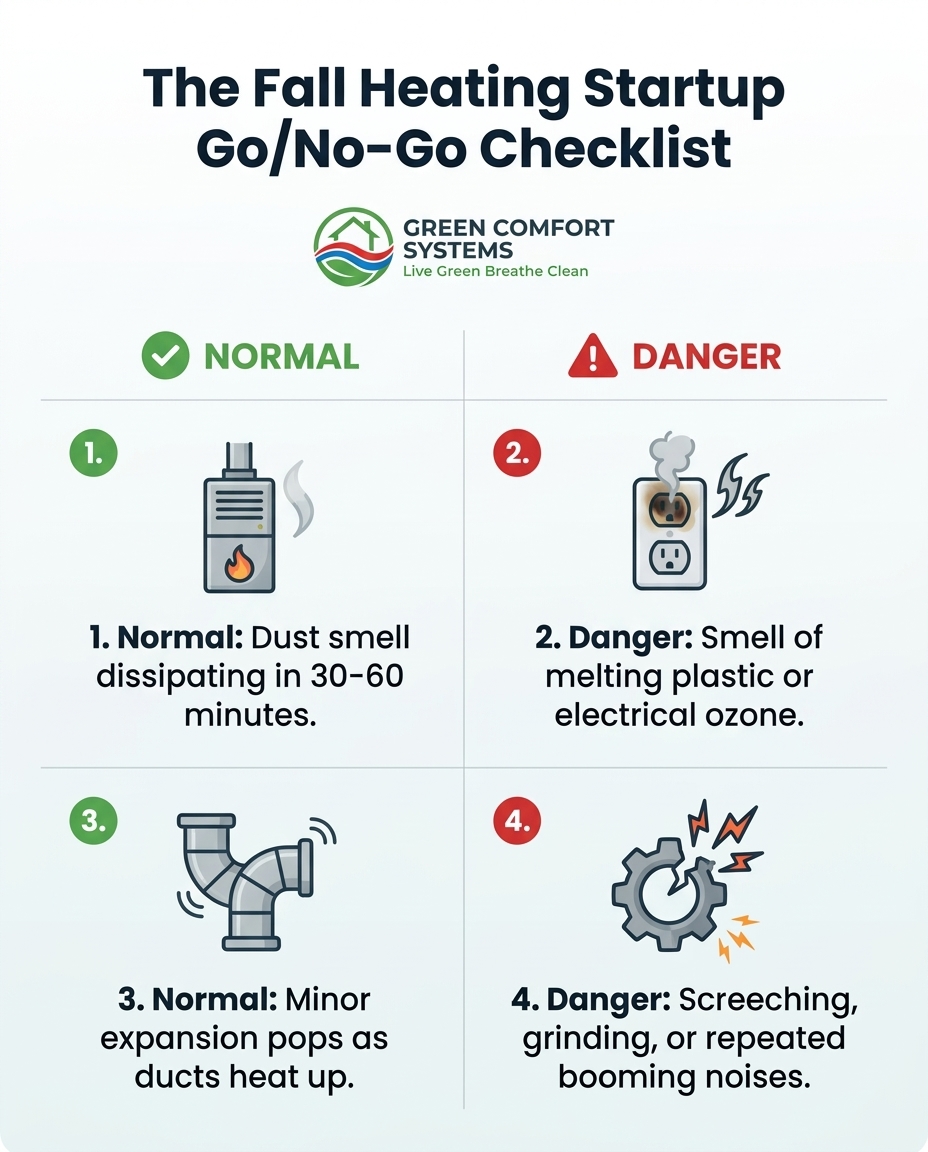
1. Time the odor: Normal dust burn-off should dissipate entirely within 30 to 60 minutes of continuous operation. If the smell persists longer than an hour, or if it grows stronger rather than fading, the system requires professional attention.
2. Identify the exact scent: A dusty, slightly smoky smell is standard. However, if you detect the acrid scent of melting plastic, burning rubber, or electrical ozone, you have a serious problem. These odors indicate overheating wires, failing blower motors, or compromised electrical shielding.
3. Listen for auditory clues: As your ductwork rapidly heats up and expands, you will likely hear minor pops, pings, or ticking sounds. This is normal thermal expansion. Conversely, aggressive grinding, loud screeching, or repeated booming sounds point to failing bearings, ignition delays, or severe mechanical friction.
• Smell — Normal Seasonal Operation: Light, dusty, toasted odor — Danger Sign (Call a Pro): Melting plastic, electrical ozone, sulfur
• Duration — Normal Seasonal Operation: Fades completely in 30-60 minutes — Danger Sign (Call a Pro): Persists or worsens after an hour
• Sound — Normal Seasonal Operation: Soft clicking, metallic expansion pops — Danger Sign (Call a Pro): Loud banging, grinding, continuous screeching
• Visuals — Normal Seasonal Operation: No visible smoke in the home — Danger Sign (Call a Pro): Visible haze or smoke entering from vents
Having access to upfront HVAC pricing means that if your system does fail this safety check, you can make informed decisions about repairs without worrying about hidden fees.
When to Turn the System Off Immediately
Certain warning signs bypass the waiting period entirely. If you smell burning wires or melting plastic, hear loud screeching or repeated booming sounds, or see actual smoke visibly entering your living space through the vents, do not wait for the 60-minute mark. Walk directly to your thermostat and switch the system to "off." These are definitive indicators of an electrical or mechanical hazard that requires a licensed technician to diagnose and repair safely.
Why Prompt Action Matters for Older Adults' Heating Safety
Connecting the physical safety of your HVAC system to the well-being of the people living inside the home is critical, particularly for older adults. Reliable heating is not just a matter of comfort; it is a fundamental health necessity. As we age, our bodies become increasingly vulnerable to sudden temperature drops, and the ability to regulate internal body heat diminishes. Waiting out a failing system or relying on inadequate space heaters is incredibly dangerous during the transition into winter.
Our region is known for severe temperature swings. The weather can shift rapidly from hot, humid Chesapeake summers to freezing, biting winter nights. When a heating system fails during one of these sudden drops, the indoor temperature can plummet to unsafe levels within hours. This makes it absolutely essential to have a trusted local team that responds quickly to heating emergencies, ensuring that vulnerable residents are never left in the cold.
One local homeowner recently reached out to us needing urgent help and parts for a sudden heating issue. Our Green Comfort Systems team members, Kyle and Emily, provided quick assistance to secure the necessary components and resolve the problem efficiently. Because they acted fast, the heating issue was corrected before the home could become dangerously cold. Prioritizing safety over temporary fixes or delayed repairs is a pattern we see often as crucial for long-term well-being, especially when an October first-chill heating startup reveals that an aging system is on its last legs.
Understanding Senior Heating Assistance Programs for System Upgrades
When a heating system definitively fails the safety check and requires replacement, the unexpected expense can be daunting. This is where generic senior heating assistance programs become a vital resource. Designed specifically to help older adults afford necessary heating replacements, these informational programs serve as a bridge between an unsafe home environment and reliable, efficient winter warmth. The core purpose of these initiatives is to ensure that seniors are not forced to choose between financial stability and physical safety.
While specific program details can vary by location and year, general eligibility factors typically revolve around a few key criteria. Applicants usually need to meet a specific age requirement, demonstrate homeownership status, and prove the necessity of the replacement—meaning the current system is either completely non-functional or poses a documented safety hazard. These state or regional initiatives strongly focus on energy efficiency and safety, often prioritizing the installation of modern, high-efficiency heat pumps or furnaces that lower ongoing monthly utility bills. Furthermore, federal tax credits may apply to qualifying heat pump installations, though you should always verify current programs with your utility or a tax professional.
Key benefits of senior-focused heating programs:
• Safety first: Removes the immediate physical danger of operating compromised, failing equipment.
• Energy efficiency: Upgrades older, energy-wasting units to modern standards, reducing the monthly energy burden.
• Financial relief: Provides structured support to make necessary home improvements manageable on a fixed income.
These programs are specifically designed to remove the stress of unexpected winter breakdowns for homeowners in Rosedale MD. Knowing that these safety nets exist allows you to make decisions based on the actual condition of your equipment, rather than fear of the replacement process.
Navigating Eligibility and Financing Paperwork with Local Experts
Even when you know that support programs exist, the actual process of applying for them can feel overwhelming. Program paperwork, eligibility verification, and financing applications often involve dense terminology and strict documentation requirements. It is perfectly normal to feel daunted by the administrative side of securing a new heating system. That is exactly why working with a dedicated local team makes all the difference.
Green Comfort Systems is committed to the community, actively helping older adults maximize their savings by navigating combined state initiatives and local discounts. We understand the administrative process inside and out. Recently, a customer needed help understanding the paperwork for financing a new purchase. Our sales staff effectively explained all the necessary documents step-by-step, allowing the customer to comfortably understand and complete the financing paperwork without the usual stress.
Sometimes, state programs cover a significant portion of the upgrade, but a remaining balance still exists. Local financing can be structured specifically to bridge those gaps, creating a manageable, predictable path forward. By exploring HVAC discounts for older adults and combining them with accessible financing, the transition to a safe, new heating system becomes as seamless as possible during your October first-chill heating startup.
Proactive Steps to Take Before the Deep Freeze Arrives
As seasoned HVAC professionals, we know that the best way to handle a winter heating emergency is to prevent it from happening in the first place. If your initial startup revealed any warning signs—even if the system eventually settled down and seemed to run normally—we highly recommend scheduling a professional pre-winter inspection. Waiting for an emergency mid-winter failure guarantees that your system will break down on the coldest day of the year, right when local technicians are at their busiest.
A proactive assessment provides the ultimate peace of mind. Knowing that your heat exchanger is intact, your electrical connections are secure, and your blower motor is operating within safe parameters allows you to face the winter with confidence. During these checks, a professional can verify that your equipment is certified safe for the long months ahead in Rosedale MD.
Essential proactive steps for every homeowner:
• Change your air filters: A clogged filter forces the blower motor to work twice as hard, increasing the risk of overheating and mechanical failure. Fresh filters improve indoor air quality and system efficiency.
• Clear the area around the unit: Ensure that boxes, stored items, and combustible materials are kept far away from the furnace or air handler.
• Test your carbon monoxide detectors: Before running a gas or oil furnace for the season, verify that your home's safety alarms have fresh batteries and are functioning correctly.
We encourage you to reach out early to explore your options before the peak winter rush begins. If you have any doubts about your system's performance, contact our team for an assessment today.
Common Homeowner Questions Answered About Fall Heating & Senior Programs
We know that an October first-chill heating startup brings a wave of questions. Below, we have your most common homeowner questions answered, providing direct, actionable advice so you can manage your home's comfort with confidence.
How long is it normal for a heater to smell like burning dust?
It is normal for a heater to smell like burning dust for 30 to 60 minutes during its first cycle of the season. This odor is simply the accumulated summer dust baking off the heat exchanger. If the smell persists beyond an hour, or if it grows significantly stronger, turn the system off and request a professional inspection to ensure there are no underlying mechanical issues.
What does an electrical issue in a furnace smell like?
An electrical issue in a furnace typically smells like melting plastic, burning rubber, or a sharp, metallic ozone scent. Unlike the dusty, toasted smell of normal burn-off, these odors are highly acrid and irritating to breathe. If you detect any of these scents, shut off the power to the unit immediately at the thermostat and call a licensed technician.
Why is my heater making a loud noise when it turns on for the first time?
Your heater may make loud noises during startup due to delayed ignition, failing motor bearings, or a cracked heat exchanger. While soft clicking or minor metallic popping is just normal thermal expansion, loud booming or aggressive grinding is a serious warning sign. These aggressive noises indicate mechanical friction or dangerous combustion issues that require immediate professional diagnosis.
How do I know if I qualify for senior heating assistance programs?
You can determine if you qualify for senior heating assistance programs by reviewing the specific age, income, and homeownership requirements, which vary by state or regional guidelines. Generally, applicants must own the home they live in and demonstrate that their current heating system is failing or unsafe. Local HVAC professionals can often help you review these criteria and point you toward the right application resources.
Can local financing be combined with state heating assistance programs?
Yes, local financing can frequently be combined with state heating assistance programs to cover the total cost of a system replacement. State programs may provide a baseline level of support or specific rebates for high-efficiency equipment, while flexible local financing bridges the remaining gap. This combination allows homeowners to secure a safe, reliable system without facing a massive upfront financial burden.
Secure Your Winter Comfort and Safety Today
Navigating the transition into winter does not have to be a stressful experience. By understanding the clear, time-bound criteria for evaluating your heater's safety, you can confidently distinguish between a normal seasonal startup and a true mechanical emergency. Remember that if your system does show signs of failure, you are not alone in figuring out the next steps.
Help is readily available through structured financing and dedicated senior support programs designed to keep Rosedale MD homes safe. We encourage you to consult with local experts to ensure your equipment is fully prepared for the freezing temperatures ahead. To secure your peace of mind and explore all available HVAC financing options, reach out to our team at Green Comfort Systems and take the proactive step toward a warm, worry-free winter.
Book Expert Service Or Contact Us
Other Blogs


Get Financing Today
Get the comfort you deserve, without the financial stress.

Latest Blogs
Home Maintenance Tips and Troubleshooting: Answering Your Fall Heating Startup FAQs
Understanding the Senior HVAC Initiative & Fall Heating Startups: Common Questions Answered
How Proper Air Balancing Fixes Hot and Cold Spots in Two-Story Maryland Homes
