





Clearing the Air: How We Handle Lingering Musty Odors During Your October Heating Startup

The First Chilly October Night: Why Your Rosedale Home Smells Musty
If you are focused on clearing the air: how we handle lingering musty odors during your October heating startup is exactly what you need to know when the first real cold snap hits Rosedale MD. October in Maryland usually brings that initial, sharp temperature drop into the 40s, prompting homeowners across the region to finally switch their thermostats from cooling to heating. You listen for the familiar click of the furnace kicking on, expecting a comforting rush of warm air. Instead, your vents suddenly blast a lingering damp, musty, or burning dust odor throughout every room in the house.
This initial blast of unpleasant air immediately raises concerns. You might wonder if something is burning out, if there is a dangerous electrical fault, or if your system is pushing harmful mold spores into your living space. As a family-owned business since 2016, the team at Green Comfort Systems has fielded hundreds of frantic calls about this exact issue. The concrete problem you are facing is real, but the good news is that it is rarely a sign of catastrophic equipment failure. Rather, it is a direct result of summer settling—months of idle time where dust and moisture have quietly accumulated inside your heating system's dark cabinet.
The critical decision point for any homeowner in Rosedale MD is knowing how to react. Should you simply open a few windows, bundle up, and wait for the smell to eventually burn off on its own? Or is that persistent damp odor a clear signal that you need to call a professional for comprehensive HVAC services? Ignoring a foul smell that doesn't dissipate can lead to circulating poor-quality air all winter long. To ensure your system is safe, clean, and operating efficiently, scheduling a thorough fall furnace tune-up is the most effective way to eliminate the root cause of the odor rather than just masking the symptoms.
The Maryland Climate Effect: Summer Humidity Meets Fall Heating
To understand why your heating system produces such a distinct smell in the fall, you have to look at what it was doing during the summer. In our experience servicing local neighborhoods, the humid subtropical climate of the region plays a massive role in how your HVAC equipment behaves between seasons. During the long, humid Maryland summer, your air conditioner works overtime to pull moisture out of your indoor air. That moisture condenses heavily on the indoor evaporator coils.
The Science of Summer Settling
When the cooling season finally winds down in late September, your heating equipment sits completely dormant. The internal cabinet of your HVAC system remains a dark, enclosed space. Any residual condensation left on the coils, the drain pan, or the heat exchanger takes a very long time to dry out. Meanwhile, normal household airborne dust, pet dander, and microscopic debris continue to float through your return vents.
This airborne dust eventually settles inside the idle cabinet, binding directly with the lingering moisture. Instead of remaining dry and loose, the dust forms a damp, sticky layer across the sensitive internal components. Because the environment is dark and slightly damp, it creates the perfect breeding ground for minor biological growth, such as mildew, to take hold.
The October Baking Process
When you finally initiate that October heating startup, the system's burners ignite, and the heat exchanger rapidly climbs to temperatures exceeding 140 degrees Fahrenheit. The blower motor then forces air over these scorching hot components. The damp, settled dust and any minor mildew growth that accumulated over the summer are instantly baked by this intense heat.
This sudden baking process is what produces the distinctive musty and burning odor that floods your home. The Rosedale climate creates the exact conditions necessary for this moisture accumulation, making this a uniquely regional challenge that requires proactive fall maintenance to fully resolve.
Normal Burn-Off vs. Persistent Odors: Knowing the Difference
One of the most common patterns we see at Green Comfort Systems during fall maintenance is homeowners struggling to differentiate between a harmless, temporary smell and a persistent odor that signals a deeper contamination issue. Understanding this difference is vital for protecting your indoor air quality and knowing when professional intervention is necessary.
Identifying Normal Dust Burn-Off
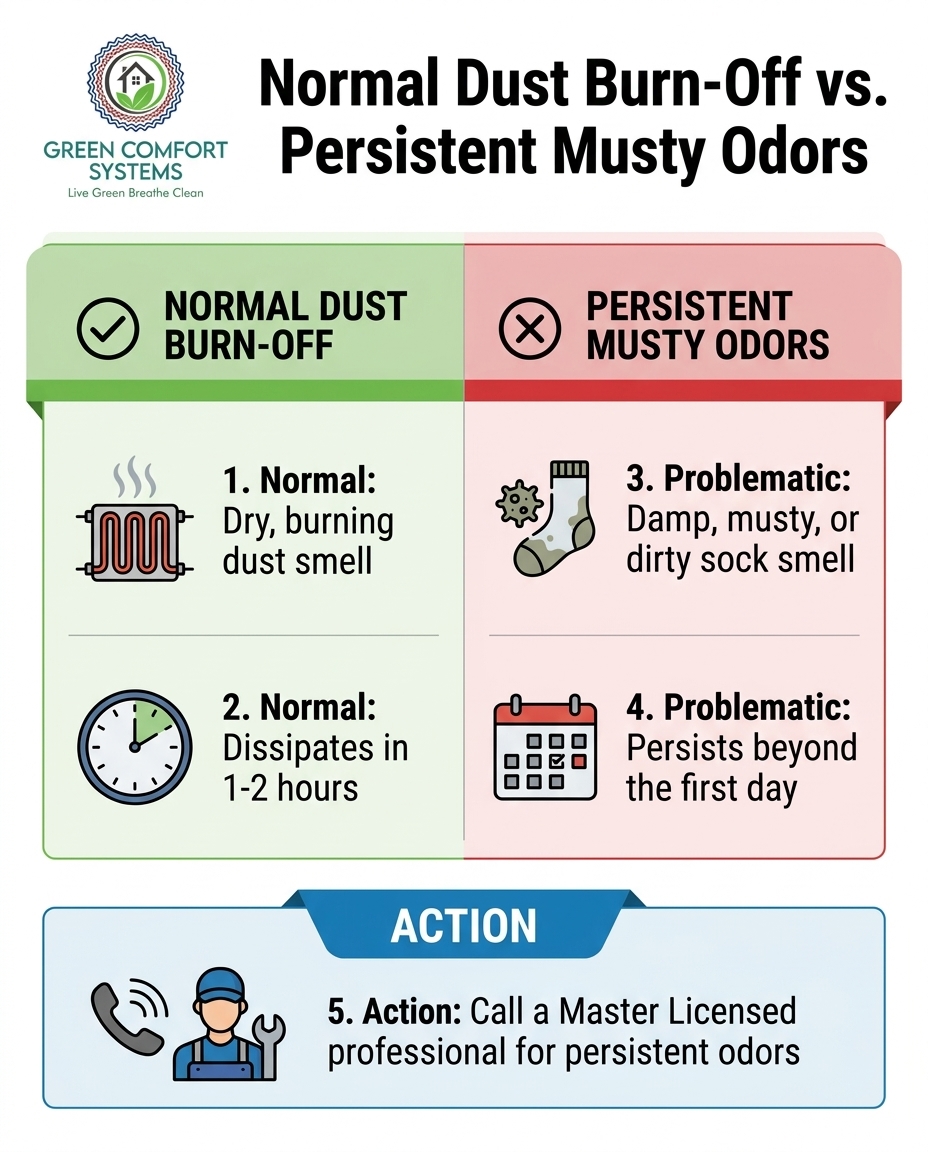
Normal dust burn-off is incredibly common. Even in a perfectly maintained home in Rosedale MD, a microscopic layer of dry dust will settle on the heat exchanger. When the furnace fires up for the first time, this dry dust incinerates safely inside the cabinet. The resulting smell is distinctly dry—often described as smelling like a hot clothing iron or a dusty radiator. Crucially, this normal burn-off odor typically dissipates completely within one to two hours of the first continuous heating cycle.
Recognizing Problematic Odors
Warning signs of a deeper issue sound the alarm when the smell leans heavily toward damp earth, mildew, or a pungent locker room scent, and most importantly, when it persists beyond the first day of heavy use. This specific damp scent is often referred to in the industry as dirty sock syndrome. It occurs when biological growth has heavily colonized the indoor coil or the heat exchanger, and the system is continuously blowing air over this active bacteria.
If you ignore a persistent musty smell, you are allowing your system to circulate compromised air throughout your living space, which can aggravate allergies and significantly reduce the overall efficiency of your equipment.
• Primary Scent — Normal Dust Burn-Off: Dry, hot dust, similar to a warm iron — Persistent Musty Odor (Problematic): Damp earth, mildew, or dirty gym socks
• Duration — Normal Dust Burn-Off: Fades entirely within 1 to 2 hours — Persistent Musty Odor (Problematic): Persists for days or returns every cycle
• Root Cause — Normal Dust Burn-Off: Light dry dust on the heat exchanger — Persistent Musty Odor (Problematic): Moisture buildup and biological growth
• Required Action — Normal Dust Burn-Off: Open windows for ventilation, let it run — Persistent Musty Odor (Problematic): Schedule a professional diagnostic tune-up
The Hidden Dangers of DIY Heat Exchanger Troubleshooting
When faced with a lingering smell, it can be tempting to remove the furnace panels and attempt to clean the internal components yourself. However, modern heating systems are highly complex, tightly engineered machines. Attempting DIY cleaning on internal heating components introduces severe safety risks and can easily cause expensive permanent damage to the unit.
The Fragility of Heating Components
The heat exchanger is the most critical safety component in your furnace. It acts as a metal shield that keeps toxic combustion gases entirely separate from the breathable air circulating through your home. The metal is designed to expand and contract with intense heat. If you attempt to scrub or vacuum this component using household tools, it is incredibly easy to scratch, dent, or even crack the metal. A cracked heat exchanger creates an immediate, life-threatening carbon monoxide risk, as those toxic gases can now leak directly into your ductwork.
Why Professional Tools Matter
Diagnosing the exact source of a musty smell requires specialized tools that the average homeowner simply does not possess. We rely on high-definition borescope cameras to inspect the deepest, hidden curves of the heat exchanger and the blower motor assembly. We use highly calibrated combustion analyzers to ensure no gases are leaking. Improper DIY cleaning not only risks your safety but will almost certainly void your manufacturer's warranty.
Operating as a family-owned business since 2016, our team prioritizes safety above all else. We strongly advise relying on a professional with an MD HVAC Master License #78268 to perform these intricate internal inspections, ensuring your home remains safe and your equipment remains fully protected.
How Our Master Licensed Technicians Safely Restore Your Indoor Air Quality
When you call in Green Comfort Systems to address a lingering heating odor, you are investing in a comprehensive, step-by-step process designed to eradicate the root cause of the smell safely. Our licensed technicians follow a strict protocol to ensure your system is restored to peak condition without risking damage to the delicate internal mechanisms.
1. Comprehensive Visual Inspection: The process begins with a detailed visual assessment. Using specialized cameras and lighting, the technician inspects the heat exchanger, the blower motor assembly, and the evaporator coil. We are specifically looking for dangerous soot buildup, cracked metal, or the biological growth that causes dirty sock syndrome.
2. Safe, Professional-Grade Cleaning: Once the source of the odor is identified, we use professional-grade, non-acidic cleaning agents to break down the bound dust and moisture. We safely remove the debris from the blower wheel and the cabinet interior using specialized vacuums that prevent the dust from becoming airborne in your living room.
3. Verification of Proper Airflow: Cleaning the components is only half the job. We then measure the static pressure and verify proper airflow throughout the system. Proper ventilation ensures that odors are permanently eradicated, not just temporarily masked. Restricted airflow often contributes to moisture buildup, so correcting this is vital for long-term freshness.
4. Targeted IAQ Recommendations: Finally, we evaluate your home's overall indoor air quality. Based on the amount of summer dust that settled in your system, we may recommend ongoing improvements, such as upgrading to a higher MERV-rated filtration system or installing a UV air purifier to proactively neutralize biological growth before it settles.
To keep your system running cleanly year after year, joining the Green Guardian Club maintenance plan is the most effective way to proactively manage these seasonal cleanings. Regular, scheduled maintenance under an MD HVAC Master License #78268 guarantees that your equipment is thoroughly prepped before the cold weather ever arrives, ensuring eco-friendly, safe indoor air for your family.
Addressing the Ductwork: The Final Step in Eliminating Damp Odors
Sometimes, the furnace itself is perfectly clean, yet the house still smells musty when the heat turns on. In our experience, when this happens, the problem usually lies within the distribution system. Your ductwork acts as the respiratory system of your home, and it is equally susceptible to the summer humidity that plagues Maryland.
The Impact of Unconditioned Spaces
Many homes route their ductwork through dark, unconditioned spaces like sweltering summer attics or damp crawlspaces. During July and August, the air inside the ducts is freezing cold from the air conditioner, while the air outside the ducts is hot and humid. This extreme temperature difference causes the ductwork to sweat, creating condensation along the interior walls of the metal or flex duct. Just like in the furnace cabinet, airborne dust sticks to this condensation, creating a damp, musty lining throughout the entire distribution network.
Targeted Cleaning for Winter Readiness
When the October heating startup pushes a massive volume of hot, dry air through these previously damp ducts, it bakes the settled dust lining the walls, pushing the musty smell straight into your bedrooms and living areas. If a furnace tune-up does not completely resolve the odor, targeted duct cleaning before winter is often the necessary next step.
Positioning comprehensive system care—covering both the heating unit and the ductwork—is the ultimate defense against poor winter air quality. Ensuring the entire pathway is clear of summer debris guarantees that the warm air reaching your family is as clean and fresh as possible.
Frequently Asked Questions About Fall Heating Odors
Why does my heater smell musty when I turn it on?
A musty smell usually occurs because dust and moisture have settled on your heating components during the idle summer months. When the heater turns on for the first time in Rosedale MD, it bakes this damp debris, releasing a mildew-like odor into the air. If the smell persists, it often indicates minor biological growth on the indoor coil.
Is it safe to run the heater if it smells like burning dust?
Yes, running the heater with a dry, burning dust smell is generally safe for the first cycle of the season. This is normal dust burn-off occurring as the heat exchanger incinerates settled particles. However, if the smell lasts longer than a few hours or is accompanied by smoke, you should turn the system off immediately and call a professional.
How long does the heating startup smell last?
Normal dust burn-off odors typically last between one and two hours during the initial heating cycle. Once the accumulated dry dust has been safely incinerated off the heat exchanger, the smell should fade completely. If a musty or burning smell lasts for multiple days, it requires professional diagnostic attention.
How do I get rid of the heater smell?
For normal burn-off, simply opening a few windows to ventilate the house while the furnace runs its first cycle is usually enough. If the smell is musty or persistent, you cannot get rid of it by simply waiting; you need to schedule a professional cleaning to physically remove the damp debris and biological growth from the internal components.
What is dirty sock syndrome in a heat pump?
Dirty sock syndrome is an industry term for a foul, damp odor that smells exactly like a locker room or dirty gym clothes. It is caused by a buildup of bacteria and mildew on the indoor evaporator coil, which thrives in the dark, damp environment created by summer cooling condensation.
Why should I hire a licensed professional for heating odors instead of cleaning it myself?
Cleaning internal heating components requires dismantling safety shields and working directly with the fragile heat exchanger. A licensed professional possesses the specialized tools and training to clean these areas without cracking the metal, which would otherwise risk a deadly carbon monoxide leak and void your manufacturer's warranty.
Breathe Easier This Winter: Schedule Your Diagnostic Tune-Up Today
Peace of mind during the winter months comes directly from knowing exactly what is circulating in your home's air. Ignoring a persistent musty odor during your fall startup doesn't just subject your family to unpleasant smells; it can lead to decreased heating efficiency, higher energy usage, and poorer respiratory health as airborne debris continually cycles through your living spaces.
Do not wait for the deep winter freeze to arrive before addressing your indoor air quality. Schedule a comprehensive diagnostic inspection with our highly rated, locally trusted team today. Backed by an MD HVAC Master License #78268, a 4.9★ rating with over 480+ Google reviews, and recognized with a Baltimore Magazine "Best of Baltimore" HVAC 2025 award, we ensure your heating system operates safely, cleanly, and reliably all season long. Should your startup issue require immediate attention, our after-hours emergency repair available means you're never left in the cold. And if it's time for a system replacement, we offer free installation estimates—plus, federal tax credits and utility incentive programs may apply to qualifying high-efficiency upgrades (be sure to verify current programs with your utility provider or tax professional).
Book Expert Service Or Contact Us
Other Blogs


Get Financing Today
Get the comfort you deserve, without the financial stress.

Latest Blogs
Clearing the Air: How We Handle Lingering Musty Odors During Your October Heating Startup
Furnace Maintenance Tips: Troubleshooting the First October Startup
Troubleshooting Your October Heating Startup in Rosedale: What's Normal and What's Not
