





How to Fix AC Leaking Water from Ceiling in Maryland Homes

Why AC Leaking Water from the Ceiling Is a Serious Problem in Maryland Homes
If you're dealing with ac leaking water from ceiling causes and fixes in a maryland home, here's a quick summary of what's likely happening and what to do:
Most common causes:
- Clogged condensate drain line (algae or debris buildup)
- Frozen evaporator coils from a dirty air filter or low refrigerant
- Cracked or rusted condensate drain pan
- Failed condensate pump
- Improper installation or poor drainage slope
What to do right now:
- Turn off your AC at the thermostat immediately
- Place a bucket under any active drip
- Check and replace your air filter
- Document the damage with photos
- Call a licensed HVAC technician — especially if water is near electrical components or soaking into drywall
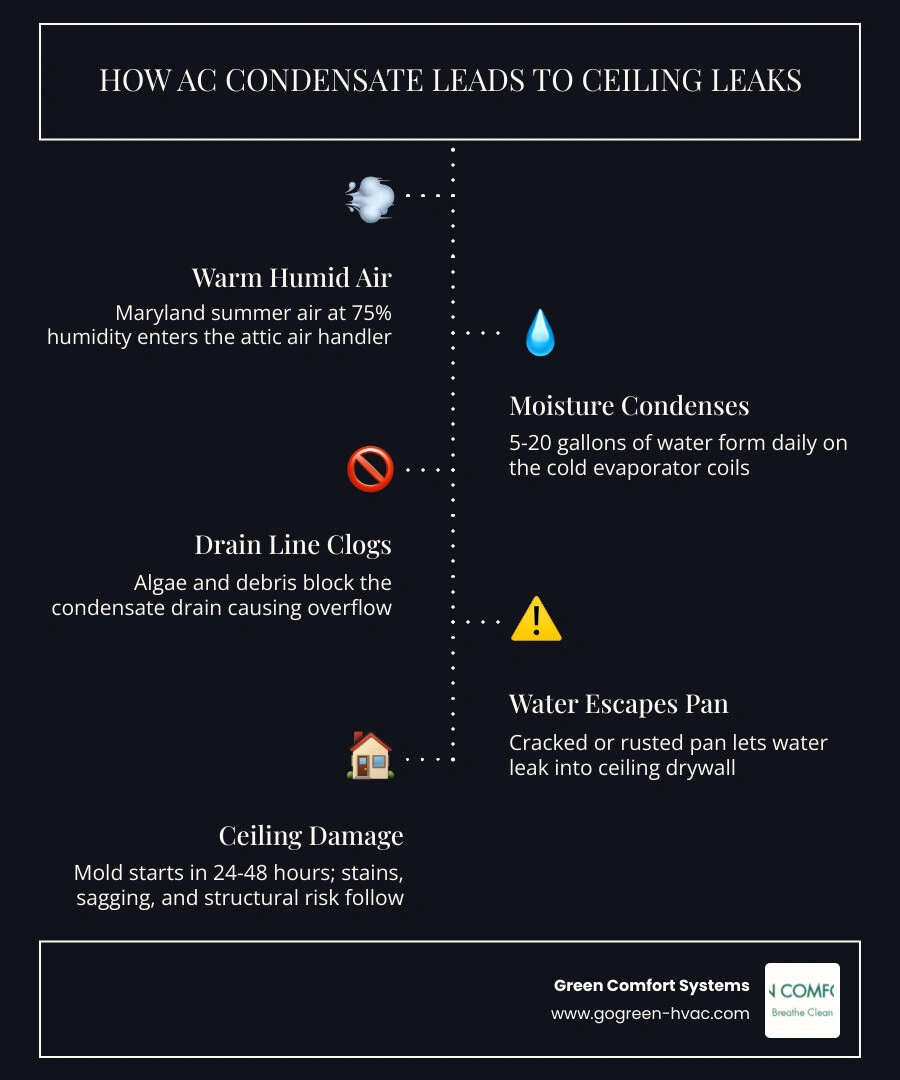
You walk into a room and notice a water stain spreading across your ceiling near an AC vent. Or worse, you see a slow drip turning into a puddle on your floor. In Maryland, this is not a rare situation. Baltimore averages 75 percent relative humidity during summer, and a typical residential AC system can pull 5 to 20 gallons of condensate out of the air every single day. That is a lot of water moving through your drainage system — and when something goes wrong, it often shows up first as a ceiling leak.
Maryland homes face a specific challenge here. Older housing stock, attic-mounted air handlers, and long stretches of intense summer humidity put local AC systems under real strain. When a drain line clogs, a pan rusts through, or coils freeze over, that water has to go somewhere — and it usually finds the path of least resistance right through your ceiling. Mold can begin growing within 24 to 48 hours of water exposure, which means a slow drip today can become a costly remediation job by the weekend.
This guide walks you through exactly how to identify the cause, contain the damage, and get the right fix — fast.
Understanding AC Leaking Water from Ceiling Causes and Fixes in a Maryland Home
When your air conditioner runs, it does two things: it cools the air and it dehumidifies your home. As warm, humid air passes over the cold evaporator coils, moisture condenses on the coils, just like water droplets forming on a cold glass of sweet tea on a hot July afternoon.
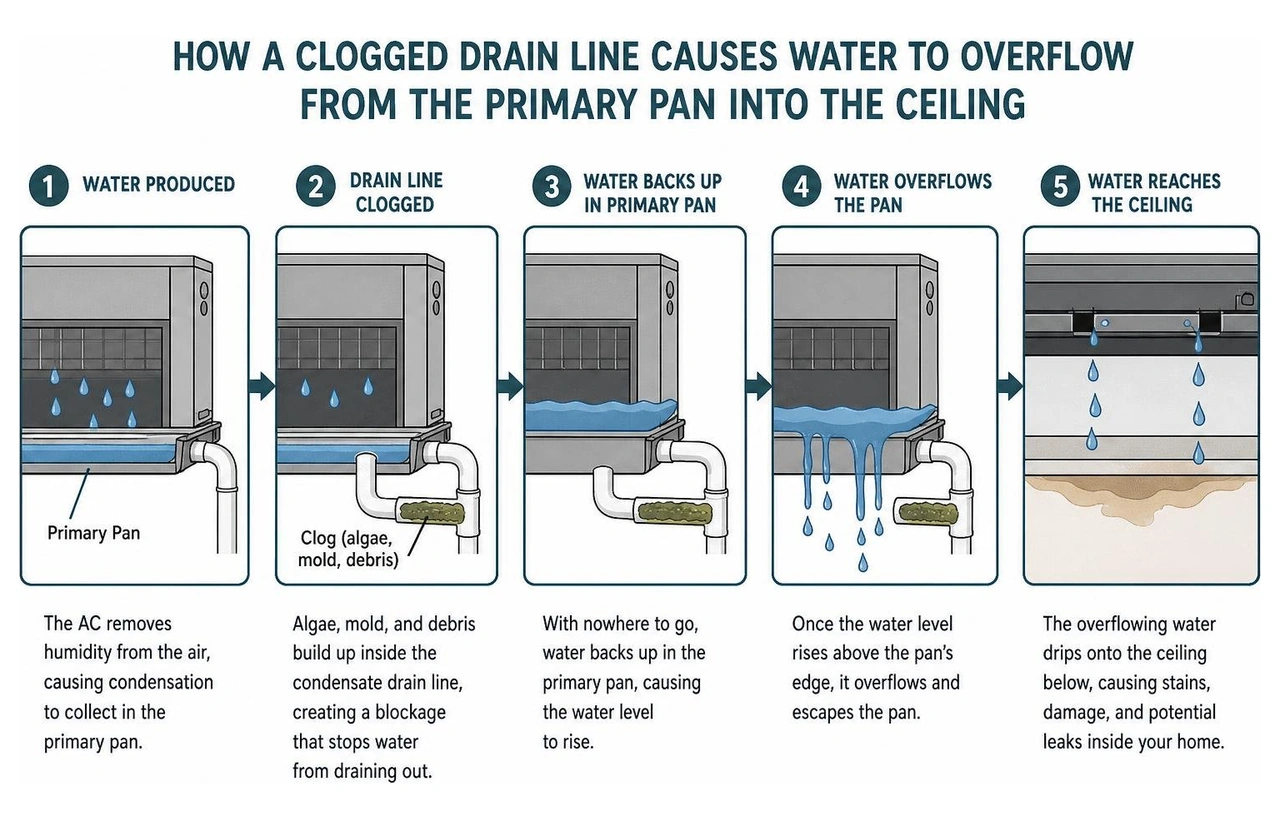
Under normal conditions, this water drips off the coils into a primary drain pan, flows through a condensate drain line, and exits your home safely. However, when your air handler is located in your attic — as is common in many multi-story homes across Towson, Ellicott City, and Glen Burnie — any failure in this drainage path means gravity will bring that water straight down into your ceiling.

Here are the primary technical reasons why this happens:
- Clogged Condensate Drain Line: Over time, algae, mold, dust, and biological slime build up inside the narrow 3/4-inch PVC drain line. When the line is completely blocked, the water backs up into the drain pan and overflows.
- Frozen Evaporator Coils: If airflow is restricted or refrigerant is low, the temperature of the coils drops below freezing. Ice builds up on the coils. When the system cycles off or can no longer maintain the ice, a massive volume of water melts all at once, completely overwhelming the drain pan.
- Cracked or Rusted Drain Pan: Older air handlers often feature metal drain pans. Over a decade or more of constant water exposure, these pans can rust through. Plastic pans can also degrade and crack due to attic heat fluctuations.
- Failed Condensate Pump: If your system relies on a pump to push water up and out of a basement or tight attic space, a motor failure or stuck float switch will cause immediate water backup.
- Improper Installation or Poor Slope: Condensate drainage relies on gravity. If the drain line or the primary pan was not installed with a proper downward slope, water pools in the system until it spills over the sides.
How Maryland's Humidity Triggers AC Leaking Water from Ceiling Causes and Fixes in a Maryland Home
Our local climate plays a massive role in how often these leaks occur. Maryland summers are notoriously soupy. With relative humidity levels in Baltimore frequently hovering around 75 percent and dew points regularly climbing into the high 60s and low 70s, your air conditioner has to work double-time as a dehumidifier.
A system running in a dry climate might only produce a couple of gallons of water a day. In Maryland, that same system can easily generate up to 20 gallons of water daily. This high volume means even a partial restriction in your drain line can trigger a major overflow in a matter of hours.
Furthermore, our region features beautiful, historic housing stock in areas like Catonsville and Severna Park. Many of these older homes were retrofitted with central air decades after they were built. This often resulted in air handlers being squeezed into tight, unconditioned attic spaces where high heat accelerates algae growth in drain pans, and cramped mechanical quarters make regular maintenance difficult. If you haven't scheduled professional upkeep lately, it's highly recommended to look into AC Maintenance Pikesville MD to ensure your drainage system is thoroughly cleared before the peak of summer.
Warning Signs of a Ceiling AC Leak Before Disaster Strikes
You don't always have to wait for a literal downpour in your living room to know there is a problem. Catching the signs of a leak early can save you from replacing large sections of drywall. Watch out for these warning signs:
- Musty or Damp Odors: If you smell a persistent earthy, moldy odor near your vents or in the rooms directly beneath your attic, water is likely pooling somewhere it shouldn't be.
- Peeling, Bubbling, or Cracking Paint: Water traveling down the back of your drywall will cause the latex paint on your ceiling to lose its adhesion, creating soft bubbles or cracks.
- Water Stains or Rings: A faint yellow, brown, or dark ring on your ceiling is a classic sign of an active, slow drip.
- Sagging Drywall: Drywall acts like a sponge. As it absorbs water, it becomes heavy and begins to sag. If you notice a dip in your ceiling, keep clear—it is at risk of collapsing.
- Strange Dripping or Sloshing Noises: While some operational sounds are normal, hearing water dripping inside your walls or ceiling is a clear red flag. If you are trying to determine if a sound is normal, check out our guide on How to Identify Strange AC Noises.
Step-by-Step Guide to Diagnosing Your Ceiling Leak
If you suspect your air conditioner is the source of the water dripping from your ceiling, you can perform a safe, systematic visual inspection to confirm your suspicions before calling in the professionals.
- Step 1: Shut Down the System: Never inspect an active, running HVAC unit. Turn the system off at the thermostat and shut off the dedicated breaker.
- Step 2: Locate Your Attic Air Handler: Carefully access your attic space using a sturdy ladder. Ensure you only step on the wooden ceiling joists, as stepping on the drywall floor will cause you to fall through the ceiling.
- Step 3: Inspect the Secondary Drain Pan: Most attic systems feature a large metal or plastic secondary drain pan sitting directly beneath the unit. If this pan is filled with water, your primary drain line is clogged.
- Step 4: Check the Float Switch: Look for a small plastic device wired into your drain line or attached to the side of the secondary pan. If the float is raised to the top, it means water levels have reached a critical point.
- Step 5: Examine the Air Filter: Pull out your air filter. If it is completely matted with dust, it has restricted the airflow, which can freeze your system. If your unit has been struggling to cool your home alongside the leak, you might also be dealing with an AC Blowing Warm Air scenario.
Checking for a Clogged Condensate Drain Line
The single most common culprit behind an ac leaking water from ceiling causes and fixes in a maryland home is a clogged condensate drain line. Over the course of a humid summer, algae and mold thrive inside the dark, wet PVC pipe.
To check for a clog, locate the outdoor termination point of your drain line—usually a white PVC pipe dripping near your outdoor condenser unit. If your AC is running but you don't see any water dripping outside, yet your indoor ceiling is wet, the line is blocked.
How to Clear a Minor Clog:
- The Wet/Dry Vacuum Method: Go outside to the end of the PVC drain line. Secure the hose of a wet/dry vacuum to the pipe using a towel or duct tape to create a tight seal. Turn the vacuum on for 10 to 15 seconds to suck out the algae clog and built-up water.
- The Vinegar Flush: Locate the T-shaped cleanout port on the PVC line near your indoor air handler. Pour one cup of distilled white vinegar down the line. Let it sit for 30 minutes to break down algae, then flush it with warm water. Note: Never use harsh chemical drain cleaners, as they can melt the PVC glue and damage your pipes.
If the clog is stubborn or located deep within your home's walls, you will need professional equipment. Reach out to our team for reliable AC Repair Abingdon MD to safely clear the line without damaging your plumbing.
Inspecting for Frozen Evaporator Coils and Low Refrigerant
A frozen evaporator coil is another frequent cause of ceiling leaks. When airflow is blocked by a dirty filter, or if your system is low on refrigerant, the coil's temperature drops below 32 degrees Fahrenheit. Moisture from the air freezes instantly on contact, turning your air handler into a solid block of ice.
When that ice eventually melts—either because you turned the system off or because the compressor finally overheated—it creates a deluge of water that easily overflows the narrow primary drain pan.
How to check for a frozen coil:
- Look for ice forming on the copper refrigerant lines leading into your indoor unit.
- Check if the air coming out of your vents feels weak or warm.
- Listen for a hissing sound, which often indicates a refrigerant leak.
If you suspect your coils are freezing up, turn off the cooling mode immediately and switch your thermostat's fan setting to "ON." This runs the fan without the compressor, helping to safely melt the ice. Running a frozen system will only cause further damage. If your system is experiencing this issue, you can read more about what to do when your AC Not Cooling properly.
Immediate Actions: How to Stop and Contain the Water Damage
When water is actively dripping from your ceiling, you must act quickly to minimize structural damage and prevent mold growth. Use the table below to understand what you can handle immediately and what requires professional intervention.
| Action Step | DIY Temporary Containment | Professional HVAC Repair |
|---|---|---|
| System Control | Shut off the AC at the thermostat and breaker immediately. | Diagnose electrical shorts and restore safe system operation. |
| Water Containment | Place a bucket under the drip; use towels to dry floors. | Flush the drain line, repair cracked pans, and replace failed pumps. |
| Ceiling Pressure | Carefully poke a tiny hole in the center of bulging drywall to drain pooled water safely. | Assess structural integrity of the ceiling and repair drywall. |
| Airflow & Drying | Set up household fans and dehumidifiers to dry the room. | Check ductwork for internal water intrusion and mold. |
By shutting off the system, you stop the production of new water. Placing a bucket under the leak prevents the water from ruining your flooring or subfloor. If you notice a large bulge in your ceiling drywall, water is pooling on top of it. Poking a small hole in the center of the bulge with a screwdriver allows the water to drain cleanly into a bucket, preventing the entire sheet of drywall from getting too heavy and collapsing.
When to Call a Professional for AC Leaking Water from Ceiling Causes and Fixes in a Maryland Home
While clearing a simple drain line clog with a shop vac is a manageable DIY task, many ceiling leak scenarios require the tools and expertise of a licensed technician. You should call for professional help immediately if:
- Water is dripping near electrical fixtures: If water is leaking through a ceiling fan, light fixture, or electrical outlet, do not touch the switches. Turn off the power at your main breaker panel and call us immediately.
- The ceiling is sagging or severely damaged: Structural wood rot and drywall collapse are serious safety hazards.
- The leak returns after cleaning the drain line: This points to a deeper issue, such as an improper drain slope, a cracked primary pan, or a refrigerant leak.
- You suspect a refrigerant issue: Handling refrigerant requires specialized tools and EPA certification.
If you live in the southern parts of our service area, you can easily schedule expert assistance through our AC Services Arnold MD page. For homeowners looking to completely upgrade an older, leak-prone system with modern, high-efficiency equipment, our team also specializes in AC Installation Crownsville MD.
Frequently Asked Questions About Ceiling AC Leaks
Can I run my AC if it is leaking water from the ceiling?
No, you should never run your air conditioner if it is actively leaking water into your home. An AC system can produce up to 20 gallons of water a day in Maryland's humid climate. Continuing to run the system will continuously dump water into your ceiling, leading to drywall collapse, ruined insulation, structural wood rot, and mold growth.
Additionally, running a system with a frozen coil or low refrigerant can destroy the compressor—the most expensive component of your system. If you hear unusual sounds when trying to operate your system during a leak, refer to our helpful article on AC Making Clicking Sounds to understand what those noises mean.
How fast does mold grow after an AC ceiling leak?
Mold can begin to colonize wet surfaces within 24 to 48 hours of water exposure. Because attic leaks saturate drywall and fiberglass insulation—both of which are highly porous, organic materials—they create the perfect breeding ground for mold spores.
If you ignore a ceiling leak for even a couple of days, you are no longer just dealing with an HVAC repair; you are looking at a complex mold remediation process. This is why immediate system shutdown and quick drying are so critical.
What is a condensate float switch and do I need one?
A condensate float switch (often called a safety switch) is a small electrical device installed on your drain line or secondary drain pan. It features a buoyant float that rises if water backs up. Once the water reaches a certain level, the switch automatically cuts power to your outdoor condenser, stopping the cooling cycle and preventing any further water production.
If your attic air handler does not have a float switch installed, you absolutely need one. It is a simple, highly effective safety device that can save you from thousands of dollars in water damage repairs.
Conclusion
A water leak from your ceiling is stressful, but understanding the causes and acting quickly can prevent a minor drip from turning into a major home restoration project. From clearing clogged drain lines to diagnosing frozen coils, keeping your home dry and comfortable during Maryland's humid summers requires a proactive approach.
At Green Comfort Systems, based in Rosedale, MD, we are proud to serve families across Catonsville, Dundalk, Ellicott City, Forest Hill, Glen Burnie, Halethorpe, Joppa, Middle River, Perry Hall, Severna Park, and Towson. We do things differently by focusing on highly efficient, eco-friendly operations. Through our proud partnership with One Tree Planted, we plant a tree for every service we complete, helping to keep Maryland beautiful and green.
The best way to prevent ceiling leaks is with regular, professional maintenance. Our Green Guardian Club maintenance plan provides twice-yearly tune-ups where we thoroughly flush your drain lines, test safety float switches, and inspect your drain pans before the summer heat hits.
If you are currently dealing with a ceiling leak or want to protect your home from future water damage, contact us today or visit our AC Services Baltimore MD page to schedule a professional diagnostic visit. Let us help you keep your home cool, dry, and comfortable!
Book Expert Service Or Contact Us
Other Blogs


Get Financing Today
Get the comfort you deserve, without the financial stress.

Latest Blogs

Choosing Between Emergency Weekend Repair and Monday Scheduling for a Failing Heat Pump in Severna Park

Smart Thermostats vs. Programmable Models for Managing Unpredictable October Weather in Middle River

How Our Fully Stocked Trucks Enable Under-an-Hour Heat Pump Repairs in Owings Mills
