





The Burning Smell When You First Turn on Your Furnace in September: Normal vs. Dangerous

That First Chilly Fall Night: Why Your Furnace Smells Like It's Burning
The transition from summer to autumn brings a familiar routine, but dealing with the burning smell when you first turn on your furnace in September: normal vs. dangerous is a distinction every homeowner needs to understand immediately. On that first chilly September night, reaching for the thermostat to switch the system from cooling to heating is an automatic reflex. Within minutes, however, a distinct burning odor begins filtering through the vents, filling the living room and hallway. For many, this triggers instant panic. You are immediately faced with a critical decision point: is it safe to open the windows and wait for the smell to dissipate, or does the system require an emergency shutdown to prevent a fire?
Most initial odors are simply harmless dust burning off after months of inactivity, but specific, sharp scents can indicate severe electrical or mechanical faults that put your home at risk. Understanding the difference between a routine seasonal burn-off and a true hazard is the key to protecting your property. At Green Comfort Systems, we field dozens of calls every September from concerned homeowners. For residents seeking reliable heating services, our team wants to help you evaluate these early warning signs to ensure your equipment operates safely throughout the colder months.
The Science Behind the 'First Cycle' Furnace Odor
To understand why your heating system produces such a noticeable smell after sitting idle, it helps to look at the physical mechanics of the equipment during the off-season. Throughout the summer, the heating components of your system—specifically the heat exchanger and the burner assembly—sit completely dormant. While your air conditioner works overtime to cool the house, the furnace's internal heating chambers remain cold and inactive.
Here is where the local climate plays a major role. In our years of servicing HVAC units in Rosedale MD and surrounding Baltimore County, we've seen how the mid-Atlantic transition from high summer humidity to cooler fall temperatures creates a unique environment inside your ductwork and HVAC cabinet. The heavy, moisture-laden summer air causes airborne particulates—such as common household dust, pet dander, pollen, and cooking aerosols—to cake and stick stubbornly onto the cold metal surfaces of the idle heat exchanger. Instead of simply blowing away, this debris forms a fine, insulated layer over the heating elements.
When you finally initiate the first heating cycle of the season, the burners ignite, and the heat exchanger rapidly climbs to temperatures exceeding several hundred degrees. This sudden, intense heat instantly incinerates the caked-on dust and dander. Because the blower motor is simultaneously pushing air over these freshly heated surfaces and out into your home, the smell of that incinerated debris is carried directly into your living spaces. This specific type of burn-off is a completely expected physical reaction and a standard part of the seasonal transition.
The Wait-It-Out Checklist: Recognizing Normal Dust Burn-Off
If you are experiencing a burning odor on the first chilly September night of the year, your first step is to evaluate the sensory profile of the smell. Normal dust burn-off has a very specific signature that distinguishes it from a dangerous malfunction. We advise our customers to use this checklist to determine if you can safely wait it out:
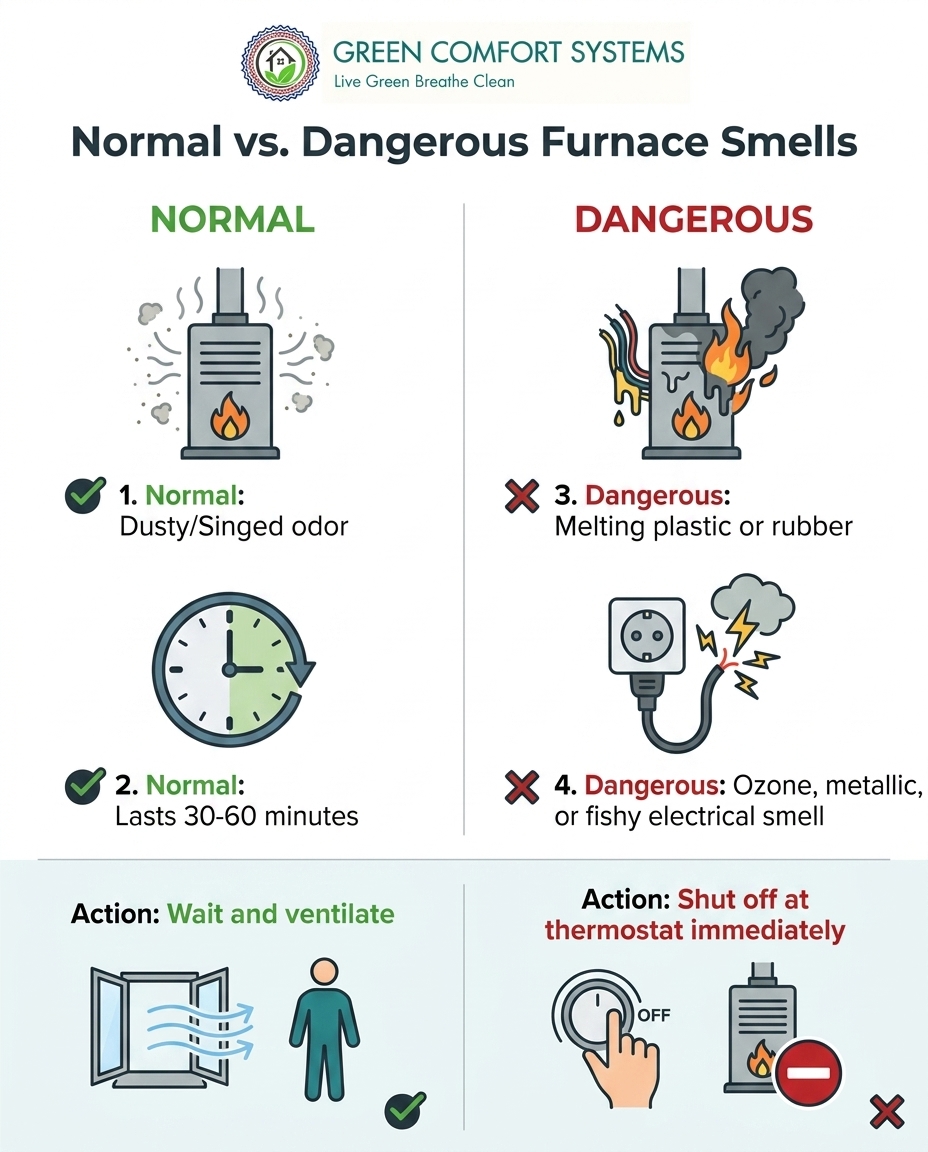
• Identify the specific scent: A normal burn-off smells dry, dusty, or slightly singed. Many homeowners compare it to the smell of a hot clothes iron that has been left on the board too long, or the initial odor of a portable space heater powering up. It should not smell toxic, chemical, or metallic.
• Monitor the safe timeline: Normal burn-off odors are temporary. The smell should peak within the first 10 to 15 minutes of the heating cycle and begin to dissipate noticeably within 30 to 60 minutes. If the heater runs for an hour and the smell is just as strong, it is no longer considered a standard burn-off.
• Ventilate the home safely: If the smell matches the dusty profile, it is generally safe to open a few windows to cross-ventilate the house while monitoring the system. This helps clear the incinerated particulates from your indoor air faster.
• Listen for accompanying sounds: A normal dust burn-off should happen quietly. The furnace should sound like it normally does—a steady hum of the blower motor and the rush of air. The smell should not be accompanied by loud banging, screeching, grinding, or rattling noises, which indicate mechanical distress.
Red Flags: When a Burning Smell Means Danger
While dust burn-off is harmless, other odors are urgent warning signs. Heating equipment is a leading cause of home fires, according to the National Fire Protection Association (NFPA), making it critical to accurately identify electrical or mechanical odors. If the smell coming from your vents does not match the dry, dusty profile, you must take immediate action. Our team's safety-first approach at Green Comfort Systems emphasizes the importance of rapid hazard identification over simply pushing standard repairs. Knowing when to shut the system down can save your home.
Follow these steps if you detect a dangerous odor:
1. Identify the scent of melting plastic or rubber: This heavy, toxic smell often points to failing wire insulation, a seized overheating blower motor, or a foreign object (like a child's toy) that has fallen into the ductwork and is melting against the heat exchanger.
2. Recognize the 'ozone' or electrical fire smell: Often described as a sharp, metallic, or strangely "fishy" odor, this indicates that electrical components are sparking, short-circuiting, or actively melting. This requires immediate intervention.
3. Execute the safety protocol: Do not wait to see if an electrical or plastic smell goes away. Immediately walk to your thermostat and switch the system to the "OFF" position. Do not attempt to open the furnace cabinet to investigate the wiring yourself, as this exposes you to high-voltage risks and potential flare-ups.
4. Call for professional diagnostics: Once the system is powered down, contact a licensed technician to inspect the wiring, circuit boards, and motors. Addressing these issues early often prevents catastrophic equipment failure.
Electrical Odors vs. Mechanical Odors
Understanding the difference between electrical and mechanical failures can help you communicate the problem effectively to your technician. Neither of these smells will fade away like seasonal dust.
• Electrical — Sensory Description: Sharp tang, metallic, ozone, or fishy smell. — Common Causes: Failing circuit boards, melting wire insulation, short circuits. — Required Action: Immediate shutdown at thermostat; requires professional furnace gas valve repair and troubleshooting or electrical assessment.
• Mechanical — Sensory Description: Heavy friction smell, burning rubber, accompanied by grinding or screeching. — Common Causes: Seized blower motor bearings, snapped or slipping fan belts. — Required Action: Immediate shutdown at thermostat to prevent motor burnout.
What to Do If the Burning Smell Lingers
Sometimes, the smell doesn't fit the dangerous profile of melting plastic or electrical ozone, but it stubbornly refuses to dissipate after the normal 60-minute window on that first chilly September night. When a dry, dusty smell lingers for hours or returns every time the furnace cycles on, it usually points to a severe airflow restriction or a buildup of debris that the system cannot clear on its own.
The most common culprit for a lingering dusty smell is a severely clogged air filter. If the filter was not changed at the end of the summer cooling season, it is likely packed with months of dust, pollen, and pet dander. When the furnace pulls air through this clogged barrier, it continuously introduces stale, dusty air into the heating chamber, perpetuating the odor. Replacing the filter is the first and easiest troubleshooting step you can take.
If a fresh filter doesn't solve the problem, excess debris in the ventilation system may be continuously circulating unpleasant odors even after the heat exchanger itself is clean. You can visually inspect accessible return vents for heavy blockages, but avoid dismantling any equipment. In some cases, severe organic buildup requires deep intervention. Just last fall, our technicians helped a local homeowner whose split units developed a persistent, unpleasant moldy smell after going uncleaned for several years. We had to disassemble the equipment, perform a thorough deep clean, and install a replacement part to completely eliminate the odor. For homes that struggle with chronic seasonal odors, investing in professional indoor air quality solutions—such as UV purifiers or heavy-duty filtration upgrades—can drastically reduce the particulates that cause these lingering smells.
Preventing the Panic: The Value of Pre-Season HVAC Inspections
The best way to handle the anxiety of a burning smell is to prevent it from happening in the first place. Transitioning from reactive troubleshooting to proactive seasonal maintenance is a pattern we see often among responsible homeowners in Rosedale MD and surrounding Baltimore County. A professional fall tune-up addresses the root causes of seasonal odors before the system is ever turned on for the winter.
During a comprehensive pre-season inspection, a technician physically cleans the heat exchanger, removing the caked-on summer dust and dander. Because this debris is wiped away manually, there is nothing left to incinerate when the burners ignite, completely bypassing the dreaded first-cycle burning smell. Beyond just cleaning, these tune-ups involve critical safety checks. Technicians test electrical connections to ensure they are tight and corrosion-free, verify the health of the blower motor, and calibrate the thermostat for accurate heating.
Routine maintenance also extends the lifespan of the equipment and prevents unexpected mid-winter breakdowns. We frequently see the benefits of this proactive approach; in one instance, a regular customer of ours required pre-season maintenance on their heating system to ensure reliability. Our technician arrived on time, thoroughly explained the maintenance process, and completed the tune-up efficiently, leaving the system running safely and smoothly for the rest of the season. Additionally, a tune-up is an excellent time to request a professional ductwork inspection to identify accumulated debris, leaks, or breaches that might be pulling dusty attic or crawlspace air into your living areas.
Evaluating Your Heating Options for the Season Ahead
If your furnace is consistently producing chronic electrical smells, rattling loudly, or requiring frequent repairs, it may be reaching the end of its safe operational life. A heating system that repeatedly triggers your safety concerns on that first chilly September night is not one you want to rely on when temperatures drop below freezing.
When evaluating your options, we like to remind homeowners that modern heating alternatives offer cleaner, odor-free operation without the severe seasonal dust burn-off associated with older gas furnaces. Transitioning to efficient electric options can provide both heating and cooling in a single, streamlined system. These modern units operate without combustion chambers, eliminating the risk of carbon monoxide leaks and drastically reducing the harsh odors associated with burning off organic debris.
Upgrading your system is an investment in your home's safety and comfort. If you decide to explore these modern alternatives, prioritizing heat pump maintenance and installation can offer long-term energy savings. Furthermore, when considering a system upgrade, we always recommend consulting with your local utility providers. There are often generic energy rebates, federal tax credits, or utility incentive programs available for homeowners who transition to high-efficiency electric heating systems, making the upgrade more accessible and rewarding.
Frequently Asked Questions About Fall Furnace Odors
How long does the burning smell last when you turn on the heater?
A normal dust burn-off smell should peak within the first 10 to 15 minutes of the heating cycle and begin to fade shortly after. Generally, the odor will completely dissipate within 30 to 60 minutes. If the smell persists for several hours or returns every time the furnace turns on, it indicates a clogged filter or a larger mechanical issue that requires attention.
Is it normal for a heater to smell like burning plastic?
No, a heater should never smell like burning plastic or melting rubber. This distinct, toxic odor usually indicates failing wire insulation, an overheating motor, or a foreign object melting inside the ductwork. If you smell burning plastic, you should immediately turn off the system at the thermostat and call a professional technician.
Can a furnace catch fire from accumulated dust?
While the standard amount of household dust that accumulates over the summer is safely incinerated by the heat exchanger, extreme neglect can pose a hazard. If a furnace is entirely packed with dense debris, pet hair, and completely blocked filters, it can restrict airflow enough to cause the system to overheat. Routine maintenance in Rosedale MD and surrounding Baltimore County prevents this buildup from becoming dangerous.
What does an electrical fire in a furnace smell like?
An electrical fire in an HVAC system produces a sharp, metallic, or "ozone" smell, which some people describe as smelling vaguely like fish or melting wires. This is vastly different from the dry smell of dusty burn-off. An electrical odor is a severe red flag that requires an immediate system shutdown to prevent a house fire.
Should I open my windows when the furnace smells like burning dust?
Yes, if you have identified the smell as a normal, dry dust burn-off, it is perfectly safe to open your windows. Cross-ventilating the house for 15 to 20 minutes will help push the incinerated particulate matter out of your indoor air faster, clearing the odor while the furnace finishes its initial cycle.
Why does my heater smell funny even after I changed the filter?
If you have installed a fresh air filter but the heater still smells dusty or stale, the ductwork itself may be heavily contaminated with debris, mold, or pet dander. Alternatively, the blower motor could be covered in grime that the filter cannot catch. Persistent smells after a filter change usually require a professional deep cleaning of the HVAC cabinet and ventilation system.
Ensure a Safe, Odor-Free Start to Your Heating Season
Navigating that first chilly September night shouldn't involve panic or uncertainty. By understanding the clear criteria that separate a normal dust burn-off from a dangerous electrical fault, you gain the peace of mind that comes from knowing your home is safe. Never ignore lingering odors, melting plastic scents, or sharp metallic smells. If your system exhibits any red flags, or if a dusty smell refuses to fade after an hour, prioritize your family's safety. Schedule a professional evaluation with our team today to ensure your heating system is clean, secure, and ready to handle the deep winter cold ahead.
Book Expert Service Or Contact Us
Other Blogs


Get Financing Today
Get the comfort you deserve, without the financial stress.

Latest Blogs

Why Fast Access to Replacement Parts Matters for Your Rosedale Heating Repair

Pre-Winter HVAC Inspections: Finding the Hidden Wear and Tear Before the November Rush

Choosing Between Emergency Weekend Repair and Monday Scheduling for a Failing Heat Pump in Severna Park
