





Preparing Your Severna Park Waterfront Property for the Heating Season

The Hidden Cost of Waterfront Living: Defending Against Severn River Winds
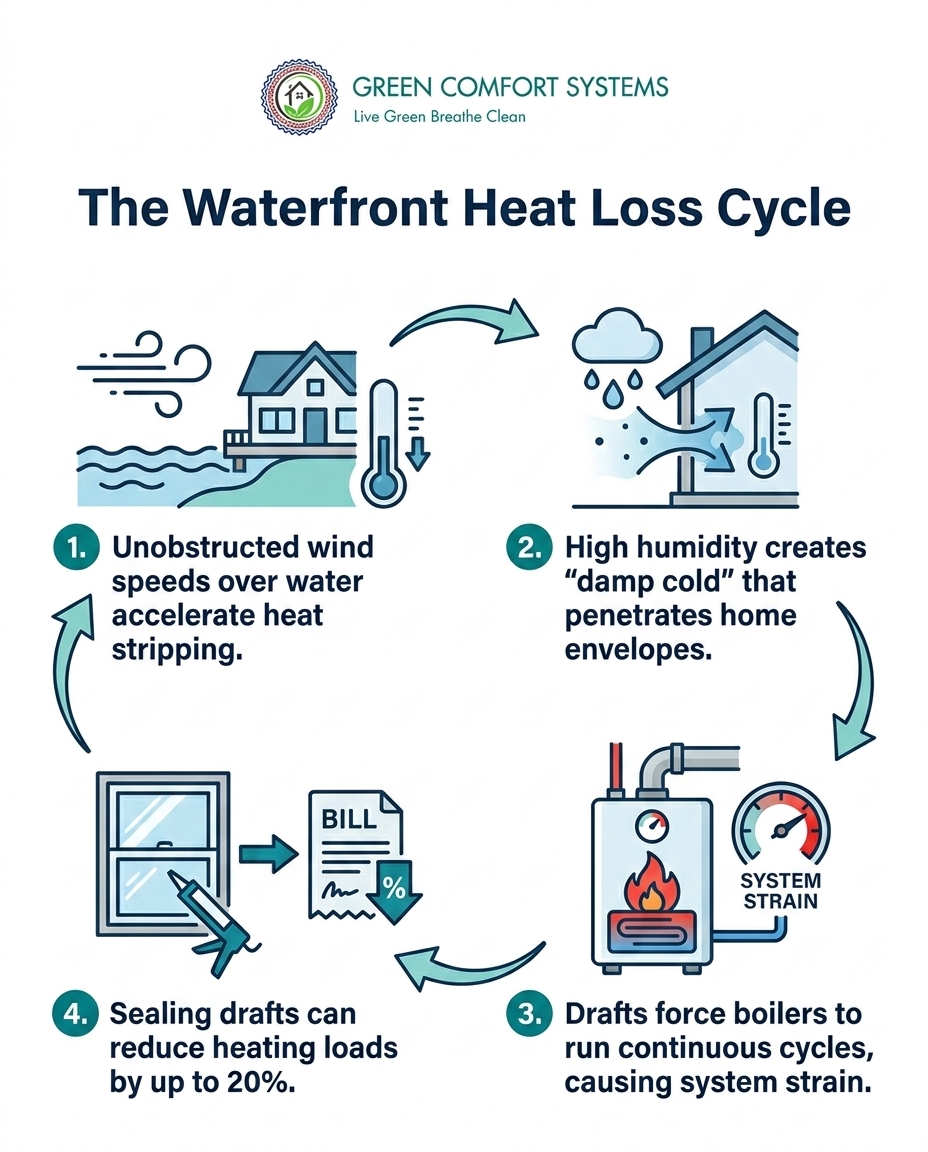
Your boiler is running nonstop, but the house still feels drafty and cold. Preparing your Severna Park waterfront property for the heating season requires more than a standard checklist because river winds completely change the thermal dynamics of your home. The unobstructed gusts sweeping off the Severn River can strip the heat directly from your home's envelope, pushing your heating equipment to its absolute limits before winter has even officially begun.
For comprehensive protection against coastal chill, investing in professional heating services is your first line of defense.
The Reality of the Riverfront Microclimate
Living on the water offers incredible views, but it also exposes your property to a unique set of environmental challenges. Inland homes benefit from natural windbreaks—trees, neighboring houses, and uneven terrain—that slow down winter gusts. On the Severna Park waterfront, the Severn River provides a long, frictionless runway for cold air. By the time those winds hit your siding and windows, they are carrying maximum force.
This relentless wind exposure drastically increases your home's rate of heat loss. Even if your thermostat is set to a comfortable 70°F, the continuous barrage of cold air against the exterior walls accelerates thermal transfer. The heat inside your home is literally pulled outside, forcing your boiler or furnace to work twice as hard just to maintain a baseline temperature. Addressing this extreme heat loss is the primary decision point for any homeowner looking to secure their property before the harsh weather arrives.
The bottom line: Standard winterization techniques are designed for average suburban environments. Waterfront properties demand a proactive, heavy-duty approach to draft mitigation and mechanical preparation to survive the winter without excessive energy waste or catastrophic system failure.
The Science of 'Damp Cold' and Unobstructed Wind Chill
To truly protect your home, you have to understand the specific meteorological forces at play. The Severn River doesn't just deliver fast-moving air; it delivers moisture-heavy air. This combination creates a phenomenon commonly known as "damp cold," which behaves very differently from the dry cold experienced further inland.
How Moisture Defeats Standard Insulation
Water conducts heat much faster than air. When the high-humidity winds off the Chesapeake Bay tributaries hit your home, the moisture in the air acts as a thermal bridge. It penetrates microscopic gaps in your siding, window casings, and roofline, chilling the building materials faster than dry air ever could. This damp cold strips the heat from your home's envelope, making the indoor environment feel clammy and uncomfortable even when the heating system is running.
Because the home envelope is constantly fighting this moisture intrusion, the resulting indoor environment often suffers. Excessive moisture trapped inside a tightly sealed home, combined with fluctuating temperatures, can lead to condensation on windows and walls. This is why addressing the physical drafts must often be paired with professional indoor air quality solutions to keep the indoor humidity balanced and the air healthy to breathe throughout the winter.
• Wind Speed — Inland Property Dynamics: Slowed by trees, hills, and dense housing. — Severna Park Waterfront Dynamics: Accelerated over the open water of the Severn River.
• Air Moisture — Inland Property Dynamics: Generally lower humidity during winter months. — Severna Park Waterfront Dynamics: High marine moisture creating a penetrating "damp cold."
• Heat Loss Rate — Inland Property Dynamics: Moderate; standard insulation usually suffices. — Severna Park Waterfront Dynamics: Rapid; wind constantly strips away the thermal boundary.
The dual forces of high wind and high moisture mean your heating system rarely gets a break. Every time the wind gusts, a new wave of cold air replaces the thin layer of warmth your house has managed to build up against its exterior.
Targeted Draft Mitigation for Riverfront Homes
Because the Severn River microclimate is so demanding, standard weatherstripping bought off the shelf is rarely enough to stop 30+ mph gusts. Waterfront homeowners need to take a targeted, aggressive approach to sealing the building envelope.
Advanced Envelope Protection Strategies
Draft mitigation is the most effective way to reduce the immediate load on your heating system. According to the U.S. Department of Energy, comprehensively sealing drafts can save homeowners up to 20% on their heating bills. For a waterfront property, those savings are often even higher because the baseline heat loss is so extreme.
1. Evaluate River-Facing Fenestrations: The windows and doors directly facing the water take the brunt of the wind load. Check the glazing and the structural caulking around the exterior frames. Standard felt weatherstripping will compress and fail under high wind pressure; upgrade to heavy-duty silicone or V-strip weatherstripping that expands to fill gaps dynamically.
2. Seal Hidden Envelope Leaks: Wind doesn't just enter through doors. High pressure forces cold air through recessed lighting fixtures, electrical outlets on exterior walls, and gaps where the foundation meets the sill plate. Use foam sealants designed for high-draft areas to block these hidden pathways.
3. Assess Attic and Crawlspace Bypasses: River winds can create a vacuum effect, pulling heated indoor air up into the attic or down into a vented crawlspace. Ensuring the attic floor is air-sealed prevents the "stack effect" from pulling your expensive heat out through the roof.
4. Balance Ventilation: While sealing the home is critical, a house that is entirely airtight can trap the river's high moisture indoors. Always pair aggressive draft mitigation with a professional assessment of your home's mechanical ventilation to ensure fresh air circulates without losing thermal energy.
By locking down the structural envelope, you stop the wind from dictating your indoor temperature, which directly protects your mechanical equipment from catastrophic overwork.
How High Coastal Winds Accelerate Boiler Strain
The environmental challenges of waterfront living translate directly into mechanical strain on your heating system. When the home loses heat faster than the boiler can comfortably replace it, the system enters a state of continuous demand.
Identifying the Signs of Mechanical Fatigue
Boilers are designed to run in cycles: they heat the water, distribute the warmth, and then power down to rest while the house retains the heat. On the Severna Park waterfront, the rapid thermal loss caused by unobstructed wind chill often prevents the house from holding that heat. As a result, the boiler is forced to short-cycle—turning on and off rapidly—or run continuously without a break.
Older or improperly sized boilers are particularly vulnerable to failing during a severe riverfront cold snap. The constant expansion and contraction of the heat exchanger under heavy load can lead to metal fatigue, stress fractures, and eventual system failure. If you are noticing strange noises, uneven heating across different rooms, or a sudden spike in energy costs, these are early warning signs of environmental overwork. If your system is already struggling to keep up, reviewing the steps for troubleshooting a boiler not heating can help you determine if the issue is a simple fix or a sign of deeper mechanical fatigue.
• Short-cycling: The system turns on and off every few minutes, never completing a full heating cycle.
• Kettling noises: A rumbling or bubbling sound from the boiler, often indicating scale buildup worsened by continuous operation.
• Cold zones: Rooms facing the river remain freezing while inland-facing rooms are overly hot, indicating the system cannot push enough heat to overcome the wind load.
Recognizing these symptoms early allows you to intervene before a minor strain becomes a complete mid-winter breakdown.
Professional September Pre-Heating Season Checks
The timing of your system maintenance is just as critical as the maintenance itself. In Maryland, the weather can shift rapidly. September is the critical window for boiler checks, sitting perfectly between the end of the cooling season and the sharp drop in average nighttime temperatures that typically arrives in October.
What a Comprehensive Boiler Inspection Entails
Waiting until the first freeze hits the Severn River is a dangerous gamble. One local homeowner reached out last winter when their heating system required urgent maintenance during a severe cold snap. A technician had to perform immediate diagnostics and maintenance, explaining all the steps taken to restore the system efficiently. Scheduling your checkup in the September pre-heating season helps you avoid these stressful, mid-winter emergency scenarios.
A professional waterfront boiler inspection goes far beyond a simple filter change. Because boilers deal with combustible gases, high pressure, and scalding water, maintenance requires a licensed professional and should never be attempted as a DIY project. During a comprehensive check, technicians will:
• Verify combustion efficiency: Ensuring the fuel is burning cleanly and completely, which is vital for both energy savings and carbon monoxide prevention.
• Test safety limits and controls: Checking the pressure relief valves, aquastats, and low-water cutoff switches to guarantee the system will shut down safely if a fault occurs.
• Inspect the heat exchanger: Looking for hairline cracks or signs of metal fatigue caused by the heavy cycling demands of waterfront heat loss.
• Calibrate thermostats: Ensuring the system is reading the indoor temperature accurately, despite the drafts coming off the river.
Having a technician comprehensively service the system provides the peace of mind that your home is structurally and mechanically ready for whatever the river throws at it.
Upgrading to High-Efficiency Systems for Waterfront Demands
There comes a point when continuing to repair an aging boiler under heavy waterfront strain is no longer a viable strategy. If your system is over 15 years old, requires frequent repairs, or simply cannot keep the river-facing rooms warm, it is time to consider replacement.
The Advantage of Modern Heating Technology
Green Comfort Systems specializes in eco-friendly, high-efficiency boiler solutions that are perfectly suited to combat the heavy energy demands of Severn River properties. Modern heating technology has advanced significantly, offering solutions that handle rapid thermal loss much better than traditional cast-iron models.
For draft-prone coastal homes, upgrading to high-efficiency tankless boilers is often the ideal defense. Unlike traditional systems that heat a large reservoir of water and suffer from standby energy loss, tankless boilers provide continuous, on-demand heat. They modulate their output precisely based on the current demand. When a massive gust of wind strips heat from your living room, a modern modulating boiler ramps up its output instantly to match the exact heat load required, maintaining a consistent indoor temperature without the wasteful on-and-off short-cycling of older units.
Furthermore, upgrading to eco-friendly systems not only improves your daily comfort but can also offer financial benefits. Federal tax credits and generic energy rebates may apply to qualifying high-efficiency installations. While you should always verify current programs with your utility provider or a tax professional, these incentives make upgrading to a robust, waterfront-ready heating system more accessible than ever.
Frequently Asked Questions About Maryland Waterfront Winterization
How do you winterize a waterfront property?
Winterizing a waterfront property requires focusing on heavy-duty draft mitigation to combat high winds. Standard weatherstripping is rarely enough; you must seal hidden envelope leaks, upgrade window insulation, and schedule professional boiler maintenance early. Additionally, addressing moisture control is essential to maintain indoor air quality against the damp coastal air.
Why does a house by the water feel colder?
A house by the water feels colder due to the combination of high humidity and reduced wind friction over open water. This creates a "damp cold" that penetrates the home's exterior faster than dry air. The constant, unobstructed wind continually strips the heat away from the building envelope, making the interior feel drafty.
When should I schedule boiler maintenance in Maryland?
You should schedule boiler maintenance during the September pre-heating season. This is the optimal window to ensure your system is ready before average nighttime temperatures drop sharply. Booking in early fall helps you avoid the massive October rush when everyone else turns their heat on for the first time.
How do I prepare my house for winter in Maryland?
To prepare your Maryland home for winter, start by sealing drafts around all windows, doors, and exterior penetrations. Check your attic insulation to prevent heat loss through the roof, and have your HVAC system professionally serviced. Finally, ensure all outdoor plumbing and irrigation systems are properly drained and winterized to prevent frozen pipes.
Can high winds damage my heating system's efficiency?
Yes, high winds can severely impact your heating system's efficiency by stripping heat from the home faster than the boiler can replace it. This rapid heat loss forces the system to run continuously or short-cycle. Over time, this constant overwork accelerates mechanical wear and tear, reducing the system's lifespan and spiking energy bills.
Preparing Your Severna Park Waterfront Property for the Heating Season Requires Action Now
Combating the relentless winds and damp cold of the Severn River requires proactive, localized preparation. Standard checklists aren't enough when you are dealing with unobstructed gusts that strip the heat directly from your home. By taking aggressive steps to seal your building envelope and ensuring your mechanical systems are operating at peak efficiency, you can protect your property from extreme winter strain.
Clear, regionally specific guidance and professional intervention are the keys to maintaining a comfortable, safe indoor environment. Don't wait for the first freezing night to discover your boiler can't handle the coastal chill. Preparing your Severna Park waterfront property for the heating season means scheduling your pre-season checks now. Reach out to your local heating experts to secure your home before the severe winter weather sets in.
Book Expert Service Or Contact Us
Other Blogs


Get Financing Today
Get the comfort you deserve, without the financial stress.

Latest Blogs

Why Fast Access to Replacement Parts Matters for Your Rosedale Heating Repair

Pre-Winter HVAC Inspections: Finding the Hidden Wear and Tear Before the November Rush

Choosing Between Emergency Weekend Repair and Monday Scheduling for a Failing Heat Pump in Severna Park
