





Mitigating Coastal Wind and Debris Damage to Dundalk AC Condensers

The Threat of Coastal Squalls on Your Cooling System
Mitigating coastal wind and debris damage to Dundalk AC condensers requires proactive defense, especially when late summer bay winds transform everyday yard debris into dangerous projectiles. You might step outside after a heavy storm and notice a few leaves stuck to your outdoor cooling unit, but the unseen damage is often much worse. High winds sweeping off the water can drive small twigs, pebbles, and heavy branches directly into the delicate aluminum fins of your system. This creates a frustrating decision point for homeowners: you need to shield your equipment from flying debris, but you cannot restrict the massive amount of airflow the system needs to survive peak August heat.
In our years serving the Rosedale and Dundalk areas, our team at Green Comfort Systems has found that establishing a strong baseline of professional air conditioning services is the first step toward a storm-ready system. Exploring reliable AC installation and replacement options ensures your home remains protected long-term. If your outdoor unit is sitting unprotected in the path of a bay squall, we can tell you from firsthand experience that it is only a matter of time before efficiency drops and mechanical strain takes over.
The unique challenge of the bay: Dundalk and surrounding bay-adjacent areas experience specific microclimates. The open water creates funneled wind corridors that significantly exacerbate storm intensity. When a typical summer thunderstorm hits inland, it might cause a brief downpour. When that same storm hits the coastline, the wind velocity spikes, turning loose mulch and unpruned branches into high-speed hazards aimed right at your condenser cabinet.
Understanding the Dundalk Microclimate and Wind Corridors
Geography plays a massive role in how long your outdoor cooling equipment will last. Dundalk's position near the Patapsco River and the Chesapeake Bay creates a dual threat for any outdoor mechanical equipment: high-velocity wind funnels and corrosive salt air. Inland systems rarely face this specific combination, which is why generic maintenance advice often falls short for coastal homeowners.
Airborne coastal debris does not just stop at the exterior of your condenser. The same particulate matter whipped up by bay winds can infiltrate your home's ventilation, making comprehensive indoor air quality solutions a crucial part of your overall home defense strategy. Let's break down exactly why this environment is so tough on your equipment.
The Salt Air Effect on Aluminum Fins
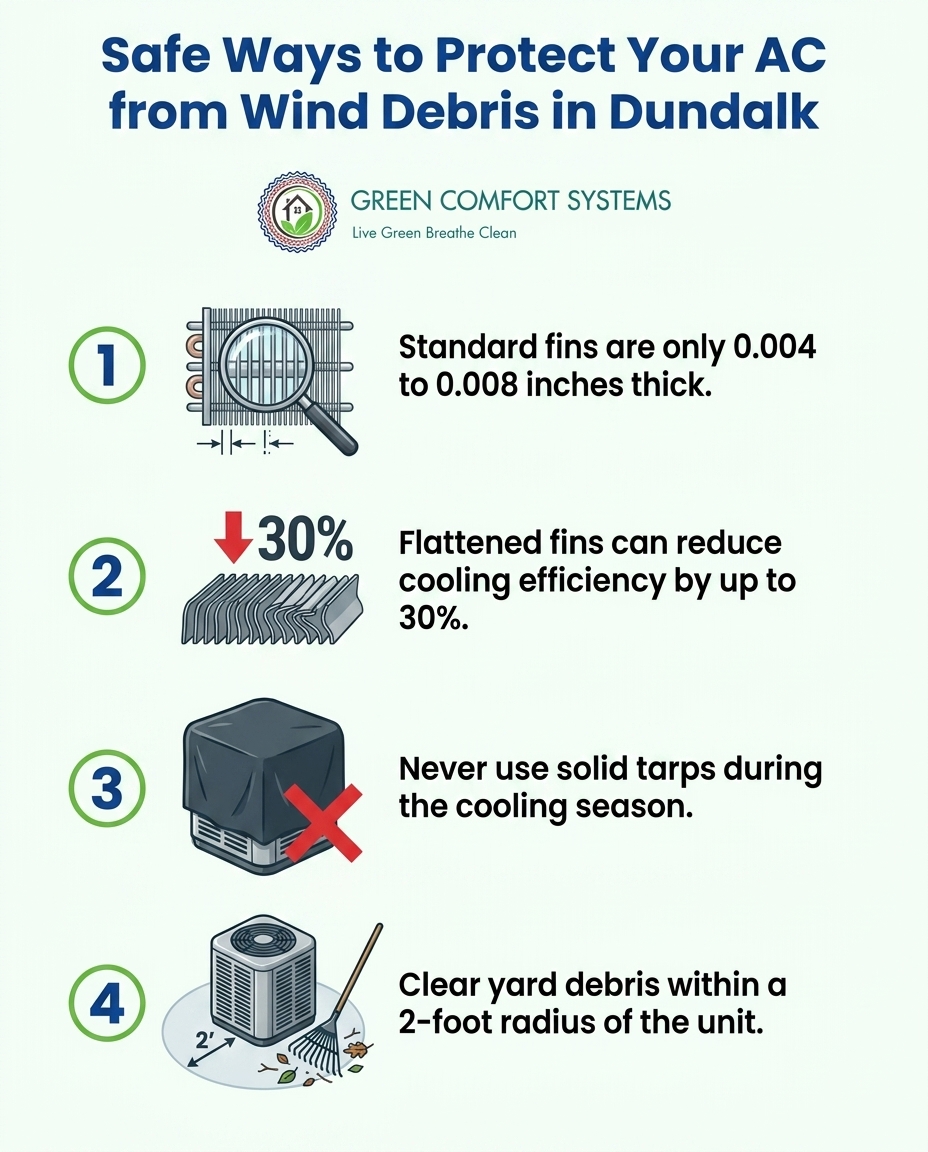
Your outdoor condenser is lined with hundreds of thin aluminum fins designed to transfer heat away from the refrigerant. Because they need to transfer heat rapidly, these fins are incredibly thin—typically measuring between 0.004 and 0.008 inches thick. That is roughly the thickness of a few sheets of paper.
• Accelerated oxidation: The constant presence of salt moisture in the coastal air accelerates the oxidation process on standard aluminum.
• Increased brittleness: Over time, this oxidation makes the metal brittle and rigid, stripping away its natural flexibility.
• Impact vulnerability: When brittle fins are struck by wind-borne debris, they do not bend and bounce back. They fold flat, permanently blocking the passage of air.
High-Velocity Projectiles in August
Late summer storms in August bring peak Atlantic storm season activity to the Mid-Atlantic. During these sudden squalls, the wind does not just blow; it gusts unpredictably. Small items that seem harmless on a calm day reach damaging velocities in a matter of seconds.
The yard maintenance defense: The most effective preliminary defense against high-velocity projectiles is proactive landscaping. Trimming back shrubs at least two feet from the unit, replacing loose gravel with heavier river rock, and securing patio furniture before a storm hits can drastically reduce the amount of ammunition the wind has at its disposal.
The Suffocation Risk: Why Summer AC Covers Are Dangerous
One of the most common mistakes we see homeowners make during late summer storms in August is rushing outside to throw a generic plastic tarp over their AC unit. While the intention is good—shielding the equipment from rain and flying branches—the result is often catastrophic. Covering an air conditioner during the cooling season is a massive suffocation risk that can destroy your compressor in a single afternoon.
Late summer storms frequently overlap with severe back-to-school heatwaves. If your thermostat calls for cooling while the unit is wrapped in a tarp, the system will turn on and immediately begin suffocating. If you notice your system struggling after a storm, it is critical to know how to silence the squeal and fix a noisy AC unit before permanent damage occurs.
The Mechanics of Compressor Failure
Air conditioning units do not actually "create" cold air; they remove heat from inside your house and pump it outside. To do this successfully, the outdoor condenser requires massive amounts of ambient air to flow through the aluminum fins and dissipate that heat.
What happens when airflow is blocked:
1. Heat gets trapped: A solid tarp traps the exhausted heat inside the condenser cabinet, causing the internal temperature to skyrocket instantly.
2. Pressure builds: The compressor has to work twice as hard to pump refrigerant through a system that cannot release its heat.
3. System failure: This extreme overheating leads to tripped electrical breakers, melted wires, or a completely seized compressor motor.
Unlike breathable, professional summer hail guards—which are made of heavy-duty mesh designed specifically to let air pass through while stopping solid objects—winterizing covers and generic tarps should never be used when the system has power.
Professional Strategies for Fin Protection and Airflow Restoration
If a storm has already rolled through and peppered your outdoor unit with debris, the next step is assessing the damage. There is a distinct difference between light cosmetic fin bending and severe, airflow-blocking damage. Flattened fins act like a brick wall against the air your system desperately needs to pull through. In fact, restricted airflow from severely damaged fins can reduce your system's overall cooling efficiency by up to 30%, causing your energy usage to spike while your home stays warm.
These protective principles apply to more than just traditional air conditioners. Proper heat pump maintenance requires the exact same vigilance, as heat pumps run year-round and face both late summer storms in August and harsh winter winds. Keep in mind that federal tax credits may apply to qualifying heat pump installations, so if storm damage forces a replacement, we always advise checking with a tax professional for current programs.
Just this past summer, our team at Green Comfort Systems received a frantic call from a local homeowner during an end-of-season heatwave when their ductless AC unit started throwing error codes. We routed a technician out the next day and found the system struggling under immense strain from coastal debris blockages. Our team quickly recharged the unit with refrigerant and performed a full diagnostic on a second unit to ensure total stability. This type of rapid, professional response is vital when extreme weather and high temperatures collide, as a struggling compressor will quickly fail if forced to run with compromised airflow or low refrigerant levels.
Diagnosing Bent Fins vs. Blockages
Knowing what to look for can save you from a major breakdown. Here is a breakdown of common post-storm symptoms our technicians see, and the appropriate actions to take.
• Surface leaves and grass clippings — Underlying Cause: Wind blowing light yard debris against the intake. — Recommended Action: Gently wash away with a garden hose on a low-pressure setting.
• A small patch of slightly bent fins — Underlying Cause: Minor impact from pebbles or small twigs. — Recommended Action: Monitor the area; light cosmetic damage rarely impacts overall performance.
• Large sections of fins smashed completely flat — Underlying Cause: Heavy impact from flying branches or patio furniture. — Recommended Action: Call a professional for specialized fin combing to restore airflow.
The danger of DIY fin repair: Never use butter knives, screwdrivers, or flathead tools to try and pry bent fins back into place. The copper refrigerant tubing sits directly behind those thin aluminum fins. One slip of a screwdriver can puncture the coil, instantly releasing all your refrigerant into the atmosphere and turning a minor airflow issue into a major, system-killing repair. Proper fin restoration requires specialized combing tools and the precision expertise our Green Comfort Systems technicians have developed through years of local coastal experience to ensure the delicate coils remain intact.
Securing the Condenser: Professional Anchoring Solutions
Protecting the fins is only half the battle during a severe bay squall. The physical stability of the condenser cabinet itself is just as critical. The specific velocity of winds coming off the Chesapeake Bay requires specialized anchoring standards that are frequently overlooked by inland contractors. If your condenser is just sitting loosely on a basic concrete pad, it is highly vulnerable to shifting, tipping, or vibrating out of place when wind speeds escalate.
At Green Comfort Systems, we specialize in identifying when a unit needs heavy-duty professional anchoring tailored specifically to Maryland's coastal weather. Through countless storm seasons, we have seen that standard placement is rarely enough for bay-adjacent properties.
Beyond Basic Placement
The ground beneath your AC unit takes a beating during heavy storms. When extreme wind is paired with torrential rain, the soil around and underneath your condenser pad can quickly wash away.
• Soil erosion risks: Heavy rain runoff from roof gutters can erode the dirt supporting the condenser pad, causing the entire unit to tilt. A tilting unit puts massive physical stress on the copper refrigerant lines connected to your house.
• Vibration and shifting: High winds can cause a loose unit to vibrate violently. If the unit shifts too far, it can completely sever electrical connections or snap the refrigerant lines.
• Hurricane straps: Professional anchoring systems utilize heavy-duty hurricane straps and specialized structural tie-downs to bolt the condenser directly to a reinforced pad, ensuring it stays perfectly level and secure regardless of wind speed.
If you have an older unit that has been repeatedly damaged, knocked off balance, or is fundamentally unsecured, evaluating your options for a modern, properly anchored replacement might be the safest long-term choice for your property.
Frequently Asked Questions About Coastal AC Protection
How do I protect my AC unit from flying debris in high winds?
The most effective method is proactive yard maintenance and installing a breathable, professional-grade hail guard. Keeping shrubs trimmed back at least two feet and securing loose patio furniture removes the most common projectiles. A professional mesh guard will deflect larger branches without restricting the airflow your system needs to operate safely.
Is it safe to cover my AC unit with a tarp during a summer storm?
No, you should never cover an active air conditioner with a solid tarp during the cooling season. Tarps trap the exhaust heat inside the cabinet, suffocating the unit and causing the compressor to overheat rapidly. If the system turns on while covered, it can suffer permanent mechanical failure in a matter of hours.
How do you fix bent fins on an air conditioner without causing damage?
Bent fins are repaired using a specialized tool called a fin comb, which gently realigns the delicate aluminum without scraping the metal. Homeowners should never attempt to pry fins straight with a knife or screwdriver, as this easily punctures the pressurized copper refrigerant lines hidden just beneath the surface.
Can coastal salt air really damage my outdoor AC condenser?
Yes, salt moisture in coastal air accelerates the oxidation process on standard aluminum components. Over time, this makes the thin condenser fins brittle and rigid, meaning they are much more likely to fold flat and block airflow when struck by minor debris, rather than bending and bouncing back.
At what point does yard debris require a professional HVAC inspection?
You should schedule an inspection if large sections of fins are smashed flat, if the unit has physically shifted off its concrete pad, or if the system sounds significantly louder than usual after a storm. Restricted airflow from debris can reduce efficiency by up to 30%, so early intervention prevents major compressor strain.
Ensure Your Condenser is Ready for the Next Bay Storm
Defending your outdoor cooling equipment in Dundalk and other bay-adjacent areas is a balancing act. You must shield the delicate aluminum fins from high-velocity yard debris while simultaneously ensuring the system receives maximum airflow to combat peak August heatwaves. Relying on generic tarps or ignoring the unique risks of coastal salt air will only lead to strained compressors and unexpected breakdowns.
Professional anchoring, proactive debris management, and expert fin restoration provide the peace of mind you need when the skies turn dark over the Patapsco River. Do not wait for a severe weather event to test the limits of your outdoor unit. Schedule a professional inspection with our team at Green Comfort Systems to ensure your system is properly secured, breathing freely, and ready to keep your home comfortable through the worst of the bay's late summer squalls.
Book Expert Service Or Contact Us
Other Blogs


Get Financing Today
Get the comfort you deserve, without the financial stress.

Latest Blogs

How Our Fully Stocked Trucks Enable Under-an-Hour Heat Pump Repairs in Owings Mills
Diagnosing a Blower Motor Failure When Your Furnace Runs but Produces No Air
The Anatomy of a Fast Towson Furnace Repair: How We Diagnose Ignitor Failures
