





Addressing Drafty Windows and Heating Inefficiencies in Older Forest Hill Homes

The 30% Energy Drain: Identifying the Source of Your Home's Cold Spots
Nearly 30% of residential heating energy is lost straight through your windows, which means addressing drafty windows and heating inefficiencies in older Forest Hill homes requires pinpointing the actual source of the problem before you upgrade any equipment. If you own a historic property, you likely already know the frustration of setting your thermostat to 72°F, hearing the heater kick on, and still needing to grab a heavy sweater just to sit in your living room.
The Department of Energy tracks this massive energy drain because it creates a frustrating dilemma for homeowners. Are your cold spots caused by a failing, undersized furnace that can no longer keep up with demand? Or is your heating system working perfectly, only to have all that expensive warm air sucked out through drafty original windows?
Figuring out this puzzle is critical during the September pre-heating season transition. This early fall window is your best opportunity to make diagnostic decisions before the deep freeze sets in. Throwing a larger, more powerful heater at a leaky house is never the right solution, as it only masks the underlying problem while driving up your utility bills. If you are struggling to keep your house warm, exploring professional heating services with our team at Green Comfort Systems can help you uncover the root cause and secure your comfort before winter arrives.
Understanding the Thermal Envelope of Forest Hill's Historic Housing Stock
To truly understand why your house feels cold, you have to look at your home as a complete system. The barrier between your conditioned indoor air and the harsh outdoor weather is called the thermal envelope. This envelope consists of your roof, foundation, exterior walls, exterior doors, and windows. When this boundary is tight, your heating system barely has to work to maintain a comfortable temperature. When it is compromised, your heater is essentially trying to warm up the entire neighborhood.
In our years of serving Rosedale and the surrounding areas, we've found that the Forest Hill historic housing stock presents unique challenges for maintaining a solid thermal envelope. Many of these beautiful older properties still feature their original wood-framed, single-pane windows. While these windows offer unmatched architectural charm, they were built long before modern energy standards. They lack the thermal breaks found in contemporary double-pane or triple-pane windows. A thermal break is an insulating barrier placed inside the window frame that stops conductive heat energy from transferring from the inside of your home to the outside.
Without these thermal breaks, heat easily escapes right through the glass. Furthermore, decades of settling, shifting, and degraded glazing putty create micro-cracks around the window sashes. When cold, windy Maryland winters roll in, freezing nor'easter winds push directly through these architectural vulnerabilities.
This compromised thermal envelope puts severe strain on any heating system, regardless of its age or condition. If your home cannot hold onto the heat being produced, your furnace will run continuously, burning through energy while failing to keep you comfortable. Understanding this dynamic is the first step in diagnosing your cold spots.
Diagnosing the Chill: Furnace Inefficiency vs. Window Drafts
Before you call our technicians to replace your heating equipment, we always recommend identifying the true culprit behind your discomfort. It is entirely possible to have a brand-new, perfectly functioning furnace that still leaves you shivering because your home's envelope is failing. Conversely, you might have perfectly sealed storm windows but a furnace that simply lacks the capacity to warm the square footage. Knowing how to read the symptoms can save you significant time and frustration.
One common scenario our team sees homeowners face is a heating system that just can't seem to reach the temperature set on the thermostat. If you find yourself constantly adjusting the dial or dealing with a boiler not heating your radiators evenly, you might be dealing with an equipment issue rather than an envelope issue.
Signs Your Heating System is Undersized
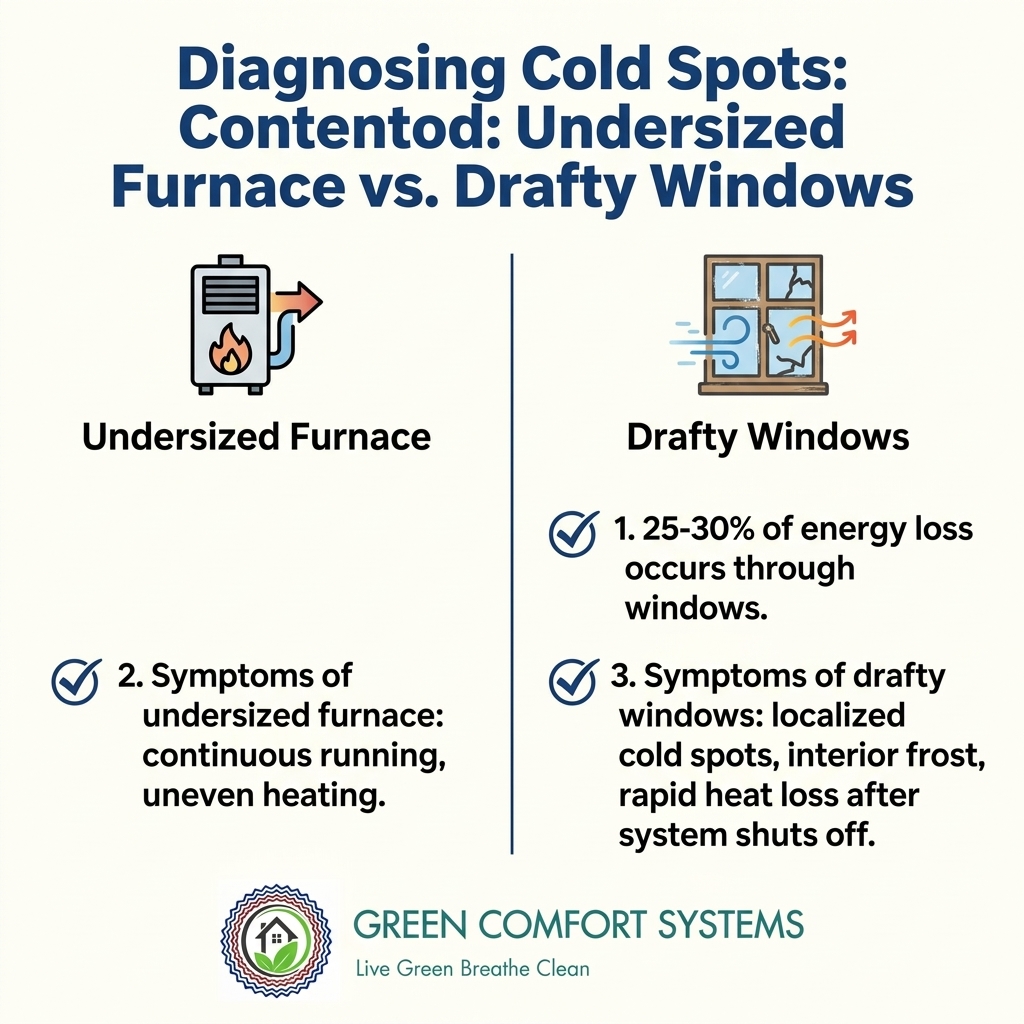
An undersized heating system simply lacks the output capacity (measured in BTUs) to warm your home's total volume of air. If you are researching how to calculate if furnace is undersized, look for these specific operational clues:
• Continuous operation: The system runs for hours on end without ever reaching the set point on your thermostat.
• Uneven floor-to-floor heating: The basement or first floor might feel adequately warm, while the second or third stories remain freezing cold because the blower motor lacks the power to push air upward.
• Struggling during moderate weather: If your heater cannot keep up when the outside temperature drops to 45°F, it will completely fail when temperatures drop below freezing.
Signs Your Original Windows are the Culprit
If your furnace is appropriately sized but your home still feels cold, your original windows are likely failing. The symptoms of a failing envelope look and feel very different from mechanical failures:
• Proximity drafts: You notice a distinct, sharp drop in temperature when standing within three feet of an exterior window.
• Interior condensation: Frost or heavy moisture builds up on the inside of the single-pane glass, indicating that warm indoor air is crashing into a freezing cold surface.
• Zonal temperature drops: Rooms with multiple large windows (like living rooms or sunrooms) are significantly colder than windowless interior rooms, like hallways or interior bathrooms.
The quick fix diagnostic: Pay attention to how your system cycles. If the furnace runs, satisfies the thermostat, shuts off, and the room immediately feels cold again within ten minutes, your windows are rapidly bleeding the heat out. If the furnace never shuts off at all but the air coming from the vents feels lukewarm, the equipment itself is likely struggling.
The Myth of the 'Bigger is Better' Heating System
A common misconception among homeowners is that installing a larger capacity heater will solve the draft issues in an older property. It seems logical on the surface: if the house is losing heat, just pump more heat into it. However, this approach actually decreases your overall comfort and severely damages your system's efficiency.
When you install an oversized furnace to compensate for drafty windows, you create a destructive cycle known as short-cycling. A massive furnace will blast a huge volume of hot air into the room, satisfying the thermostat almost instantly. The system then shuts down abruptly. Because your historic windows are still leaking, that heat quickly escapes, causing the thermostat to trigger the massive furnace to turn on again just minutes later.
This constant starting and stopping places immense wear and tear on the blower motor, the heat exchanger, and the electrical components. It is the equivalent of driving a car by slamming on the gas pedal and then immediately slamming on the brakes. Not only does this lead to premature equipment failure, but it also causes your utility bills to skyrocket.
Modern equipment is specifically designed to work in harmony with your home's current thermal envelope. Just this past summer, a local homeowner reached out to our Green Comfort Systems team to replace an aging AC and heating unit that was constantly struggling. We replaced the system efficiently and ahead of schedule, but the true success of that installation was ensuring the new unit was accurately sized for the home's specific layout, resulting in quiet, steady operation rather than aggressive short-cycling.
Matching the right technology to older homes is paramount. Upgrading to modern energy-efficient heat pumps—which may even qualify for generic federal tax credits or local utility incentives—or properly sized furnaces ensures quiet, continuous, and efficient operation that maintains a steady temperature without the chaotic temperature swings caused by oversized equipment.
Why Professional Heat Load Calculations Matter for Older Homes
If guessing the size of a furnace leads to short-cycling and high bills, how do you determine the exact right size? The answer lies in a professional heat load calculation, commonly referred to in the industry as a Manual J calculation. This is a rigorous, data-driven process that our team relies on, requiring specialized expertise, particularly when servicing older or historic Maryland homes.
We frequently see inexperienced contractors rely on outdated "rules of thumb" based solely on the square footage of the house. This guesswork is dangerous for historic properties. A 2,000-square-foot home built in 1890 with original wood windows, balloon framing, and zero wall insulation has a drastically different heat load than a 2,000-square-foot home built in 2020 with foam insulation and triple-pane glass.
While you might search online for how to calculate if furnace is undersized, performing a true Manual J calculation is not a DIY project. An HVAC professional must meticulously account for dozens of variables. They measure the exact orientation of your home to the sun, the specific R-value of your attic insulation, the U-factor of your original windows, the number of exterior doors, the ceiling heights, and the natural air infiltration rate of the building.
By assessing the whole home's thermal envelope, a professional can mathematically determine exactly how many BTUs of heat your home loses on the coldest night of the year. This specialized expertise prevents the installation of undersized units that run continuously and oversized units that short-cycle. It provides you with the peace of mind that your new system is engineered specifically for your home's unique architectural fingerprint.
Actionable Steps to Prepare Your Maryland Home for Winter
You do not have to wait for the first major freeze to expose your heating vulnerabilities. Taking proactive steps during the September pre-heating season transition gives you the time needed to weatherize your envelope and evaluate your equipment. Completing these tasks early ensures your home is ready for whatever winter brings.
Here are the most effective steps you can take to prepare your older home for the cold months ahead:
1. Install weatherstripping: Original wood windows often rattle in their frames. Applying V-seal weatherstripping, felt strips, or foam tape to the tracks and sashes can significantly reduce the amount of cold air pushing through the gaps.
2. Use temporary window insulation: If replacing historic windows isn't an option this year, interior shrink-wrap insulation kits act as a temporary thermal break. By trapping a layer of still air between the original glass and the plastic film, you drastically reduce conductive heat loss.
3. Schedule a home energy audit: An early fall energy audit, complete with a blower door test, can pinpoint exactly where your home is leaking air. This data helps you prioritize which drafts to seal first.
4. Seal exterior penetrations: Use exterior-grade caulk to seal gaps where plumbing, electrical, or gas lines enter the home. Stopping these drafts not only improves heating efficiency but also provides natural indoor air quality solutions by preventing uncontrolled, unfiltered outdoor air from entering your living space.
5. Book professional maintenance: Have an expert evaluate your heating system before you need to turn it on. Another local homeowner recently scheduled their winter maintenance with us; our technician performed the tune-up and carefully explained every step of the process, giving the homeowner complete clarity on their system's health.
By addressing the thermal envelope first and then ensuring your mechanical systems are tuned up, you create a comprehensive defense against the winter cold.
Frequently Asked Questions About Heating Historic Homes
Why is my old house so cold even with the heating on?
Your old house is likely cold because a compromised thermal envelope is allowing heat to escape faster than your furnace can produce it. Historic homes often feature single-pane windows, uninsulated walls, and structural gaps that create severe drafts. Even a powerful heating system will struggle to maintain comfort if the warm air is constantly leaking outside.
How do I know if my furnace is undersized?
An undersized furnace will run continuously without ever reaching the temperature set on your thermostat. You will likely notice that the air coming from the vents feels lukewarm rather than hot, and the system will struggle to push warm air to the upper floors of your home. If your heater cannot keep up during mild temperature drops, it is likely too small for the space.
Does an undersized furnace run constantly?
Yes, in our experience, an undersized furnace will run constantly in a futile attempt to reach the target temperature. Because it lacks the necessary BTU capacity to overcome the home's natural heat loss, the thermostat never registers that the room is warm enough to shut the system down. This constant operation leads to excessive wear and tear on the blower motor and higher energy bills.
How do you fix a drafty old house without replacing original windows?
You can significantly reduce drafts by installing high-quality weatherstripping around the window sashes and doors. Additionally, applying removable rope caulk to visible gaps, installing interior storm windows, or using temporary heat-shrink window insulation kits can create a functional thermal break. Heavy, thermal-lined curtains also help block convective cold air loops from chilling the room.
Can a larger furnace compensate for poorly insulated windows?
No, installing a larger furnace will not effectively compensate for poorly insulated windows. An oversized furnace will heat the room very quickly and shut off, but the drafty windows will immediately suck the heat out, causing the furnace to turn back on minutes later. This short-cycling ruins energy efficiency, damages the equipment, and leaves the home feeling drafty and uncomfortable.
What is involved in a heat load calculation for a historic home?
A professional heat load calculation (Manual J) measures exactly how much heating capacity a specific home requires. For a historic home, a professional will measure the square footage, evaluate the R-value of existing insulation, assess the U-factor of original windows, and calculate the natural air infiltration rate. This data ensures the new heating system is perfectly matched to the home's unique architectural characteristics.
Secure Your Comfort Before the Maryland Freeze
Understanding the delicate balance between your home's thermal envelope and your mechanical heating system is the key to lasting winter comfort. Whether your cold spots are caused by original, drafty windows letting the heat escape, or an aging furnace that simply cannot keep up with the demands of your historic property, guessing is never the right strategy.
Don't wait until the first major freeze leaves you shivering in your living room. Schedule a professional evaluation with Green Comfort Systems today to get a clear, actionable explanation of your home's true heating needs. By consulting with our local historic home experts, you can make informed decisions, eliminate the guesswork, and ensure your home stays consistently warm all winter long.
Book Expert Service Or Contact Us
Other Blogs


Get Financing Today
Get the comfort you deserve, without the financial stress.

Latest Blogs
Addressing Drafty Windows and Heating Inefficiencies in Older Forest Hill Homes
Managing the September Swing: Keeping Your Rosedale Home Comfortable When Days Are Hot and Nights Are Cold
Electronic Ignition Failures: Why Your Modern Furnace Won't Start on Chilly September Mornings
