





The Visible Signs Your Rosedale Home Needs Duct Cleaning Before Winter

Preparing Your Rosedale Home for the Winter Freeze: When to Check Your Vents
You are wiping down your baseboards and prepping your house for the colder months, but every time you look at the vents, you notice a troubling buildup. Identifying the visible signs your Rosedale home needs duct cleaning before winter is a critical step in seasonal maintenance, yet it can be difficult to tell the difference between normal household dust and a severe blockage. At Green Comfort Systems, we see homeowners in the area preparing to seal up their houses for the freezing temperatures ahead, but many are unsure if the dust, pet hair, or strange spotting around their HVAC registers requires professional intervention before the heat kicks on for the first time.
During the September pre-heating transition, your system shifts from cooling to heating. If your ductwork is packed with summer dust, pet dander, and allergens, all of that debris will be trapped inside your tightly sealed home. Fortunately, true air quality issues leave physical evidence that you can spot yourself right at the register level. If you are seeing physical evidence of deep system contamination, exploring professional duct work services can help you make an informed decision for your home's air quality.
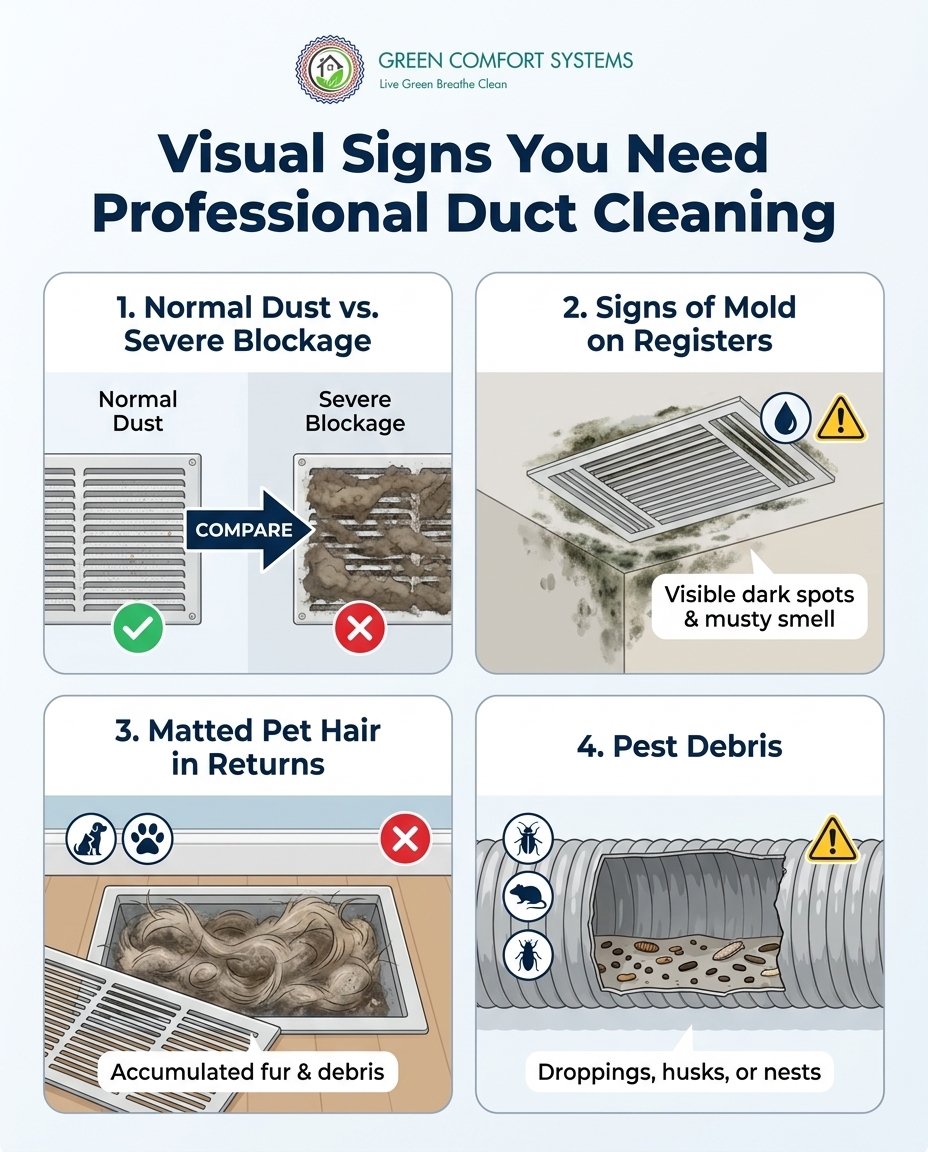
Normal Surface Dust vs. Severe Duct Blockages
It is completely normal to see a light coating of gray dust on the exterior of your vent grates. Your HVAC system moves massive amounts of air every day, and a small amount of airborne particulate will inevitably settle on the metal fins. However, there is a distinct difference between everyday household dust and a severe blockage that requires professional attention. In our years of servicing HVAC units across Rosedale MD, our team finds that homes often deal with a mix of outdoor pollen, indoor dust, and seasonal allergens that can accumulate rapidly if the system is neglected.
Excessive debris accumulation indicates that your system is actively circulating contaminants rather than just passively collecting surface dust. By making a quick visual confirmation, you can avoid unnecessary services and determine exactly what kind of buildup you are dealing with.
• Location of Debris — Normal Household Dust: Restricted to the outside face of the register grate. — Severe Duct Blockage: Clinging to the deep interior walls of the metal ductwork.
• Texture and Appearance — Normal Household Dust: Light, powdery, and light gray in color. — Severe Duct Blockage: Thick, cobweb-like, dark, and heavily matted.
• Impact on Airflow — Normal Household Dust: No noticeable restriction when the system runs. — Severe Duct Blockage: Visible restriction; air struggles to push through the vent.
• Cleaning Effort — Normal Household Dust: Wipes away instantly with a dry microfiber cloth. — Severe Duct Blockage: Returns almost immediately after wiping the exterior grate.
Characteristics of Everyday Household Dust
Everyday dust is a fact of life in any occupied home. This type of accumulation typically presents as a light gray film on the outside of the register. It is easily removed during your regular weekend chores with a standard microfiber cloth or a vacuum brush attachment. Most importantly, this light surface dust does not restrict the airflow coming from the vent. If you wipe the grate clean and it stays clean for several weeks, your ductwork is likely in acceptable condition.
Warning Signs of Deep System Debris
When your ducts are genuinely clogged, the visual evidence is much more dramatic. You will notice dark, heavy particulate matter clinging to the inside of the duct walls, extending far beyond the metal grate. One of the most common warning signs our technicians encounter is debris that immediately returns just days after you have cleaned the exterior of the vent. In severe cases, this thick buildup creates a physical barrier, resulting in a visible restriction of air pushing through the register. This means your blower motor is working overtime just to push conditioned air into your living spaces.
Identifying Mold-Like Growth and Musty Odors Around Registers
Because of Rosedale's proximity to the Chesapeake Bay, our region experiences incredibly humid summers. This heavy moisture often finds its way into your ductwork. When warm, humid air meets the cool metal of your air conditioning ducts, condensation forms. This lingering moisture creates a perfect breeding ground for biological contaminants. If these moisture issues are not addressed, mold-like substances can begin to flourish before the dry winter heat kicks on.
The visual signs of biological growth are usually quite distinct. You may spot black spots, dark streaks, or fuzzy growth forming on the metal registers themselves, or even spreading onto the surrounding drywall. These visual cues are almost always accompanied by a damp, unpleasant smell when the blower motor engages. If you notice a damp basement smell coming from your HVAC vents, it is a strong indicator that moisture has compromised the system.
Recently, a local homeowner reached out to our Green Comfort Systems team after discovering black, mold-like spotting and an unpleasant, musty smell coming from their wall-mounted split units, which had not been cleaned in several years. One of our technicians performed a thorough cleaning, disassembled the components for a necessary second servicing, and replaced a failing part. Once the biological buildup was removed, the units were fully restored, providing clean air and functioning properly again.
Neglected systems can harbor these biological contaminants out of sight, but once they reach the registers, they require professional remediation. The EPA explicitly recommends professional duct cleaning when there is visible mold growth on the hard surfaces of your heating and cooling system.
The Impact of Pet Hair and Dander on Your HVAC Airflow
Homes with pets face a unique set of indoor air quality challenges. During the hot summer months, dogs and cats shed heavily. As your air conditioner runs continuously, that loose hair and dander gets pulled directly into your return air vents. By the time the September pre-heating transition arrives, our technicians frequently find return ducts choked with months of accumulated pet hair.
This specific type of blockage is highly visible and severely impacts how your system breathes. When pet hair mats together inside a duct, it creates a dense, felt-like barrier. This forces the system to work much harder to pull in the air it needs to heat your home.
To check for severe pet hair blockages, follow these simple visual inspection steps:
1. Locate your primary return vents: These are usually the largest vents in your home, often found in hallways or low on the walls in main living areas.
2. Shine a light inside: Use a bright flashlight to look past the metal louvers and deep into the duct cavity.
3. Look for webbing: Check for thick, matted webs of hair clinging to the sides of the ductwork or blanketing the area just behind the filter.
4. Check the filter face: If your air filter is completely obscured by a thick layer of fur long before its scheduled replacement date, the surrounding ducts are likely coated as well.
Homes with multiple pets often require more frequent visual inspections. If you can see handfuls of fur trapped behind the register grate, a professional cleaning will instantly relieve the strain on your HVAC system.
Why Winter Weatherizing Traps Contaminants Indoors
As the temperatures drop, Maryland winters require tightly sealed homes for maximum heating efficiency. Homeowners spend the fall caulking windows, adding weatherstripping to doors, and sealing up drafts to keep the cold air out. While this is excellent for your energy bills, our team constantly reminds customers that it creates an airtight thermal envelope that dramatically changes how your home breathes.
Creating this tight seal inadvertently traps existing duct contaminants inside your living space. If your ducts are filled with summer dust, pet dander, and dried mold spores, that debris has nowhere to go once the house is locked down. The moment your furnace kicks on, it begins circulating that trapped, contaminated air through every room in your Rosedale MD home.
The Science of Winter Weatherization
A well-sealed thermal envelope prevents heat loss by stopping the exchange of indoor and outdoor air. However, this also means a massive reduction in natural fresh air ventilation during the winter months. Without fresh air coming in through open windows or drafty doors, your home relies entirely on the HVAC system to filter and circulate the air you breathe.
The Indoor Air Quality Trade-off
The trade-off for a warm, draft-free home is an increased concentration of airborne particulates. Uncleaned duct debris is continuously recirculated through the blower motor, the vents, and your lungs. This is why the early fall window is the optimal time to remove these contaminants. Cleaning the ducts before you seal the house ensures that the air locked inside with you remains fresh and healthy. If you are concerned about the air you will be breathing all winter, implementing comprehensive indoor air quality solutions is the best defense.
How Clean Ducts Reduce Furnace Strain and Improve Heating Performance
Severe visual blockages at the register are not just an air quality issue; they are a mechanical warning sign. When you see thick debris clogging a vent, it indicates restricted airflow throughout the entire system. Your furnace needs a precise, unobstructed flow of air to operate efficiently. When ducts are choked with debris, the blower motor is forced to work significantly harder to push warm air into your rooms.
This restricted airflow causes the system to run longer cycles, consuming more energy and putting unnecessary wear and tear on critical components. Professional duct cleaning serves as a comprehensive, eco-friendly HVAC solution that lowers winter heating bills by removing these airflow restrictions. By allowing the system to breathe freely, you reduce the electrical load on the blower motor and decrease the amount of fuel your furnace needs to maintain a comfortable temperature. Additionally, optimizing your system's overall efficiency through maintenance may qualify you for certain local utility incentive programs; we always recommend checking with your utility provider for current seasonal rebates.
The relationship between clear ductwork and overall heating longevity is undeniable. Framing the removal of these blockages as a proactive step for winter efficiency ensures your system will perform reliably. Addressing these issues during the September pre-heating transition prevents unexpected breakdowns when the freezing weather finally arrives, protecting your heating system performance for the long haul.
A Visual Inspection Guide for Your Rosedale Home's Registers
You do not need specialized tools to determine if your ducts are in trouble. A simple, careful visual inspection can tell you a lot about the health of your HVAC system. At Green Comfort Systems, we always encourage homeowners to perform a quick check before the winter season begins.
Here is what you should look for when inspecting your Rosedale MD home's registers:
• Grab a bright flashlight: Turn off the HVAC system and shine the light directly into the immediate interior of both supply (blowing air) and return (pulling air) registers.
• Check for matted pet hair: Look for dense clumps of fur that have woven themselves into the corners of the ductwork.
• Scan for black spotting: Carefully inspect the metal fins and the drywall immediately surrounding the vent for any signs of dark, fuzzy, or streaky biological growth.
• Watch for pest evidence: Look for small droppings, insect casings, or bits of nesting material just inside the vent opening.
• Assess the debris level: Determine if the dust is a light, easily wiped layer, or a thick, heavy crust that blocks the metal surface entirely.
A critical warning for homeowners: While a simple exterior wipe-down with a damp cloth is perfectly safe and encouraged, you must strictly caution against attempting to deep-clean the ducts yourself. Never push a vacuum hose deep into the ductwork, as this can easily tear flexible ducting or damage internal dampers. Furthermore, never spray household chemical cleaners or bleach into your HVAC system. Deep cleaning and sanitization require licensed professional equipment to ensure the job is done safely and effectively without damaging the home's infrastructure.
Frequently Asked Questions About Duct Cleaning Before Winter
How do I know if my air ducts need to be cleaned?
The clearest indicator is heavy, visible debris clinging to the inside of your ductwork that returns immediately after wiping the grate. If you shine a flashlight into the vent and see thick, cobweb-like dust, matted pet hair, or signs of pest activity, it is time for a cleaning. A simple layer of light gray dust on the outside of the vent is normal, but deep, restrictive blockages require professional attention.
Is duct cleaning a waste of money?
Duct cleaning is highly beneficial when performed for the right reasons, such as removing severe blockages, mold growth, or pest infestations. It is not a waste of money if your system is struggling to push air through clogged vents, as cleaning will restore airflow and reduce strain on the blower motor. However, if your ducts only have a light coating of normal household dust, a deep cleaning may not be immediately necessary.
What does mold in air vents look like?
Mold in air vents typically appears as irregular black, brown, or dark green spots clustered on the metal fins of the register. You may also see fuzzy patches or dark streaks spreading from the vent onto the adjacent ceiling or drywall. This visual evidence is almost always accompanied by a distinct, musty odor when the HVAC system turns on.
How often should you clean your air ducts?
Most homes benefit from professional duct cleaning every three to five years, depending on environmental factors and household habits. Homes with multiple shedding pets, residents with severe allergies, or properties that have recently undergone major renovations will need more frequent cleanings. Our team recommends performing a visual inspection during the September pre-heating transition to help you determine your specific timeline.
Does summer humidity in Maryland increase the need for duct cleaning?
Yes, the high humidity levels during Maryland summers can introduce significant moisture into your ductwork through condensation. This damp environment allows biological contaminants to thrive inside the dark ducts. If this moisture and subsequent growth are not removed before winter, the furnace will blow dried spores throughout the sealed home.
Can cleaning my ducts really lower my winter heating bills?
Yes, removing severe blockages allows your heating system to operate with much less resistance. When ducts are clogged with heavy debris, the blower motor must consume more electricity to force air through the home, and the furnace runs longer cycles to reach the target temperature. Clearing these pathways improves overall efficiency and reduces energy consumption.
Ensure a Healthy, Efficient Home Before the Winter Chill
Visual confirmation empowers homeowners to make smart, proactive maintenance decisions without relying on guesswork. By taking a few minutes to inspect your registers with a flashlight, you can clearly separate normal household dust from severe blockages that threaten your indoor air quality. Addressing these visible signs before sealing the doors and windows ensures that your Rosedale MD home remains a healthy environment all season long.
If your visual inspection reveals dense pet hair, heavy debris, or concerning mold-like growth, it is time to seek a professional assessment. Do not let summer's trapped contaminants circulate through your living spaces all winter. Reach out to the team at Green Comfort Systems to explore comprehensive indoor air solutions and ensure your heating system breathes easily when the freezing temperatures finally arrive.
Book Expert Service Or Contact Us
Other Blogs


Get Financing Today
Get the comfort you deserve, without the financial stress.

Latest Blogs

The Visible Signs Your Rosedale Home Needs Duct Cleaning Before Winter

Why Fast Access to Replacement Parts Matters for Your Rosedale Heating Repair
Pre-Winter HVAC Inspections: Finding the Hidden Wear and Tear Before the November Rush
