




Identifying a Cracked Heat Exchanger Before You Need Emergency Furnace Repair in Dundalk

Why Your Early Fall Furnace Test Run Is Critical for Home Safety
Before the first true freeze hits Maryland, there is a brief, critical window of time to ensure your heating system is safe to operate. Identifying a Cracked Heat Exchanger Before You Need Emergency Furnace Repair in Dundalk is the absolute most important step you can take during this September pre-heating season. Your furnace has been sitting dormant for months, and firing it up now gives you a chance to observe how it runs without the pressure of a freezing house forcing you to keep it on.
If you discover that your system needs professional attention, exploring comprehensive HVAC Services is the best way to restore your home's safety and comfort.
The transition from summer dormancy to early fall activation is the ideal time for safety checks because heat exchanger cracks are entirely silent. You will not hear a crack forming, and the furnace will often continue to produce warm air even when the metal is severely compromised. By turning the system on for a simple test run in September, you give yourself the time to spot visual warning signs early.
The Advantage of a September Test Run
Most homeowners wait until the first freezing night in November to turn their thermostat to "heat." If the system fails or shows signs of a severe safety hazard on that night, the household is left scrambling for emergency help. Running a controlled test in early fall changes the dynamic entirely.
• No temperature pressure: If you spot a problem, you can safely shut the system down because the house is still naturally warm.
• Clearer observation: You can take your time to watch the startup sequence, look at the flame, and smell the air from the vents without rushing.
• Safer decisions: Knowing when to call a professional before a breakdown occurs keeps your family safe and prevents a minor issue from becoming a mid-winter crisis.
Observing your system safely is the core decision point. A test run is not about fixing the furnace yourself; it is about gathering visual evidence so you know exactly when to shut the unit off and call for a licensed safety inspection.
The Mechanics of Metal Fatigue in Your Heating System
To understand why a furnace becomes dangerous, you have to understand what a heat exchanger actually does. The heat exchanger is the critical metal barrier that separates toxic combustion gases from the clean, breathable air that gets blown into your living spaces. When the burners ignite, they heat up this metal chamber. The blower motor then pushes your home's indoor air over the outside of the hot metal, warming the air before it travels through your ductwork.
Because of this design, the metal is subjected to intense physical stress every single time the furnace cycles on and off. If you suspect your system is suffering from this kind of wear, seeking professional heating services is the only way to verify its structural integrity.
Understanding Metal Fatigue and Thermal Stress
Metal fatigue is a natural physical process caused by continuous heating and cooling cycles. When the metal gets hot, it expands. When the blower cools it down at the end of a cycle, it contracts. Over thousands of cycles, this constant expansion and contraction causes the metal to weaken, eventually leading to microscopic stress cracks.
The climate plays a massive role in this wear and tear. Rapid temperature drops and freezing winter temperatures in the Baltimore and Dundalk areas force furnaces to run continuously for days on end. This puts severe stress on aging heat exchangers, especially in older homes throughout Dundalk and Rosedale MD where systems may have been running for well over a decade.
Factors That Accelerate Metal Failure
While age is the primary cause of metal fatigue, lack of proper airflow accelerates the process dramatically. When a furnace cannot breathe, the heat exchanger gets much hotter than it was designed to get.
• Clean Filter & Good Airflow — Impact on the Heat Exchanger: Metal stays within safe operating temperatures during cycles. — Risk of Cracking: Normal wear and tear over 15+ years.
• Dirty or Clogged Filter — Impact on the Heat Exchanger: Blower cannot push enough air to cool the metal, causing overheating. — Risk of Cracking: Accelerated stress, leading to premature metal fatigue.
• Closed Supply Vents — Impact on the Heat Exchanger: Traps heat inside the furnace cabinet, baking the metal barrier. — Risk of Cracking: High risk of warping and cracking at the seams.
• Oversized Furnace Unit — Impact on the Heat Exchanger: System short-cycles (turns on and off too rapidly), multiplying thermal stress. — Risk of Cracking: Rapid fatigue due to constant, unnatural temperature swings.
It is vital to emphasize that a cracked heat exchanger is a severe mechanical failure. It cannot be repaired with a simple patch, high-temperature tape, or sealant. Once the structural integrity of the metal is compromised, the entire component (or the furnace itself) requires professional replacement.
The Silent Danger: Understanding Carbon Monoxide Risks
A cracked heat exchanger is not just a mechanical nuisance that stops your house from getting warm; it is a severe life-safety hazard. The barrier that keeps toxic exhaust out of your breathing air is no longer solid. When the blower fan kicks on, the change in air pressure can actually push air through the crack, altering the burner flame, or pull toxic exhaust gases out of the combustion chamber and push them directly into your home's ductwork.
Green Comfort Systems' dedication to protecting local families from hazardous heating failures means we prioritize life-safety over simply fixing a machine. We want homeowners in Dundalk and Rosedale MD to understand exactly what is at stake when a furnace is heavily compromised.
Why Carbon Monoxide is Impossible to Detect Naturally
The most dangerous byproduct of gas combustion is carbon monoxide (CO). The Centers for Disease Control and Prevention (CDC) strictly warns that carbon monoxide is an odorless, colorless, and tasteless gas. You cannot see it filling a room, and you cannot smell it as you breathe it in. This makes it entirely impossible to detect without working safety alarms.
Ignoring the early signs of a failing heat exchanger puts the entire household at risk during the winter months. As the crack expands with heat, more CO can escape into the living spaces. The symptoms of low-level CO exposure—headaches, dizziness, nausea, and fatigue—are frequently mistaken for the common winter flu, leading families to stay indoors and rest, which only increases their exposure.
Pre-Heating Season Safety Steps
Because CO is invisible, your first line of defense is a proactive approach to your home's safety equipment.
• Test your alarms: Press the test button on every CO detector in your home during your September pre-heating season test run.
• Replace old batteries: Swap out the batteries in all units, even if they are hardwired (as the battery serves as a crucial backup during winter power outages).
• Check expiration dates: CO detectors do not last forever. Most units expire after 5 to 7 years because the internal sensors degrade. Check the date printed on the back of the device.
• Strategic placement: Ensure you have a working detector on every level of your home, especially near all sleeping areas, and at least 15 feet away from the furnace to avoid false alarms from normal startup combustion.
Visual Cue #1: Inspecting the Color of Your Pilot Flame
While you cannot see carbon monoxide, you can often see the mechanical warning signs that your furnace is producing it. The most crucial visual diagnostic that a homeowner can safely perform without touching any internal components is inspecting the color of the burner flame.
If your furnace has a small viewing window on the front panel, you can safely observe the burners while the system is running. What you see inside that chamber tells a detailed story about the health of your heat exchanger and the safety of your combustion process.
The Anatomy of a Healthy Furnace Flame
A healthy natural gas furnace flame should be a steady, solid blue color, occasionally with a very tiny, light blue tip. A solid blue flame indicates complete combustion. It means the furnace is receiving the perfect ratio of oxygen to natural gas, burning the fuel efficiently, safely, and cleanly. When a flame is blue, the exhaust gases are properly contained and vented out of the flue.
Recognizing the Danger Signs
If you look through the viewing window and see a yellow pilot flame instead of solid blue, you are looking at a serious danger sign. A yellow or orange flame indicates incomplete combustion. This happens when the gas is starved of oxygen or when the air-to-fuel mixture is contaminated.
Often, a cracked heat exchanger is the direct cause of a yellow flame. When the blower fan turns on, it forces air over the cracked metal. That pressurized air pushes through the crack and into the combustion chamber, altering the oxygen mix and causing the flame to turn yellow. Incomplete combustion is exactly what produces high levels of carbon monoxide.
Furthermore, if you notice a flickering, dancing, or wavy flame—especially one that changes shape the moment the blower fan kicks on—that is a classic sign of a draft or a crack in the chamber. A healthy flame should burn steady and strong. If you observe any abnormal flame colors or erratic flame movement, you must immediately turn off the unit at the thermostat. Do not wait to see if it corrects itself. If you suspect gas valve issues are contributing to poor combustion, learning more about furnace gas valve repair can help you understand how fuel delivery affects flame health.
Visual Cue #2: Spotting Soot Buildup and Unusual Odors
Flame color is not the only non-invasive sign of a compromised heat exchanger. Homeowners can also look for physical residue and pay attention to unusual smells during their early fall test run. These secondary symptoms are direct byproducts of incomplete combustion and a failing exhaust system.
When a furnace is operating correctly, all exhaust gases are cleanly drafted up the flue pipe and out of the house. When a heat exchanger cracks, that clean process breaks down, leading to noticeable changes in the air quality around the unit. If you are noticing these issues, it directly impacts your indoor air quality and requires immediate attention.
Step-by-Step Observation for Secondary Symptoms
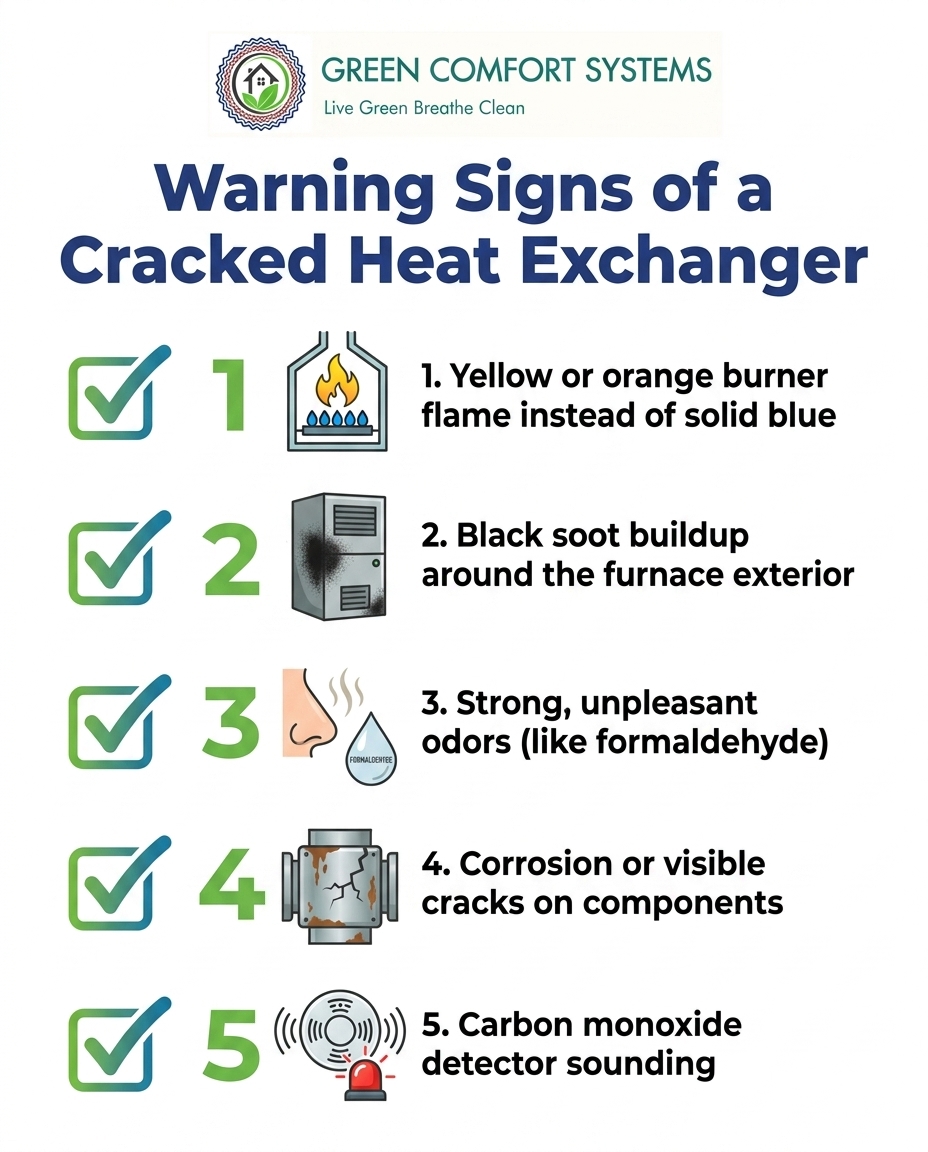
1. Check for black soot: Incomplete combustion produces black carbon soot. Look closely around the exterior cabinet of the furnace, near the burner compartment, and around the exhaust flue. If you see a fine, black, powdery substance accumulating, your furnace is not burning fuel safely. You may also notice soot building up on the register vents throughout your home, meaning the blower is pushing contaminated air into your living spaces.
2. Monitor for unusual smells: It is entirely normal to smell a faint, burning dust odor the very first time you turn on your furnace in September. This is just the dust burning off the heat exchanger after sitting idle all summer. However, a persistent, pungent, formaldehyde-like odor is a major red flag. This chemical smell indicates a serious exhaust leak and means toxic gases are entering your breathable air.
3. Look for excessive moisture: Natural gas combustion creates water vapor. Normally, this vapor is vented safely outside. If the heat exchanger is cracked, that moisture can escape into the home. If you notice excessive condensation or weeping moisture on the windows in the room where your furnace is located, it is a strong indicator of improper venting and a compromised chamber.
One local homeowner reached out for assistance during cold weather when their system failed to produce heat, having noticed odd performance and strange odors beforehand. Technicians quickly provided the necessary parts and resolved the issue efficiently. While that situation was fixed fast, catching symptoms like soot or a yellow pilot flame instead of solid blue early in the fall often prevents these freezing-weather panics entirely.
Why DIY Diagnostics Are Dangerous for Gas Furnaces
With so many home improvement tutorials available online, it can be tempting to try and diagnose a furnace issue yourself. However, when it comes to the combustion chamber of a gas heating system, DIY diagnostics are incredibly dangerous. Firmly direct your efforts toward observation, not dismantling.
You should never attempt to open the sealed combustion chamber, remove the burner assembly, or dismantle the cabinet to get a better look at the heat exchanger. The metal is designed to remain sealed to properly draft toxic gases out of the home. Breaking those seals without the proper training can create a carbon monoxide leak where one did not previously exist.
The Need for Specialized Diagnostic Tools
Just as diagnosing a summer AC issue requires specialized gauges—like when a local customer needed a technician to identify a refrigerant leak, refill the system, and perform the proper repair—diagnosing a heat exchanger requires advanced, calibrated equipment.
Licensed HVAC technicians use specialized tools to definitively diagnose microscopic stress cracks that the naked eye cannot see:
• Combustion Analyzers: These highly sensitive devices measure the exact chemical composition of the exhaust gases. A technician can read the oxygen, carbon dioxide, and carbon monoxide levels to determine if the combustion process is compromised.
• Infrared Inspection Cameras: Technicians use flexible, high-definition snake cameras to navigate the tight bends of the heat exchanger cells, visually locating hairline cracks or rust spots hidden deep inside the unit.
• Water Draft Tests: Professionals can perform safe, controlled tests to see if the blower fan is altering the flame pattern, confirming a breach in the metal.
If you observe visual cues like a yellow flame or soot in Dundalk and Rosedale MD, the only safe action is shutting down the system at the thermostat and calling a licensed professional. Trying to force a failing system to run, or attempting to patch a crack with store-bought sealants, will inevitably lead to needing the 24 hour furnace repair dundalk residents often require during mid-winter breakdowns. Worse, it puts your family's lives at risk.
Frequently Asked Questions About Furnace Safety
What are the symptoms of a cracked heat exchanger?
The most common visual symptoms include a yellow or orange pilot flame, black soot buildup around the furnace exterior, and unpleasant odors resembling formaldehyde. You may also notice excessive condensation on nearby windows or frequent carbon monoxide detector alarms. If you observe any of these signs, shut the furnace off immediately and call a licensed professional for a safety inspection.
Can you run a furnace with a cracked heat exchanger?
No, you should never run a furnace with a cracked heat exchanger. Running a compromised furnace is a severe safety hazard because it removes the barrier between toxic exhaust gases and the home's breathing air. It risks leaking deadly carbon monoxide into your living spaces, meaning the system must remain shut down until it is professionally inspected and replaced.
Why is my furnace flame yellow instead of blue?
A yellow flame indicates incomplete combustion, meaning the gas is not mixing with the right amount of oxygen. This can be caused by a cracked heat exchanger allowing blower air to push into the combustion chamber, altering the oxygen-to-gas ratio. A yellow flame is a clear visual warning sign of potential carbon monoxide production and requires immediate professional attention.
Is a cracked heat exchanger dangerous?
Yes, a cracked heat exchanger is one of the most dangerous mechanical failures that can occur in a home. It allows toxic combustion gases, including odorless and colorless carbon monoxide, to escape the exhaust system and enter the ductwork. Because it directly threatens the breathable air in your home, it is considered a critical life-safety emergency.
When should I schedule my pre-heating season furnace inspection?
You should schedule your pre-heating season furnace inspection in early fall, specifically during September, before freezing temperatures arrive. Testing the system early allows you time to catch safety issues, like metal fatigue or venting problems, without the stress of an emergency winter breakdown. Proactive early fall maintenance ensures your system is safe to run on the first truly cold night of the year.
Protect Your Home with a Professional Heating Safety Inspection
Catching a failing heat exchanger early is about much more than avoiding a chilly night; it protects both your family's health and your winter comfort. The transition into the September pre-heating season is the perfect time to evaluate your system's performance safely. By taking a few minutes to observe your furnace during a test run, you take control of your home's safety.
Do not ignore subtle signs like black soot, strange chemical odors, or a yellow flame during your initial system test. These are clear indicators that your furnace is struggling to operate safely. If you have any doubts about the condition of your heating system, schedule a comprehensive safety inspection with a licensed local expert to ensure your home is fully protected before the freezing weather arrives.
Book Expert Service Or Contact Us
Other Blogs


Get Financing Today
Get the comfort you deserve, without the financial stress.

Latest Blogs
Why Fast Access to Replacement Parts Matters for Your Rosedale Heating Repair

Pre-Winter HVAC Inspections: Finding the Hidden Wear and Tear Before the November Rush

Choosing Between Emergency Weekend Repair and Monday Scheduling for a Failing Heat Pump in Severna Park
