





Electronic Ignition Failures: Why Your Modern Furnace Won't Start on Chilly September Mornings

The Sudden Chill: Waking Up to a Cold House in Early Fall
Chilly September mornings in Maryland often arrive without warning, and discovering you are dealing with electronic ignition failures: why your modern furnace won't start on chilly September mornings is an incredibly frustrating way to start the day. You walk over to the thermostat, switch it from cooling to heating, and wait for that familiar rush of warm air. Instead, the vents blow cold, and your house remains uncomfortably brisk. In our years of serving Rosedale MD, our team at Green Comfort Systems has found that a homeowner's first instinct is often to assume the pilot light blew out. However, if your heating system was installed in the last two decades, it likely does not have a standing pilot light at all.
To get your system back on track, you need comprehensive HVAC services that address the real root of the problem. For modern, high-efficiency systems, the true culprit behind this early fall failure is usually the electronic ignition system. After sitting dormant all summer, these sensitive components are suddenly called upon to generate intense heat. When they fail, it leaves you shivering and confused. Understanding why this happens is the first step toward getting your home comfortable again, and it highlights why professional diagnostics are always the safest route for modern heating equipment.
The Death of the Pilot Light: Understanding Modern Electronic Ignition
To understand why your furnace is blowing cold air in Rosedale MD, you first need to understand how heating technology has evolved. Older furnaces relied on a standing pilot light—a small, continuous gas flame that burned 24 hours a day, 365 days a year. While this design was simple, it was incredibly wasteful. You were essentially paying for natural gas to burn constantly, even in the middle of July. Furthermore, these pilot lights were notorious for blowing out due to drafts, requiring homeowners to manually relight them.
Today's high-efficiency systems have completely eliminated this wasteful design. Instead of a continuous flame, they use on-demand electronic ignition systems. If you are used to troubleshooting old-school pilot lights, you will quickly find that modern systems operate on entirely different physical principles. You cannot manually "relight" a modern furnace with a long match; doing so is dangerous and ineffective.
• Operation — Standing Pilot Light (Older Furnaces): Burns continuously, 24/7 — Electronic Ignition (Modern Furnaces): Ignites only when heat is demanded
• Energy Efficiency — Standing Pilot Light (Older Furnaces): Low (wastes gas constantly) — Electronic Ignition (Modern Furnaces): High (uses energy only when running)
• Failure Mode — Standing Pilot Light (Older Furnaces): Flame blows out from drafts — Electronic Ignition (Modern Furnaces): Component cracks or electrical failure
• Homeowner Action — Standing Pilot Light (Older Furnaces): Manual relighting (historically) — Electronic Ignition (Modern Furnaces): Requires professional replacement
How Hot Surface Ignitors Work
The most common type of electronic ignition in modern residential furnaces is the Hot Surface Ignitor (HSI). You can think of an HSI as being very similar to the filament inside a traditional incandescent lightbulb, but on a much more intense scale.
• Intense Heat Generation: When your thermostat calls for heat, the furnace control board sends a precise electrical current to the ignitor. The component glows white-hot, reaching extreme temperatures to safely ignite the gas.
• Specialized Materials: Because they must withstand such intense heat, these ignitors are constructed from advanced materials, typically silicon carbide or the more durable silicon nitride.
• Strict Sequencing: The ignitor must reach its peak temperature before the gas valve opens. If the timing is off by even a fraction of a second, the system will shut down for safety.
The Science of Thermal Shock: Why Ignitors Fail After Summer Dormancy
If electronic ignition is so advanced, why does it seem to fail right when you need it most? The answer comes down to a physical phenomenon known as thermal shock. Chilly September mornings in Maryland demand immediate performance from a component that has been completely asleep for months.
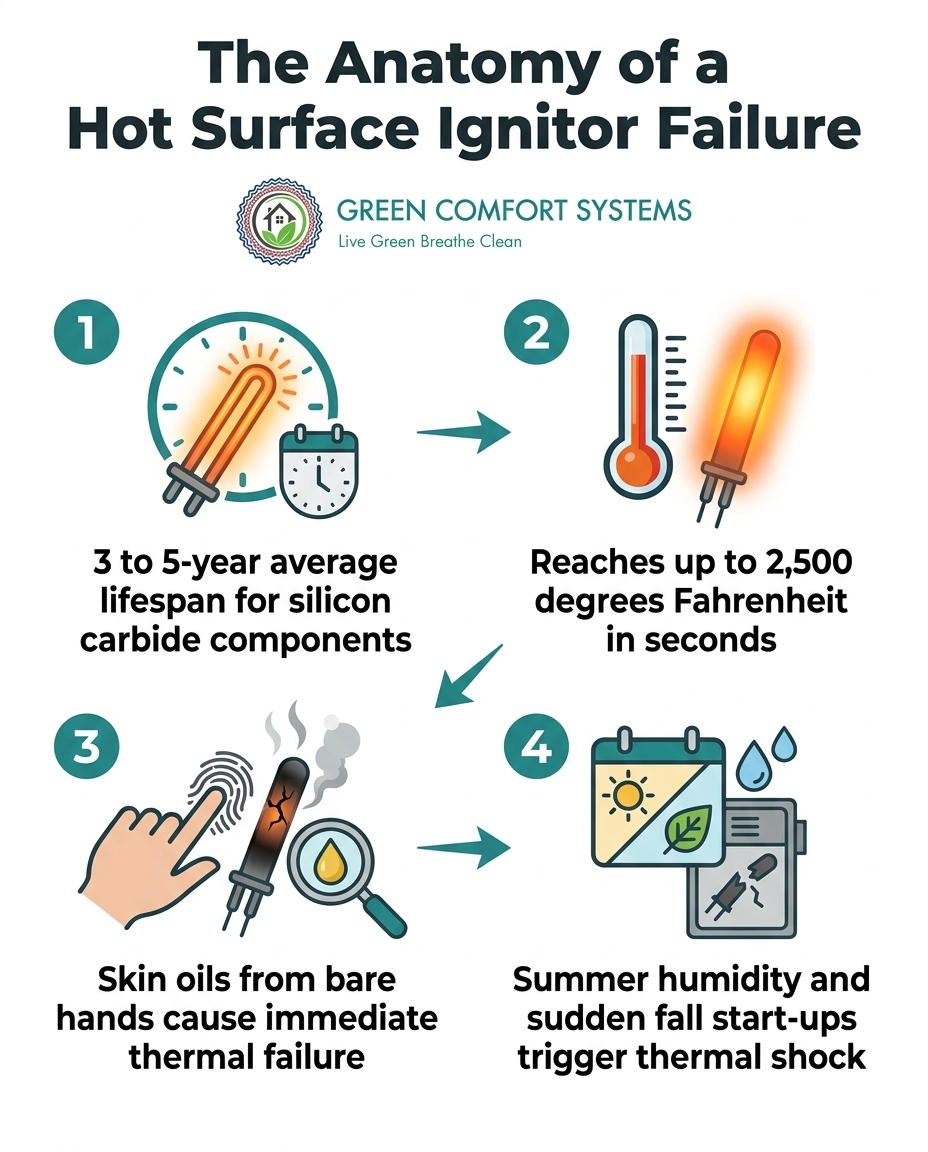
Thermal shock occurs when a material undergoes a rapid, extreme change in temperature, causing it to expand and contract violently. When your furnace kicks on for the first time in autumn, the hot surface ignitor goes from room temperature to roughly 2,500 degrees Fahrenheit in a matter of seconds. This rapid expansion puts immense physical stress on the material. Furthermore, during our pre-heating-season tune-ups, our technicians routinely spot the effects of Maryland's high summer humidity. Throughout the muggy summer, moisture can settle on dormant furnace components in your basement or utility closet. When that damp ignitor is suddenly hit with a massive surge of electricity and heat, the severity of the thermal shock is magnified.
Microscopic Cracks and Silicon Carbide Degradation
Over time, the physical stress of heating up and cooling down takes a toll. Standard silicon carbide ignitors have a natural lifespan of about 3 to 5 years. As they age, the material naturally degrades and becomes brittle.
The breaking point: Microscopic, invisible hairline cracks begin to form along the surface of the ignitor. During the summer, these cracks sit harmlessly. But on that first cold morning, when the electrical current surges through the component, the extreme heat causes those tiny cracks to widen. Because the ignitor relies on an unbroken electrical path to generate heat, a widened crack breaks the circuit entirely. The component snaps, the heat stops, and your furnace fails to start.
Recognizing the Symptoms of a Cracked or Failing Ignitor
Because you cannot simply peek at a pilot light anymore, you need to know the specific signs that point to an electronic ignition failure. Homeowners in Rosedale MD often confuse an ignition failure with a broken blower motor or a bad thermostat. By paying close attention to how your system behaves, you can help your technician diagnose the issue faster.
Here are the most common symptoms of a failing hot surface ignitor:
• Repeated clicking noises: You may hear the furnace click several times as the control board attempts to send electricity to the ignitor. When the gas fails to light, the clicking stops, and the system resets.
• The blower runs, but the air is cold: This is a major point of confusion. The furnace blower motor may turn on to circulate air, but because the gas never ignited, it simply pushes unheated, room-temperature air through your vents.
• Short cycling: The system turns on, runs for a minute or two, and then immediately shuts down. This is a built-in safety feature. If the control board does not detect a flame, it shuts off the gas valve to prevent a dangerous gas buildup in your home.
• Visual damage: If you remove the furnace access panel and look inside (without touching anything), you might see a visible crack on the ignitor element. Sometimes, a failing ignitor will develop a white blister mark or a powdery spot right where the electrical path is burning out.
Why DIY Ignitor Replacement is a Costly Mistake
When you research why your furnace won't start on chilly September mornings in Maryland, you might stumble across online videos suggesting that replacing an ignitor is an easy DIY project. This is a dangerous and costly misconception. Modern furnaces are complex appliances that combine highly combustible natural gas with high-voltage electricity. Attempting to service them without proper licensing is a significant safety risk.
Beyond the inherent dangers of gas and electricity, hot surface ignitors are incredibly fragile. They are made of brittle materials that can snap under the slightest pressure. More importantly, there is a phenomenon known in the HVAC industry as the "skin oil effect." If you touch the gray heating element of a new ignitor with your bare hands, the natural oils from your skin will transfer to the surface. When that ignitor is installed and reaches 2,500 degrees, those microscopic oil spots heat up faster than the rest of the material. This creates severe, uneven localized heating, causing the brand-new ignitor to shatter or burn out almost immediately.
The value of professional expertise: Relying on a professional ensures the job is done safely and correctly the first time. Our technicians at Green Comfort Systems frequently see the difference a professional touch makes. Recently, a local customer reached out with an urgent heating problem, and our technician repaired the issue quickly, resolving it in less than an hour and saving them from the expensive secondary damage we often see after botched DIY attempts. Our licensed professionals guarantee that you receive an ignitor with the correct voltage rating, installed with clean hands and the proper sequencing.
Beyond the Ignitor: Other Culprits for Early Fall Furnace Failures
While a cracked hot surface ignitor is a leading cause of early fall breakdowns in Rosedale MD, it is not the only component that struggles after summer dormancy. Several other issues can mimic an ignition failure, which is why a holistic approach to furnace diagnostics is necessary.
Dirty Flame Sensors: The flame sensor is a thin metal rod that sits inside the burner assembly. Its job is to detect whether a flame is actually present once the gas valve opens. Over time, carbon buildup and summer dust can coat this sensor. If the sensor is dirty, it cannot detect the flame, and it will shut the entire furnace down within seconds as a safety precaution. To the homeowner, this looks exactly like an ignition failure.
Thermostat Communication Errors: After a long season of only operating the cooling side of your system, the thermostat may struggle to communicate with the furnace control board. Wiring issues, dead batteries, or internal dust can prevent the "call for heat" from ever reaching the furnace.
Clogged Air Filters: During the summer, your HVAC filter works hard to pull dust, pollen, and pet dander out of the air. If you forget to change it before fall, that clogged filter severely restricts airflow. Modern furnaces have safety switches that monitor internal temperatures. If restricted airflow causes the furnace to overheat, it will shut down to prevent a fire. Keeping your system clean internally is also vital for your respiratory health, which is why investing in dedicated indoor air quality systems is a great way to protect both your equipment and your family.
The Diagnostic Process for High-Efficiency Heating Systems
Guessing which part is broken is a fast way to waste money. When dealing with complex circuit boards and high-voltage components, you need absolute certainty. At Green Comfort Systems, our team prides itself on a reliable, rigorous diagnostic process built on years of local field experience. We don't just swap parts and hope for the best; our technicians find the exact root cause of the electrical failure to ensure your system is safe and dependable.
Our commitment to quick, professional service is evident in how we handle early fall emergencies. When one of our local customers experienced an urgent system failure during an unseasonable cold snap with a baby in the house, our dispatch team sent a technician quickly to assess and resolve the problem efficiently. We apply that same level of dedicated care to our pre-heating-season tune-ups and diagnostics on chilly September mornings in Maryland.
Here is how a professional diagnostic process works:
1. Thermostat Verification: The technician begins by verifying that the thermostat is sending the correct voltage signal to the furnace control board.
2. Safety Switch Inspection: Before looking at the ignitor, all safety limit switches are tested to ensure the system hasn't locked itself out due to an airflow or overheating issue.
3. Electrical Continuity Testing: Using a specialized multimeter, the technician tests the hot surface ignitor for electrical continuity. If the resistance (measured in ohms) is outside the manufacturer's specified range, it confirms the internal element is degraded or cracked.
4. Voltage Checks: The technician verifies that the control board is actually sending the correct 120-volt current to the ignitor. If the board is failing, replacing the ignitor won't solve the problem.
5. Flame Sensor and Gas Valve Sequence: Finally, the system is run through a complete cycle to ensure the gas valve opens correctly and the flame sensor accurately detects the fire.
Long-Term Solutions: Upgrading vs. Repairing Aging Systems
If your furnace is relatively young, replacing a failed hot surface ignitor is a straightforward, routine repair. However, if your system is aging, an ignition failure might be a warning sign of deeper wear and tear. Homeowners in Rosedale MD should weigh the benefits of a quick fix against the long-term reliability of their heating equipment.
As mentioned earlier, standard silicon carbide ignitors have a typical lifespan of 3 to 5 years. When our Green Comfort Systems technicians replace yours, we will often upgrade it to a newer silicon nitride ignitor. Silicon nitride is much more robust, highly resistant to thermal shock, and can last up to 10 years under normal conditions.
However, if your furnace is over 15 years old and you are experiencing frequent component failures—such as a bad ignitor followed by a failing blower motor or a cracked heat exchanger—it may be time to consider a system replacement. Pouring money into an aging gas furnace is often a losing battle. For homeowners looking to move away from gas combustion entirely, exploring modern heat pump alternatives is an excellent, highly efficient long-term solution that provides both heating and cooling without the need for traditional electronic gas ignitors.
Restoring Your Home's Warmth This Fall
Waking up to a freezing house on chilly September mornings in Maryland is never pleasant, but an electronic ignition failure is a common and highly solvable issue for modern furnaces. By understanding how thermal shock and summer dormancy affect these fragile components, you can appreciate why your system needs professional care rather than a DIY fix.
A cold house in September does not mean your winter is ruined. It simply means it is time to bring in the experts to safely restore your heat. If your furnace is blowing cold air, clicking without lighting, or refusing to start, don't wait for the temperatures to drop further. Reach out for reliable heating repair solutions and schedule a professional diagnostic today. We will pinpoint the exact cause of the failure, replace the worn components safely, and give you the peace of mind that your home will stay warm and comfortable all season long.
Frequently Asked Questions
How do I know if my furnace ignitor is bad?
The most obvious sign of a bad ignitor is a furnace that clicks and runs its blower motor but never produces warm air. You may also notice the system short-cycling, where it turns on briefly and then shuts down for safety. A professional can confirm a bad ignitor by testing its electrical resistance with a multimeter.
Why is my furnace clicking but not igniting?
That clicking sound is your furnace's control board attempting to send an electrical charge to the ignitor or spark system. If the ignitor is cracked, degraded, or covered in debris, it cannot generate the heat required to light the gas. The system will click a few times before locking itself out to prevent a dangerous gas leak.
How long do hot surface ignitors last?
Standard silicon carbide hot surface ignitors typically last between 3 to 5 years before the physical stress of thermal shock causes them to crack. Upgraded silicon nitride ignitors are much more durable and can last up to 10 years. Regular maintenance helps ensure they reach their maximum lifespan.
Why did my furnace ignitor crack on the first cold day?
Ignitors crack on the first cold day due to a phenomenon called thermal shock. After sitting dormant in humid summer conditions, the sudden surge of electricity forces the component to rapidly heat to 2,500 degrees Fahrenheit. This extreme, sudden expansion causes microscopic vulnerabilities to snap, breaking the electrical circuit.
Can I replace a hot surface ignitor myself?
Replacing a hot surface ignitor yourself is highly discouraged due to the safety risks of working with high-voltage electricity and combustible gas. Furthermore, modern ignitors are extremely fragile; simply touching the heating element with your bare hands leaves skin oils that will cause the new component to shatter almost immediately upon heating.
Book Expert Service Or Contact Us
Other Blogs


Get Financing Today
Get the comfort you deserve, without the financial stress.

Latest Blogs
Addressing Drafty Windows and Heating Inefficiencies in Older Forest Hill Homes
Managing the September Swing: Keeping Your Rosedale Home Comfortable When Days Are Hot and Nights Are Cold
Electronic Ignition Failures: Why Your Modern Furnace Won't Start on Chilly September Mornings
