





Salt Air and AC Corrosion: Protecting Your Edgewater Home's Condenser Unit

The Hidden Cost of Waterfront Living on Your Cooling System
Your outdoor cooling equipment is running nonstop, but when you walk past the unit, you notice a growing layer of orange and white crust eating away at the metal fins. Dealing with Salt Air and AC Corrosion: Protecting Your Edgewater Home's Condenser Unit is a frustrating reality for waterfront homeowners who watch expensive mechanical equipment degrade years before its time. The beauty of living near the water comes with a harsh environmental trade-off. While you enjoy the coastal breeze, your outdoor HVAC system is constantly bombarded by salt-laden moisture that aggressively attacks standard aluminum and copper components.
This rapid degradation presents a concrete problem for Edgewater waterfront properties: accelerated rust and galvanic corrosion that eats through condenser coils. As the damage progresses, homeowners face a critical decision point. You have to determine whether the current rust on your outdoor unit is superficial enough to treat with specialized coatings, or if the internal degradation has progressed so far that the unit requires a full replacement to restore efficiency and safety.
Addressing this challenge requires more than a standard tune-up. Professional HVAC services evaluate these specialized environmental conditions to help you make the most cost-effective and environmentally responsible choice for your home's comfort system.
How Brackish Moisture Accelerates Galvanic Corrosion
To understand why your air conditioner is deteriorating so quickly, you have to look at the science of galvanic corrosion. Galvanic corrosion is an electrochemical process that occurs when two dissimilar metals are brought into electrical contact while submerged in an electrolyte. In the case of your outdoor AC unit, the dissimilar metals are the copper refrigerant tubes and the aluminum cooling fins.
In standard inland environments, these metals coexist peacefully for years. However, Edgewater's specific climate changes the equation entirely. The proximity to the Chesapeake Bay and the South River creates a constant supply of brackish moisture in the air. When this salt-laden moisture settles on your condenser unit, it acts as a highly conductive electrolyte. Combined with summer humidity levels that frequently exceed 70%, this environment forms the absolute perfect conditions for rapid, aggressive rust and oxidation.
The timeline of this degradation is shocking to many homeowners. Unprotected coastal AC units can lose significant energy efficiency and suffer severe coil pitting within a single year of installation. According to ASHRAE (American Society of Heating, Refrigerating and Air-Conditioning Engineers) guidelines, coastal HVAC systems operate in one of the harshest environments possible, requiring specialized defenses that standard inland units simply do not need. When you schedule professional air conditioning services, technicians are specifically looking for the early warning signs of this rapid decay.
The Vulnerability of Copper and Aluminum
Standard factory coils are highly susceptible to salt air because they are manufactured for broad, general use, not specifically for marine environments. The aluminum fins are incredibly thin to maximize heat transfer, which makes them highly vulnerable to oxidation. When salt air attacks the aluminum, it turns into a white, powdery substance that easily crumbles away.
As the aluminum deteriorates, the underlying copper tubing is exposed to the elements. The galvanic reaction accelerates, eventually eating microscopic holes into the copper itself. These micro-leaks allow pressurized refrigerant to escape into the atmosphere, leading to sudden system failure right when you need cooling the most.
Evaluating Late-Summer Rust: Is It Too Late to Save the Unit?
The Problem: By the time late summer and August roll around, your AC unit has spent months battling high heat, heavy usage, and constant exposure to brackish humidity. You might look at the outdoor cabinet and see significant rust, leaving you wondering if the system is on the verge of total failure.
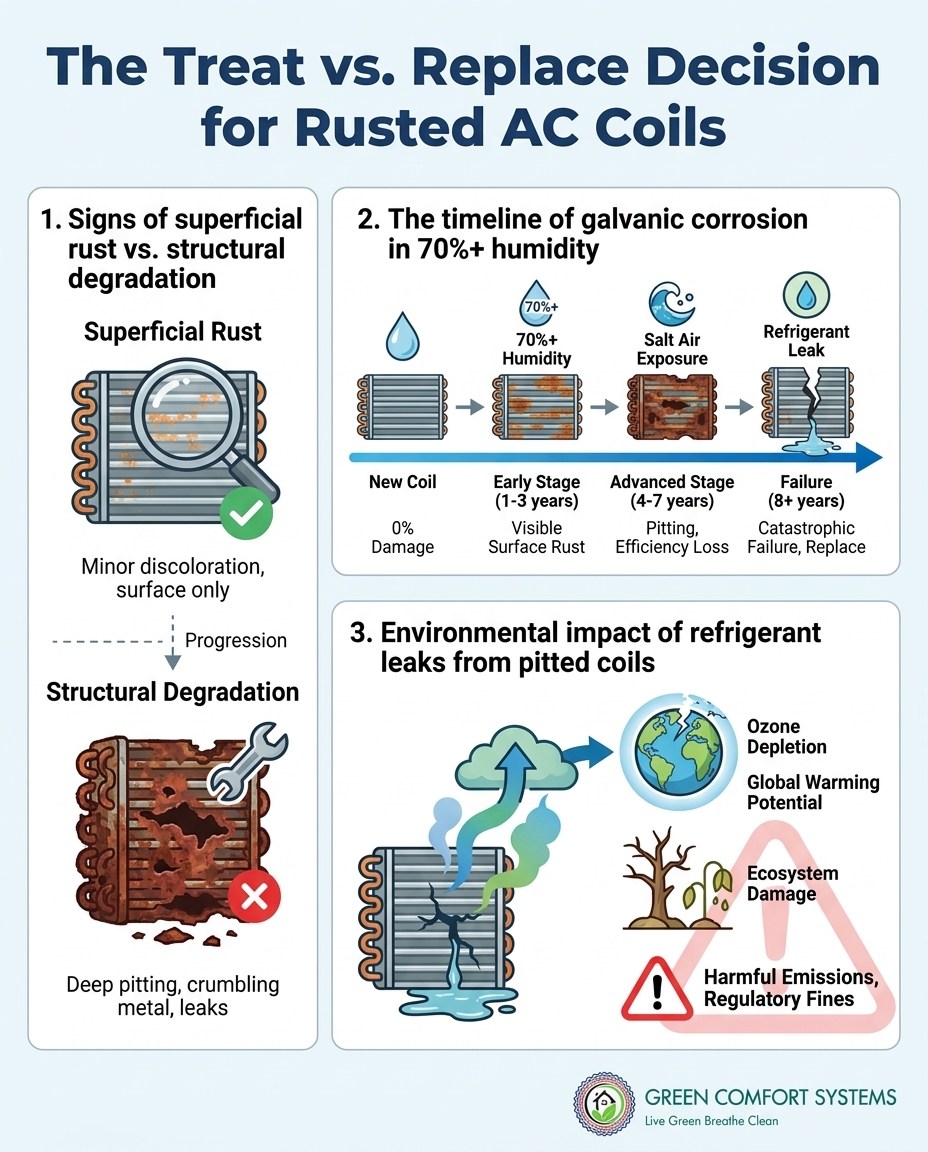
The Cause: Not all rust is created equal. Superficial surface rust often attacks the painted steel cabinet, the fan guard, or the screws holding the unit together. While unsightly, this type of rust does not immediately threaten the mechanical operation of the system. However, structural degradation occurs when the corrosion attacks the actual condenser coil fins and the refrigerant lines. When the fins become brittle and crumble to the touch, the unit loses its ability to transfer heat effectively.
The Solution: You must determine the treat-versus-replace threshold. If the structural integrity of the coil is still intact, professional anti-corrosion coatings can be applied to halt further damage. If the coil is already pitting and crumbling, coatings will no longer adhere properly, and the unit must be replaced. A typical pattern we see in late summer is an urgent need for AC repair when a neglected unit finally gives out. A technician can often arrive, repair the immediate problem in less than an hour, and save the homeowner money in the short term, but if the underlying structural corrosion isn't properly evaluated and addressed, the fix is only temporary.
• Cabinet Exterior — Superficial Rust (Treatable): Flaking paint with orange surface rust on panels. — Structural Degradation (Replace): Rust holes completely through the metal casing.
• Coil Fins — Superficial Rust (Treatable): Fins are slightly discolored but remain rigid and intact. — Structural Degradation (Replace): Fins are covered in white powder and crumble when touched lightly.
• Refrigerant Lines — Superficial Rust (Treatable): Lines show minor surface oxidation but hold pressure. — Structural Degradation (Replace): Lines show deep pitting, oil stains, or active refrigerant micro-leaks.
• System Performance — Superficial Rust (Treatable): Unit cools the home normally with standard energy bills. — Structural Degradation (Replace): Unit runs constantly, struggles to cool, and energy bills spike.
Why Preventing Coil Corrosion Protects the Environment
Corrosion prevention is often viewed purely through the lens of financial savings, but for Edgewater waterfront properties, it is also a vital environmental responsibility. Green Comfort Systems is committed to an eco-friendly mission, which means we look at the broader impact of failing HVAC equipment. Preventing corrosion isn't just about saving the machinery; it's about stopping premature disposal and preventing toxic chemical leaks into our local ecosystem.
When salt air eats through the copper tubing of your condenser coil, it creates microscopic holes. These micro-leaks allow chemical refrigerants to vent directly into the atmosphere. Refrigerants are potent greenhouse gases, and releasing them contributes significantly to environmental harm. When an AC unit develops a leak due to severe pitting, it requires immediate attention. A professional technician will check the system, figure out the problem, and refill the refrigerant level to restore cooling—but if that leak was caused by advanced, preventable salt corrosion, the environmental damage from the escaped chemicals has already occurred.
Furthermore, extending the lifespan of your outdoor AC unit directly reduces landfill waste. Manufacturing a brand-new air conditioner requires a massive amount of energy, raw materials, and transportation resources, all of which carry a heavy carbon footprint. By proactively maintaining and protecting your existing equipment from salt air degradation, you are making a highly sustainable choice that benefits both your household budget and the local coastal environment.
Defending Your Equipment with Professional Anti-Corrosion Coatings
If your condenser unit is still structurally sound, the most effective defense against salt air is the application of professional anti-corrosion coatings. Standard factory coatings are generally thin and designed to handle normal rain and inland dust. They almost always fail faster in brackish environments because they cannot withstand the continuous, aggressive nature of a saltwater electrolyte.
Professional HVAC technicians use specialized polyurethane and epoxy coil coatings designed specifically for marine and coastal applications. These high-grade coatings work by completely encapsulating the vulnerable copper and aluminum components. By creating a durable, impermeable barrier, the coating physically prevents the saltwater electrolyte from ever reaching the dissimilar metals, effectively stopping galvanic corrosion in its tracks.
A critical warning for homeowners: You must strictly avoid DIY chemical coating applications. Applying aftermarket protective sprays is a highly technical process that requires specialized equipment and training. If a coating is applied too thickly or unevenly by an unlicensed individual, it will severely restrict the airflow through the condenser fins. This causes the compressor to overheat, drastically reduces the system's energy efficiency, and will immediately void your manufacturer's warranty. Whether you are looking at standard AC protection or specialized heat pump maintenance, anti-corrosion treatments must always be handled by certified professionals.
Ongoing Defense: Freshwater Rinsing and System Monitoring
While professional coatings provide the primary armor for your system, your routine habits play a massive role in extending the life of the equipment. August heat and high humidity act as intense catalysts for chemical reactions, making late-summer maintenance especially critical for Edgewater homeowners. Between your professional service visits, there are safe, actionable steps you can take to mitigate salt buildup.
• Frequent, gentle freshwater rinsing: Use a standard garden hose on a gentle shower setting to rinse the outdoor condenser cabinet every few weeks. This washes away accumulated salt and brackish residue before it has time to bake into the metal. Never use a high-pressure nozzle or power washer, as the force will instantly bend and crush the delicate aluminum fins.
• Clear coastal vegetation: Keep the area around the unit completely clear of tall grasses, weeds, and coastal shrubs. The unit needs at least two feet of clearance on all sides to promote proper airflow. Good airflow ensures the unit dries quickly after a rainstorm or heavy morning dew, reducing the time moisture sits on the metal.
• Monitor for efficiency loss: Pay close attention to how your system is performing. If you notice the house takes longer to cool down, or if the unit seems to run constantly without shutting off, it could be an early warning sign of coil degradation. Catching these signs early is essential when troubleshooting an AC that is not cooling.
• Schedule seasonal inspections: Remember that rinsing and monitoring supplement, rather than replace, professional air conditioning services. A technician can spot microscopic pitting long before it causes a catastrophic breakdown.
Frequently Asked Questions About Coastal AC Care
How do you protect an outside AC unit from salt air?
The most effective way to protect an outside AC unit from salt air is through a combination of professional anti-corrosion coatings and routine freshwater rinsing. Certified technicians can apply marine-grade epoxy or polyurethane coatings to the internal coils to block the saltwater electrolyte from touching the metal. Homeowners should supplement this by gently rinsing the exterior cabinet with a garden hose every few weeks to wash away accumulated salt residue.
Does salt air ruin air conditioners?
Yes, salt air can rapidly ruin unprotected air conditioners through a process called galvanic corrosion. The salt-laden moisture acts as a highly conductive electrolyte that aggressively attacks the dissimilar metals (copper and aluminum) inside the condenser. Without proper coastal protection, an AC unit in a brackish waterfront environment can suffer severe efficiency loss and coil pitting within just one year.
What is the best AC coating for coastal areas?
The best AC coatings for coastal areas are professional-grade polyurethane or specialized epoxy treatments designed specifically for marine environments. These coatings are engineered to be thin enough to allow proper heat transfer, yet durable enough to completely seal the metal away from corrosive salt moisture. These must always be applied by a licensed professional to avoid restricting airflow and voiding the system's warranty.
How long do AC units last near the water?
An unprotected AC unit located directly near brackish or salt water may only last 5 to 7 years before the coils completely degrade and fail. However, with proactive maintenance, regular freshwater rinsing, and professional anti-corrosion coil coatings, a coastal AC unit can achieve a lifespan much closer to the standard 12 to 15 years expected in inland environments.
Can you fix a rusted AC coil?
You cannot reverse or "fix" rust on an AC coil once structural degradation and pitting have occurred. If the aluminum fins are crumbling and turning to white powder, the entire coil must be replaced to restore the system's efficiency and prevent toxic refrigerant leaks. If the rust is purely superficial and the metal is fully intact, a professional can clean the coil and apply a protective coating to stop further decay.
Secure Your Condenser Before the Cooling Season Ends
Addressing salt air corrosion before the damage becomes irreversible is the smartest move you can make for your waterfront property's HVAC system. Late summer and August take a heavy toll on outdoor equipment, making this the perfect time to evaluate your condenser. Don't wait for a sudden breakdown or a costly refrigerant leak. Contact your local experts today to have your unit professionally evaluated for treat-versus-replace viability, ensuring your home stays cool and eco-friendly for seasons to come.
Book Expert Service Or Contact Us
Other Blogs


Get Financing Today
Get the comfort you deserve, without the financial stress.

Latest Blogs
Why We Insist on Carbon Monoxide Testing During Every Rosedale Heating Inspection
Upgrading to a Smart Thermostat in Glen Burnie: Navigating C-Wire Requirements

Introducing the Green Legacy Initiative: How Green Comfort Systems Gives Back to Maryland's Forests
