





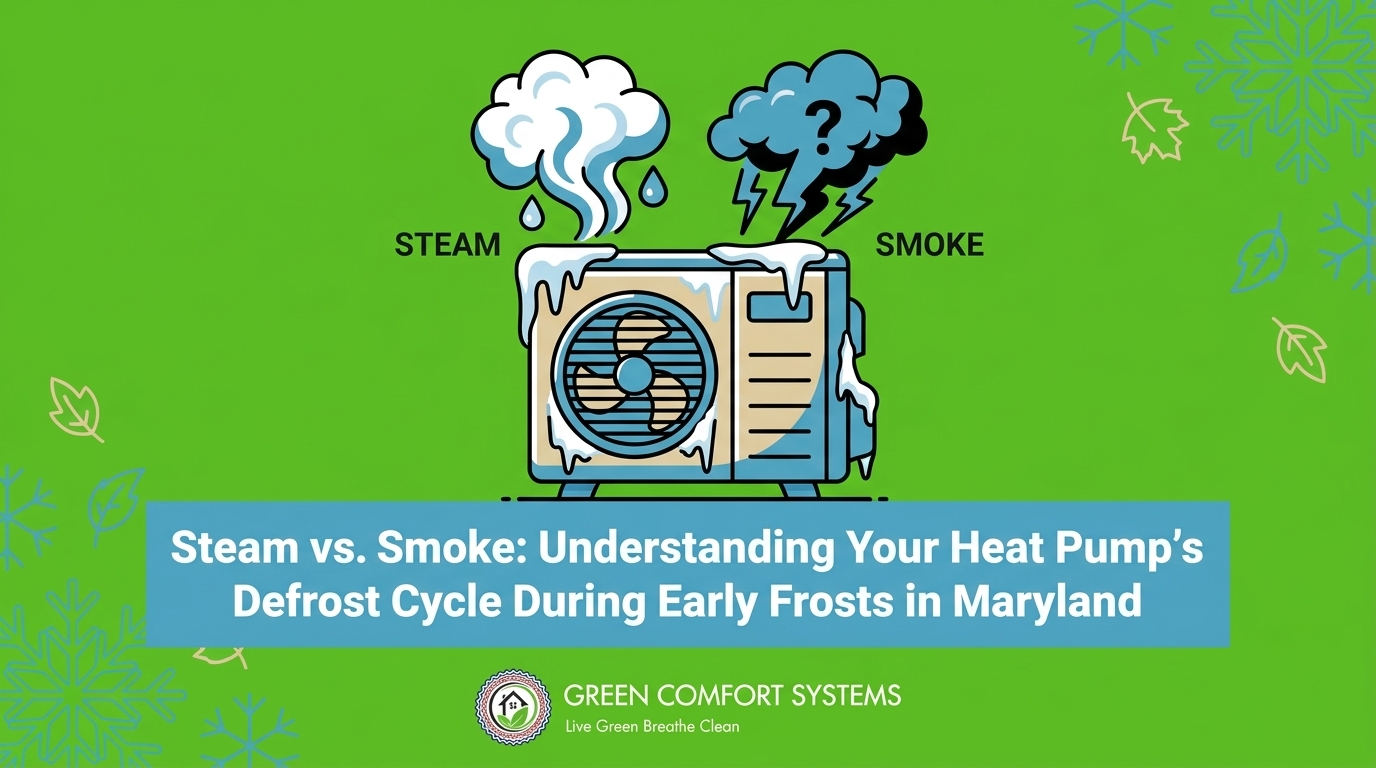
Understanding Your Heat Pump's Defrost Cycle During Early Frosts in Maryland

The Terrifying First Cold Snap: Is Your Heat Pump on Fire?
It is 7:00 a.m., the temperature just plummeted overnight, and you look out the window to see a dense white cloud billowing from your outdoor unit. Your immediate instinct is to panic, hit the emergency shutoff switch, and grab the phone. However, Understanding Your Heat Pump's Defrost Cycle During Early Frosts in Maryland is the key to recognizing whether you are facing a genuine electrical emergency or simply watching your system perform a completely normal, self-protective function.
In our years of providing trusted professional diagnostics and support, our team at Green Comfort Systems has helped countless homeowners navigate this exact panic. To learn more about how we can help, explore our heat pump installation and repair.
We typically see this terrifying moment happen during a late September early frost. You recently switched your thermostat from cooling to heating for the first time this season. The outdoor air is crisp, and your system is working hard to extract whatever ambient heat it can find. Suddenly, the outdoor fan stops spinning, a loud "whoosh" echoes from the cabinet, and a massive plume of white vapor shoots into the cold morning air. Homeowners frequently search for answers regarding smoke coming from heat pump outside, fearing the worst.
Before you rush outside in your slippers to inspect the damage, take a deep breath. What you are likely seeing is not smoke, but steam. Heat pumps are incredibly efficient machines designed to pull heat from the outdoor air and transfer it inside your home. Because they operate by moving heat rather than generating it, they are susceptible to frost buildup on their outdoor coils when temperatures drop near freezing. To keep the airflow moving and the system running efficiently, the heat pump must occasionally melt this frost away. This built-in maintenance routine is entirely automatic, safe, and necessary for your home's comfort.
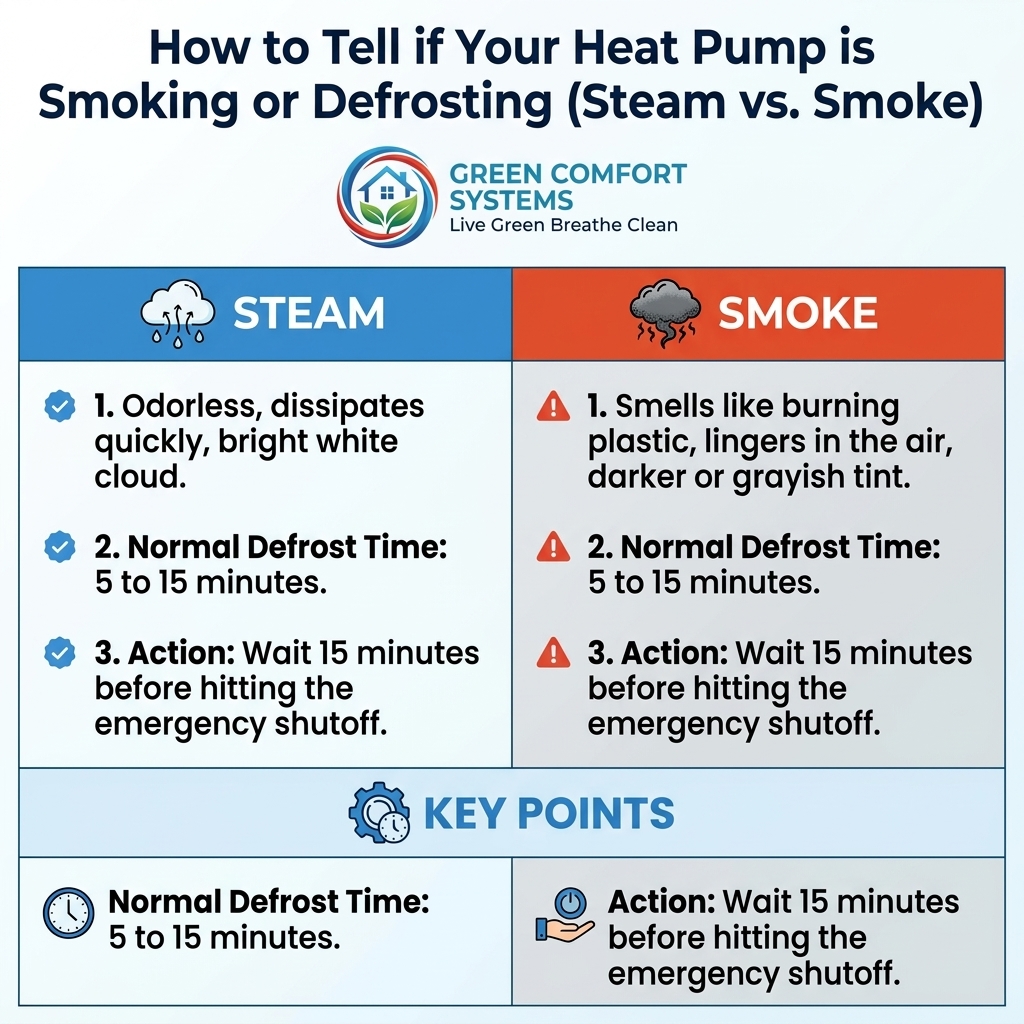
Steam vs. Smoke: How to Tell the Difference Immediately
When you spot a cloud rising from your outdoor condenser, the most critical first step is observing the vapor without putting yourself in danger. Do not touch the unit, and do not open the electrical panel. Instead, watch how the cloud behaves in the air and pay close attention to any odors. The differences between water vapor and a burning component are distinct and easy to spot once you know what to look for.
Visual Characteristics of Harmless Steam
• Bright white color: Steam from melting frost is typically a clean, bright white cloud that looks similar to your breath on a cold morning.
• Rapid evaporation: Because it is simply heated water vapor hitting drier, colder ambient air, the cloud will dissipate almost immediately after leaving the unit.
• Upward billowing: The vapor rises quickly and directly upward, especially since the outdoor fan has stopped spinning to allow the heat to concentrate.
Warning Signs of Actual Smoke
• Darker tint: Smoke from an electrical fire or a burned-out motor often carries a grayish, bluish, or even black tint.
• Lingering presence: Unlike steam, smoke does not evaporate. It lingers heavily in the yard, drifting slowly with the wind.
• Toxic odors: This is the most definitive test. Steam is completely odorless. An electrical fire will emit a harsh, acrid smell resembling burning plastic, melting rubber, or ozone.
The quick fix: If the cloud is white, odorless, and disappears quickly into the late September early frost air, you are simply watching water vapor. There is no need to intervene.
• Color — Normal Defrost Steam: Bright white, semi-transparent. — Electrical Smoke: Gray, blue, or dark black.
• Smell — Normal Defrost Steam: Odorless (smells like normal outside air). — Electrical Smoke: Acrid, burning plastic, or melting rubber.
• Behavior — Normal Defrost Steam: Dissipates and vanishes rapidly in the air. — Electrical Smoke: Lingers, hangs in the yard, drifts slowly.
• Duration — Normal Defrost Steam: Lasts only a few minutes during the cycle. — Electrical Smoke: Continues as long as the component burns.
Why Maryland's Climate Triggers Rapid Ice Buildup on Coils
To understand why your system produces so much steam, it helps to understand the specific environmental factors at play in Rosedale MD and surrounding Maryland areas. At Green Comfort Systems, our technicians are constantly navigating the challenges of our local weather. Heat pumps operate by absorbing heat energy from the outside air and compressing it to warm your home. Even when it feels cold outside to you, there is still heat energy in the air. As the outdoor unit pulls this heat across its condenser coils, the coils themselves become very cold—often dropping below the freezing point of water.
Maryland's early fall weather creates a perfect storm for rapid frost accumulation. Our regional relative humidity often exceeds 70% during these transitional months. This means there is a massive amount of airborne moisture floating around your yard. When this heavy, moisture-laden air makes contact with the freezing-cold condenser coils, condensation forms instantly. Because the coils are below freezing, that condensation rapidly turns into frost.
A light layer of white frost coating the outside of your unit is entirely normal and expected during this weather pattern. In fact, it proves that your system is successfully extracting heat from the outdoor air. However, if that frost is allowed to build up unchecked, it will eventually form a solid wall of ice. This ice blocks the airflow through the aluminum fins, suffocating the system and preventing it from absorbing any more heat. To prevent this "glacier effect," the system must periodically melt the frost away.
Inside the Defrost Cycle: What Your System is Actually Doing
Your heating system is highly intelligent. It features internal sensors and a dedicated defrost control board designed to monitor the temperature of the outdoor coils and the duration of the system's run time. When these sensors detect that ice buildup is restricting airflow and reducing efficiency, the board automatically triggers the defrost cycle. This process is a marvel of HVAC engineering.
If you are curious about what your heat pump's outdoor unit actually does, the defrost cycle is one of its most impressive functions. Here is the step-by-step breakdown of what happens during this brief period:
1. The Role of the Reversing Valve
The reversing valve acts as the brain of the operation. When the defrost cycle begins, this valve physically shifts the flow of refrigerant inside the pipes. It temporarily switches the system from heating mode back into cooling mode. By doing this, the system takes the hot, compressed refrigerant gas from inside your house and pumps it directly into the outdoor coils. You will often hear a distinct, loud "whoosh" sound when this valve engages. This sudden rush of hot gas rapidly heats the outdoor coils, melting the accumulated frost from the inside out.
2. Why the Outdoor Fan Stops Spinning
Simultaneously, the outdoor fan on top of the unit deliberately shuts off. This is a feature, not a bug. If the fan kept spinning, it would blow freezing outdoor air across the coils, fighting against the hot refrigerant trying to melt the ice. By stopping the fan, the system traps the intense heat directly around the aluminum fins, accelerating the melting process. Because the fan is off, the rapidly melting frost turns into steam that billows straight upward in a dramatic, concentrated cloud—which is exactly why so many people search for answers about smoke coming from heat pump outside.
3. Supplemental Indoor Heating
Because the system has temporarily reversed into cooling mode, it is technically pulling heat out of your house to melt the outdoor ice. To prevent your indoor vents from blowing cold air during this cycle, the system automatically activates its secondary backup heat strips (if installed). This keeps your home warm and comfortable while the outdoor unit clears itself off.
The 15-Minute Rule: How Long Should the Defrost Cycle Last?
Setting clear operational expectations is the best way to avoid unnecessary panic. A normal, healthy defrost cycle typically lasts between 5 and 15 minutes. The exact duration depends on the severity of the late September early frost, the amount of ice buildup on the coils, and the current outdoor temperature.
The 15-Minute Rule: If you see steam rising from your unit, check your watch. Wait a full 15 minutes before assuming the system is broken or manually hitting the electrical shutoff switch. Interrupting a defrost cycle prematurely forces the system to start over later, which can lead to severe ice accumulation over time.
Once the internal sensors detect that the outdoor coil temperature has risen enough to melt all the frost (usually around 50°F to 57°F), the defrost control board terminates the cycle. You will hear another loud "whoosh" as the reversing valve shifts the refrigerant back to heating mode. The outdoor fan will spin back to life, blowing away the remaining steam, and the compressor will resume its normal humming sound as it goes back to warming your home.
When to Call a Professional for Heat Pump Issues
While steam and temporary frost are normal, there are specific warning signs that indicate a genuine malfunction. Transitioning from a light frost to a thick, solid block of ice is a major red flag. If your outdoor unit looks like it is encased in a glacier, and the ice is several inches thick, the defrost board, the reversing valve, or the refrigerant charge may be failing.
Just last season, our team helped a local homeowner who reached out for maintenance on their heating system after noticing strange behavior and poor performance during a winter freeze. One of our technicians arrived on time, thoroughly explained the planned diagnostic work, and completed the maintenance to get the system back to normal without pushing unnecessary parts.
Call a professional for diagnostics if you notice any of the following:
• The 15-minute mark passes: If the unit has been steaming and the fan has been off for more than 20 minutes, the cycle is stuck.
• Solid ice accumulation: Normal frost looks like a white dusting. Solid, clear, or heavily layered ice means the system is failing to clear itself.
• Actual smoke or burning smells: If you smell burning plastic, shut off the power immediately at the breaker and call for service.
Working with our local team ensures you get accurate diagnostics rather than unnecessary parts replacements. At Green Comfort Systems, we possess a deep understanding of Maryland's unique climate swings and know exactly how the high humidity in Rosedale MD and surrounding Maryland areas affects these systems. Never attempt DIY fixes like chipping the ice away with a screwdriver or pouring hot water over the electrical components. Chipping ice frequently ruptures the delicate aluminum fins and pressurized refrigerant lines, turning a minor repair into a major replacement. If a central unit is constantly struggling to keep up with specific rooms, supplementing your home with targeted ductless mini splits can also improve overall comfort and reduce the strain on your main system.
Frequently Asked Questions About Heat Pump Defrosting
Why is my heat pump smoking in the winter?
Most likely, your heat pump is not smoking at all; it is releasing steam during its automatic defrost cycle. When the system shifts hot refrigerant to the outdoor coils to melt accumulated frost, the rapid melting creates water vapor. Because the outdoor fan stops spinning during this process, the steam billows upward in a concentrated cloud that closely resembles white smoke. This is a normal, safe function of the system.
How do I know if my heat pump is on fire or defrosting?
The easiest way to tell the difference is by using your sense of smell and watching how the cloud behaves. Steam from a defrost cycle is completely odorless and will dissipate rapidly into the cold air. Smoke from an electrical fire will smell strongly of burning plastic, melting rubber, or ozone, and the darker cloud will linger and drift slowly through your yard.
How long does a heat pump stay in defrost mode?
A typical defrost cycle lasts anywhere from 5 to 15 minutes. The exact time depends on how much frost has built up on the coils and the current outdoor ambient temperature. Once the internal sensors detect that the coil is warm enough to be ice-free, the system will automatically switch back to normal heating mode.
Is it normal for a heat pump to steam?
Yes, it is entirely normal and expected. When the unit operates in cold, humid weather, condensation freezes on the outdoor coils. The system must periodically melt this frost to maintain airflow and efficiency. The steam you see is simply the byproduct of this rapid melting process hitting the cold outside air.
Why does the outdoor fan stop during the defrost cycle?
The outdoor fan stops spinning to trap heat around the condenser coils. If the fan continued to run, it would blow freezing outdoor air over the coils, actively fighting the hot refrigerant trying to melt the ice. Stopping the fan accelerates the melting process and helps the system return to heating your home much faster.
What should I do if my heat pump is encased in solid ice?
If your unit is covered in a thick, solid block of ice rather than a light dusting of white frost, you should call a professional HVAC technician. Solid ice indicates that the defrost cycle is failing, the reversing valve is stuck, or the system is low on refrigerant. Never try to chip the ice away with tools, as this can easily puncture the pressurized refrigerant lines.
Enjoy a Warm and Worry-Free Fall Season
Seeing a massive cloud of vapor rising from your yard during a late September early frost can be alarming, but in most cases, it is simply a sign that your system is actively protecting itself. By understanding the visual and auditory cues of the defrost cycle, you can save yourself the stress of an unnecessary emergency service call and enjoy the changing seasons with confidence.
As the weather continues to cool down, ensuring your system is prepared for the heavy lifting of winter is always a smart move. A thorough pre-season tune-up verifies that internal components like the reversing valve, defrost control board, and temperature sensors are all operating precisely as they should. If you have lingering doubts about your system's performance, or if you want to ensure your home stays cozy all winter long, reach out to our team for professional heating services today.
Book Expert Service Or Contact Us
Other Blogs


Get Financing Today
Get the comfort you deserve, without the financial stress.

Latest Blogs
Retrofitting Modern Heating Solutions into Mid-Century Perry Hall Homes
The Danger of Closing Vents in Unused Rooms During the Rosedale Heating Season
Understanding Your Heat Pump's Defrost Cycle During Early Frosts in Maryland
