





Upgrading to a Tankless Water Heater in Rosedale: Gas vs. Electric Operating Costs

Is Your Home Ready for a Tankless Upgrade Before the Morning Rush Begins?
Are you confident your current plumbing can handle the sudden shift in morning routines that comes with the August back-to-school transition? When researching Upgrading to a Tankless Water Heater in Rosedale: Gas vs. Electric Operating Costs, homeowners often focus entirely on the monthly utility bills. However, in our years of serving Rosedale families at Green Comfort Systems, we've found that the true cost of upgrading goes far beyond the energy source you choose. Late summer brings concentrated morning hot water demand as families shower, run dishwashers, and start laundry simultaneously. If your aging traditional tank is already struggling to keep up, replacing it with an on-demand system seems like the logical next step.
Upgrading to a tankless system is about much more than just picking a highly rated unit off a shelf. The choice between gas and electric impacts both daily performance and the initial scope of the installation. A unit that looks perfect on paper might require extensive, hidden modifications to your home's existing framework. To ensure your home is fully prepared for the seasonal shift, you need a comprehensive assessment of your water heater services and infrastructure. This guide will walk you through the real-world operating costs and hidden retrofitting hurdles of both gas and electric systems, helping you make an informed, long-term decision.
The Hidden Realities of Tankless Retrofitting
When comparing water heaters, most homeowners look straight at the Uniform Energy Factor (UEF). While UEF is a great indicator of a unit's energy efficiency under laboratory conditions, it tells you nothing about the practical realities of what your home's existing infrastructure can support. Operating costs are only part of the equation; your existing electrical panel or gas line dictates the true scope of the upgrade.
Moving Beyond the UEF Rating
Replacing a traditional storage-tank water heater with a tankless unit almost always requires some level of infrastructure modification. Traditional tanks heat water slowly over time, storing it for later use. This means they draw a relatively low, steady amount of energy. Tankless units, on the other hand, must heat water instantly as it flows through the heat exchanger. This on-demand heating requires a massive, instantaneous spike in energy—far more than most older homes are wired or piped to deliver.
The retrofitting reality check: Homeowners are often surprised to learn about the high amperage panel requirements for whole-home electric tankless systems, or the necessity of upsizing gas lines for gas models. If you choose a unit based solely on efficiency ratings without assessing your home's current capacity, you risk facing unexpected retrofitting delays and significant additional labor.
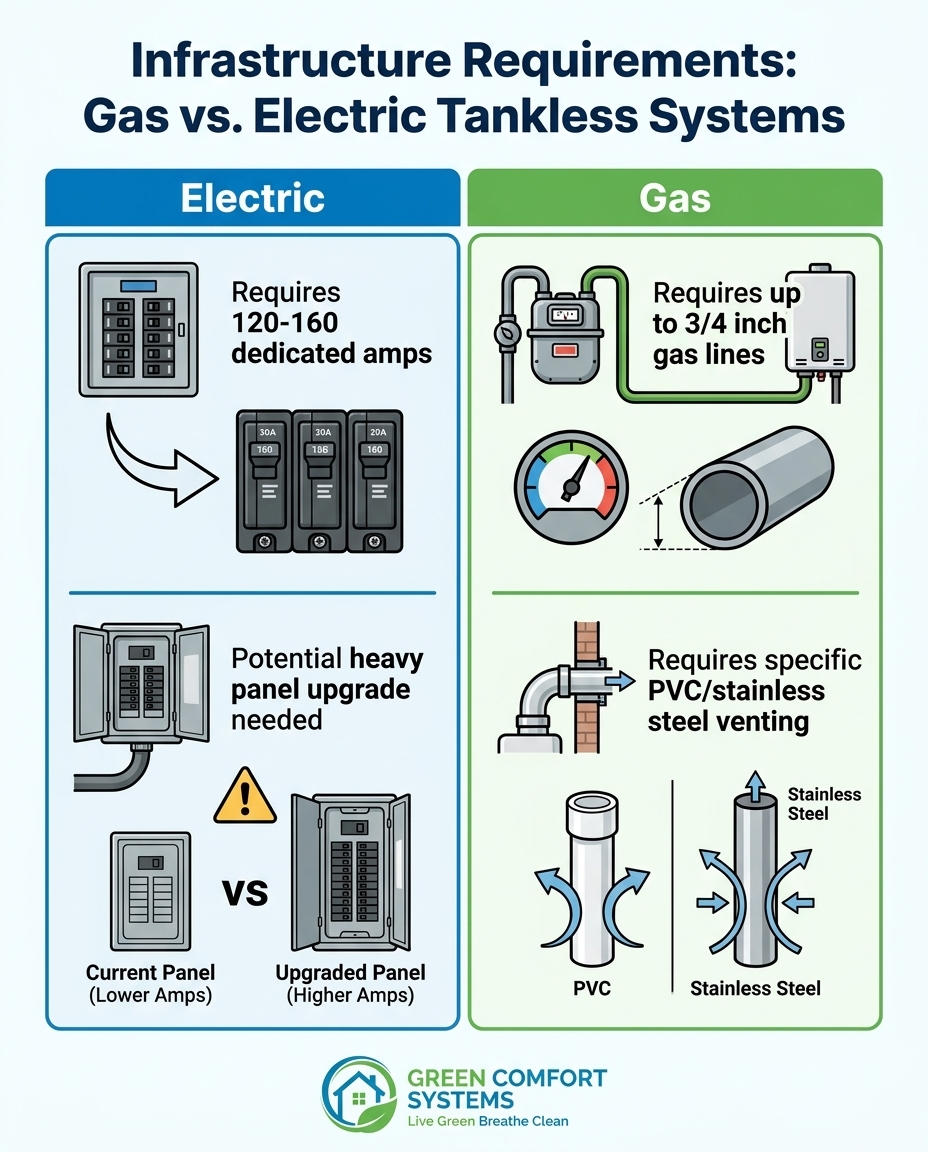
To avoid these surprises, a thorough professional evaluation is necessary. Reviewing a comprehensive tankless water heater installation guide can help you understand the sheer scale of the transition. The table below outlines the primary infrastructure differences you must consider before making a purchase.
• Electrical Capacity — Traditional Tank System: Standard 30-amp dedicated breaker — Whole-Home Tankless Requirement: 120 to 160+ dedicated amps (Electric models)
• Gas Line Sizing — Traditional Tank System: Standard 1/2-inch line — Whole-Home Tankless Requirement: Up to 3/4-inch line (Gas models)
• Venting Materials — Traditional Tank System: Standard metal B-vent — Whole-Home Tankless Requirement: Specific PVC or stainless steel (Gas models)
• Space Requirements — Traditional Tank System: Large footprint, requires floor space — Whole-Home Tankless Requirement: Wall-mounted, minimal footprint
Electric Tankless Water Heaters: Infrastructure and Efficiency
Electric tankless water heaters are highly praised for their point-of-use efficiency. Because there is no combustion process and no venting required, nearly all the electricity consumed goes directly into heating the water. However, providing a deep dive into the specific requirements reveals that installing a whole-home electric tankless system is a major electrical undertaking.
Understanding the Electrical Load
The defining characteristic of a whole-home electric tankless water heater is its massive electrical demand. To heat water instantly for multiple fixtures, these units frequently require 120 to 160 amps dedicated solely to the heater. To put that into perspective, our technicians frequently encounter older Rosedale properties where the total electrical service panel capacity is only 100 or 150 amps for the entire house.
This high amperage requirement often necessitates a heavy and extensive electrical panel upgrade. If your home requires a new panel, heavier gauge wiring, and potentially an upgraded service drop from the utility company, the initial retrofitting scope increases significantly.
Here is a breakdown of the pros and cons of electric tankless systems:
• Pro: Exceptional Energy Efficiency. Electric models operate with near-perfect energy conversion at the point of use, meaning very little energy is wasted.
• Pro: No Venting Required. Because they do not burn fossil fuels, electric units do not produce exhaust gases, eliminating the need for complex venting systems or roof penetrations.
• Pro: Compact Design. Electric units are generally smaller than their gas counterparts, making them easier to install in tight spaces like closets or under stairwells.
• Con: Massive Amperage Draw. The high amperage panel requirements for whole-home electric tankless units almost always trigger the need for a heavy electrical panel upgrade in older properties.
• Con: Relative Operating Costs. Depending on local utility rates, electricity can be more expensive per unit of energy than natural gas, potentially leading to higher monthly operating costs despite the unit's high efficiency.
• Con: Flow Rate Limitations. Electric units generally produce a lower Gallons Per Minute (GPM) flow rate than gas units, which can be a bottleneck during the morning rush.
Gas Tankless Water Heaters: Venting and Fuel Lines
For households with high hot water demands, gas tankless water heaters are often the preferred choice. They offer robust performance and can easily handle simultaneous showers and appliance usage. However, just like electric models, gas units come with their own set of strict infrastructure requirements.
Fuel Delivery and Safe Exhaust
A gas tankless unit requires a massive amount of fuel in a very short time to achieve on-demand heating. Our installation teams at Green Comfort Systems regularly see that while traditional tank heaters typically operate fine on a standard 1/2-inch gas line, a high-capacity gas tankless unit often requires a larger 3/4-inch gas line to deliver the necessary British Thermal Units (BTUs). If your current gas meter or internal piping cannot supply this volume, a professional will need to run new lines.
Furthermore, gas units require specialized venting. The combustion process produces exhaust gases that must be safely routed outside. High-efficiency condensing gas tankless heaters extract so much heat from the exhaust that the remaining gases are relatively cool, allowing for the use of specific PVC venting. Non-condensing units, however, require specialized stainless steel venting to withstand higher exhaust temperatures. Upgrading your home's tankless boiler and water heating solutions means addressing these venting realities head-on.
Here is a breakdown of the pros and cons of gas tankless systems:
• Pro: High Flow Rates. Gas units excel at producing a strong flow rate (GPM), ensuring consistent hot water even during peak morning usage when multiple fixtures are running.
• Pro: Favorable Operating Costs. In many regions, natural gas remains a more cost-effective energy source than electricity, resulting in lower relative operating costs over the lifespan of the unit.
• Pro: Better Cold-Weather Performance. Gas burners can generate the intense heat necessary to warm freezing groundwater quickly, making them highly effective in colder climates.
• Con: Gas Line Upsizing. The requirement for up to 3/4-inch gas lines often means retrofitting existing plumbing to accommodate the higher BTU demand.
• Con: Complex Venting Requirements. Safely exhausting combustion gases requires specific PVC or stainless steel venting, which may involve cutting new holes in walls or roofs.
• Con: Annual Maintenance. Gas units require regular professional maintenance, including burner cleaning and heat exchanger descaling, to maintain peak efficiency and safety.
How Local Winter Temperatures Impact Your Choice
When evaluating tankless water heaters, one of the most critical factors is often the most overlooked: the temperature of the water entering your home. This introduces the concept of "temperature rise," or Delta T. Delta T is the difference between the incoming groundwater temperature and your desired output temperature (typically around 120 degrees Fahrenheit for a standard shower).
The Problem: Freezing Groundwater
In Rosedale, MD, winter groundwater temperatures drop significantly. While the water entering your pipes in August might be a mild 65 degrees, by January, that same water can plunge into the low 40s. This drastic drop means your tankless water heater has to work much harder to bridge the gap.
The Cause: Pushing Capacity Limits
If your incoming water is 45 degrees and you want a 120-degree shower, your water heater must achieve a Delta T of 75 degrees instantly. This high demand requires a massive amount of energy. When an electric tankless unit is forced to achieve a 75-degree temperature rise, its flow rate (GPM) drops drastically. A unit that provides plenty of hot water in late summer might restrict flow to a trickle in winter just to reach the target temperature. Achieving this high Delta T without losing water pressure often pushes electric units past standard residential electrical capacities.
The Solution: Matching Fuel to Climate
Because gas units burn fuel to create intense, immediate heat, they generally have an easier time achieving a high temperature rise without maxing out utility infrastructure or crippling your water pressure. If you are exploring comprehensive energy-efficient heating upgrades, factoring in local climate realities ensures your system performs consistently year-round. For homes in regions with cold winters, gas tankless systems often provide the most reliable winter performance.
Factoring in Long-Term Operating Costs and Incentives
Evaluating the financial impact of a tankless upgrade requires looking beyond the sticker price of the unit itself. You must weigh the higher initial retrofitting costs against your long-term monthly utility consumption. A cheaper unit that requires a massive electrical panel upgrade may end up costing more overall than a premium unit that utilizes your existing gas lines.
Balancing Retrofits and Utility Bills
The key to maximizing your investment is understanding relative savings. Gas generally offers lower monthly operating costs, but if your home doesn't already have gas service, the cost of running new lines and installing venting might negate those savings for years. Conversely, if your home already has robust electrical service (200+ amps), an electric unit might save you money on installation, even if the monthly electricity usage is slightly higher.
Leveraging Incentives and Maintenance
To help offset the initial investment, generic federal tax credits and local utility rebates may apply to qualifying high-efficiency tankless installations. These incentive programs are designed to encourage energy-efficient upgrades, but requirements change frequently based on efficiency tiers and fuel types. We advise readers to consult with a professional and their local utility provider to understand which energy source offers the best relative savings for their specific home setup.
Finally, remember that maximizing the lifespan of your unit through proper maintenance directly offsets operating costs. Both gas and electric tankless heaters require periodic flushing to remove mineral scale buildup. A heavily scaled heat exchanger forces the unit to run longer and work harder, driving up utility consumption regardless of the energy source.
Choosing the Most Eco-Friendly Path for Your Home
When homeowners seek out energy-efficient upgrades, the goal is often to reduce their carbon footprint. However, true energy efficiency isn't just about the rating printed on the side of the box. It requires a broader understanding of how a system integrates into your existing home.
At Green Comfort Systems, our "Green Guardian" ethos emphasizes that the most eco-friendly choice is the one that minimizes unnecessary waste. Matching the right energy source to your home's existing infrastructure minimizes the need for extensive retrofitting. Tearing out functional drywall, running hundreds of feet of new copper wire, or discarding perfectly good gas piping creates physical waste and requires significant manufacturing energy.
A holistic approach balances environmental impact with practical reality. By assessing what your home can naturally support, you maximize long-term utility savings while avoiding unnecessary infrastructure waste. Our local experts act as partners in finding this balance, ensuring your upgrade is truly green from the inside out.
Frequently Asked Questions About Gas vs. Electric Tankless Systems
Does an electric tankless water heater need a panel upgrade?
Often, yes. Whole-home electric tankless units require significant dedicated amperage to heat water instantly. Because they frequently demand 120 to 160 amps on their own, older homes with standard 100-amp or 150-amp service panels will require a heavy electrical upgrade to support the new system safely.
Is gas or electric tankless better for cold climates?
Gas is typically better equipped to handle the high temperature rise required when groundwater is freezing. In cold climates, incoming water temperatures drop significantly, forcing the heater to work harder. Gas burners generate intense heat quickly, maintaining better water pressure and flow rates during winter months compared to standard electric models.
Can I replace a gas water heater with an electric tankless?
Yes, but it requires capping the existing gas line and potentially upgrading the electrical panel. Transitioning from gas to electric means abandoning your current venting and fuel infrastructure. You must ensure your home's electrical system can handle the massive new load before making the switch.
How many amps does a whole house electric tankless water heater use?
They frequently require between 120 and 160 dedicated amps to function properly. This massive draw is necessary to power the multiple heating elements inside the unit simultaneously. This is a primary reason why professional electrical assessments are mandatory before installation.
What are the venting requirements for a gas tankless water heater?
They require specific PVC or stainless steel venting to safely exhaust combustion gases outside the home. Condensing units typically use PVC because their exhaust is cooler, while non-condensing units require heat-resistant stainless steel. Proper venting is critical for safety and optimal system performance.
Get Expert Guidance on Your Tankless Water Heater Upgrade
Choosing between a gas and electric tankless water heater depends entirely on your home's unique setup, your local climate, and your existing infrastructure. There is no one-size-fits-all answer, and selecting the wrong energy source can lead to frustrating retrofitting delays and unexpected costs.
Before the morning routines of the new school year push your current system to its breaking point, it is critical to know exactly what your home can support. At Green Comfort Systems, our team offers professional assessments to thoroughly evaluate your electrical panels, gas lines, and venting capabilities. Schedule a consultation today to ensure your home is ready for the seasonal shift with a clear, realistic comparison tailored specifically to you.
Book Expert Service Or Contact Us
Other Blogs


Get Financing Today
Get the comfort you deserve, without the financial stress.

Latest Blogs
Retrofitting Modern Heating Solutions into Mid-Century Perry Hall Homes
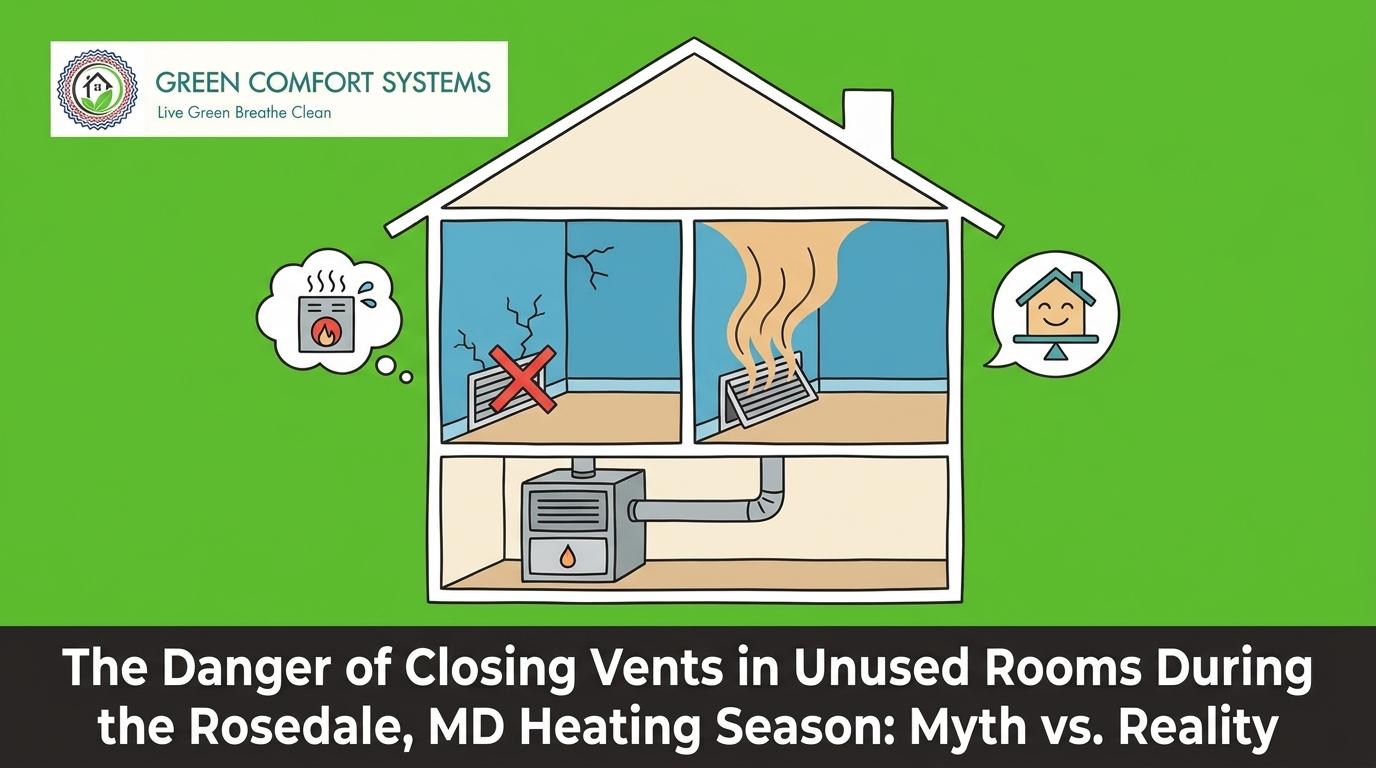
The Danger of Closing Vents in Unused Rooms During the Rosedale Heating Season
Understanding Your Heat Pump's Defrost Cycle During Early Frosts in Maryland
