





Why August is the Ideal Time to Evaluate Your Rosedale Home's Insulation

The Peak Heat Stress Test: Why Late Summer Exposes Thermal Flaws
With the intense heat and humidity of late summer bearing down on Maryland, understanding exactly why August is the ideal time to evaluate your Rosedale home's insulation is a smart move for your year-round comfort. Before the back-to-school transition fully takes over, your air conditioning system is likely running at maximum capacity to combat the sweltering outdoor temperatures. In our years of servicing local HVAC systems, our team at Green Comfort Systems has found that instead of simply enduring the discomfort of a house that refuses to cool down, you can use this extreme weather as a powerful diagnostic window. The severe temperature differential between the blistering outdoors and your conditioned indoors makes hidden thermal leaks glaringly obvious. To address these seasonal challenges head-on and secure your home's thermal envelope, explore our professional heating services and comprehensive ductwork evaluation and sealing solutions.
The Science of Temperature Differentials
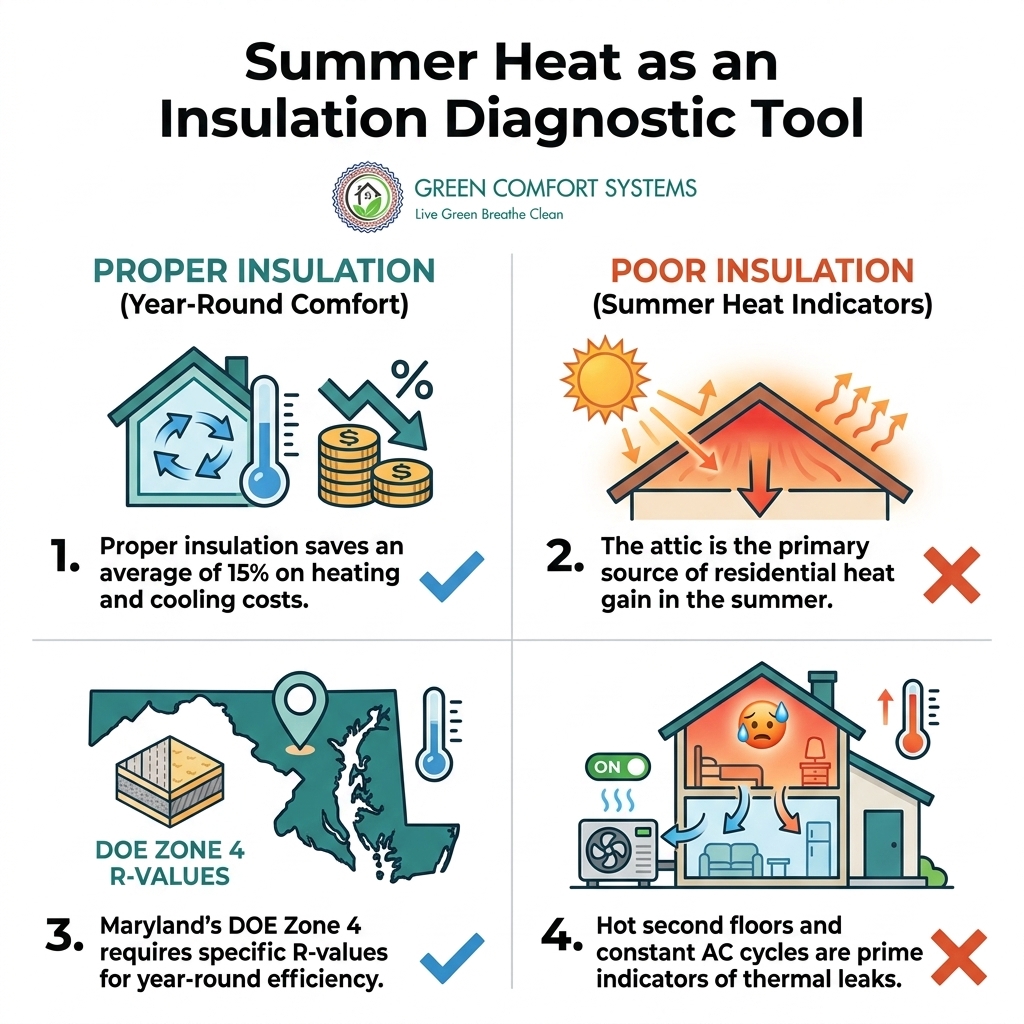
During the peak of summer, Rosedale's specific mix of high ambient temperatures and dense, heavy humidity creates a massive heat load on residential buildings. Your home's thermal envelope—the physical barrier between the conditioned indoor air and the unconditioned outdoor air—is pushed to its absolute limits. When it is 95°F outside and your thermostat is set to 72°F inside, that 23-degree temperature differential creates a high-pressure environment where heat constantly tries to force its way into the cooler space.
Our technicians frequently find that if your insulation is depleted, compressed, or entirely missing in certain areas, the August peak heat and humidity will expose those weak spots immediately. You will feel the structural failures as warm spots in specific rooms, drafts near electrical outlets, or an air conditioning unit that simply cannot keep up with the thermostat setting. Recognizing and addressing these insulation gaps right now is the smartest way to stop massive energy loss before the winter freeze eventually arrives.
Turning Discomfort into Actionable Data
A pattern we see often is that most homeowners only think about checking their home's thermal barriers when they feel a freezing draft in January. However, waiting for winter means you have already missed the most obvious warning signs. The extreme heat of late summer acts as a natural stress test. By paying attention to how your house performs during these sweltering weeks, you gather actionable data about exactly where your home is losing energy. This proactive approach allows you to fortify your living space long before the heating season begins.
Reading the Signs: Hot Upstairs Rooms and Constant AC Cycles
When a home lacks proper thermal protection, the physical symptoms are impossible to ignore. The basic physics of heat transfer dictate that heat naturally moves toward cooler areas. During peak summer conditions across Rosedale MD residential areas, the sun beats down on your roof, transferring massive amounts of thermal energy into your attic and upper floors.
Recognizing the Physical Symptoms of Thermal Failure
If your upper floors feel like a sauna while the main level is comfortable, your thermal boundary is failing. Here is what you should look for during a heatwave:
• Unbearable second floors: When attic insulation is depleted, it cannot stop radiant heat from pressing down through the ceiling into your upper bedrooms.
• Drafts near exterior walls: Feeling warm air seeping in around window frames, recessed lighting, or electrical outlets indicates clear envelope failure.
• Inconsistent room temperatures: If one side of your house is significantly warmer than the other, you likely have uneven or missing wall insulation.
• Unusually high energy bills: A sudden spike in cooling costs usually points to a system working overtime to compensate for a leaky house.
The Toll on Your Cooling Equipment
Constant, unending AC cycles are rarely just an equipment issue; they are often a direct result of cold air escaping through poorly insulated walls and ceilings. When the conditioned air you pay for leaks out of the house, your thermostat never registers that the target temperature has been reached. This forces your cooling equipment to run continuously, putting immense strain on internal components and often leading to emergency breakdowns during the hottest weeks of the year.
Of course, mechanical problems do happen. For example, our team recently helped a local customer who reached out when their AC unit had a leak and needed refrigerant refilled. One of our professional technicians quickly identified the problem and restored the system's cooling power. However, if our technicians confirm your equipment is fully charged and operating perfectly, yet your house remains sweltering, poor insulation is the likely culprit. Upgrading your thermal barriers is one of the most effective ways to improve your overall air conditioning efficiency and extend the lifespan of your HVAC equipment.
Attic Heat Traps and Ductwork Vulnerabilities
In our experience working on Rosedale properties, the attic is the primary battleground for your home's energy efficiency. In the middle of August, an under-ventilated and poorly insulated attic can reach temperatures exponentially higher than the outside air—often exceeding 140°F. This superheated space acts as a massive radiant heater, pressing thermal energy downward into your living areas.
The Physics of Radiant Heat Gain
Insulation is measured by its R-value, which indicates its resistance to heat flow. When the insulation on your attic floor becomes compressed over time, its R-value drops significantly. It loses the ability to trap air and slow down the transfer of heat. As a result, the extreme August peak heat and humidity easily bypass the barrier, warming the drywall of your ceiling and radiating heat directly into your bedrooms. This forces your HVAC system to work twice as hard just to maintain a baseline level of comfort.
The Clash of Extreme Temperatures
Beyond the direct heat transfer into your living space, a superheated attic creates a hostile environment for any HVAC ductwork routed through that space. When you have 55°F conditioned air rushing through thin metal or flex ducts surrounded by 140°F stagnant attic air, the temperature clash is severe.
If the ductwork itself is poorly insulated or has microscopic leaks, the extreme temperature difference causes rapid condensation. The ducts begin to sweat, dripping moisture onto the surrounding insulation and drywall. This not only degrades the insulation further but also introduces excess moisture into the home. Understanding exactly why attic ductwork sweats during humid Maryland Augusts is a key part of evaluating your home's overall thermal health. Checking the attic's R-value and duct integrity during this peak stress period reveals exactly where upgrades are necessary to protect your home.
Bridging the Seasons: How Summer Diagnostics Inform Winter Prep
It is easy to view summer cooling and winter heating as two completely separate challenges, but they are two sides of the exact same coin. The thermal envelope that protects you in August is the very same barrier that keeps you warm in January. The exact same gaps letting summer heat into the home right now will let expensive winter heat out in just a few short months.
Understanding DOE Zone 4 Requirements
Homes in Rosedale MD residential areas fall into the Department of Energy's (DOE) Zone 4, which is classified as a mixed-humid climate. This specific climate zone requires robust protection against both ends of the extreme weather spectrum. You need enough thermal resistance to block intense summer heat gain, while also preventing rapid heat loss during freezing winter nights.
Evaluating your home's thermal performance in late summer provides a clear, accurate roadmap for necessary upgrades. Fixing these issues in August means you are fully prepared for the heating season, allowing you to bypass the frantic rush of homeowners scrambling for help after the first major freeze.
Summer Symptoms vs. Winter Consequences
To understand how summer diagnostics map directly to winter problems, consider how the same structural flaw behaves in different seasons:
• Depleted Attic Insulation — Summer Symptom (August): Hot upstairs rooms; AC runs constantly to fight radiant heat. — Winter Consequence (January): Massive heat loss through the roof; ice dams forming on gutters.
• Leaky Window Frames — Summer Symptom (August): Warm, humid drafts entering the home; indoor humidity spikes. — Winter Consequence (January): Freezing drafts near windows; heating system struggles to keep up.
• Unsealed Ductwork — Summer Symptom (August): Conditioned air lost in the attic; ducts sweat and drip condensation. — Winter Consequence (January): Expensive heated air blown into unconditioned spaces; cold rooms.
• Poor Wall Insulation — Summer Symptom (August): Exterior walls feel warm to the touch; uneven room temperatures. — Winter Consequence (January): Exterior walls feel ice-cold; high risk of frozen pipes in outer walls.
By using the summer heat to identify these exact failure points, you can systematically seal the envelope. A tighter home stops the cycle of energy waste and ensures your heating system performs flawlessly when the weather turns cold.
The Eco-Friendly Advantage of a Sealed Thermal Envelope
Upgrading your home's insulation goes far beyond just improving your daily indoor comfort; it is one of the single most effective ways to stop residential energy waste. In an era where efficiency matters more than ever, a well-sealed home is a responsible choice for the environment.
Aligning Comfort with Sustainable Living
A tighter thermal envelope significantly lowers a home's carbon footprint by reducing the overall runtime and energy consumption of your HVAC systems. When your air conditioner does not have to fight against ambient heat leaking through the ceiling, it uses a fraction of the electricity to cool the house. This reduction in energy demand directly translates to a more sustainable household.
This approach aligns perfectly with Green Comfort Systems' core focus on eco-friendly, energy-efficient solutions. We believe that true home comfort should never come at the expense of massive energy waste. Modern, energy-efficient insulation materials provide superior thermal performance while supporting sustainable, green living practices. By upgrading your barriers, you are actively choosing to reduce your environmental impact.
Protecting Your Indoor Environment
Beyond temperature control, a well-sealed home also acts as a physical shield against the outside world. When you close the gaps in your walls and attic, you also prevent outdoor pollutants, allergens, and excessive humidity from entering your living space. This tight seal directly benefits your home's internal ecosystem, making indoor air quality improvements much more effective and easier to maintain.
What to Expect During a Professional Insulation Evaluation
Identifying that your home is losing energy is only the first step. Understanding exactly where and how to fix it requires specialized knowledge. A professional evaluation takes the guesswork out of the process, providing concrete data about your home's structural health without relying on DIY assumptions.
The Value of Advanced Diagnostic Tools
When our experts at Green Comfort Systems evaluate your home during the August peak heat and humidity, we follow a systematic process to uncover hidden flaws:
1. Thermal Imaging Scans: Our professionals utilize specialized infrared cameras to scan your ceilings and walls. These tools pinpoint hidden drafts and missing insulation pockets that are completely invisible to the naked eye, mapping out exactly where heat is breaching the envelope.
2. Attic Depth and Condition Checks: We physically assess the current depth, type, and condition of your attic insulation. We compare the existing R-value against regional DOE requirements to determine how severely the material has degraded over time.
3. Ventilation Assessment: Proper insulation must be paired with proper airflow. Our technicians inspect soffit and ridge vents to ensure the attic can adequately expel trapped heat without compromising the thermal barrier below.
4. Ductwork Integrity Inspections: Our thorough evaluation includes checking the structural integrity of the ductwork routed through unconditioned spaces, looking for disconnected joints, degraded seals, or signs of severe condensation.
It is also worth noting that upgrading your home's efficiency often comes with financial incentives. Qualifying energy-efficient insulation upgrades may be eligible for general federal tax credits or local utility rebates. We always advise homeowners to consult with their local utility provider or a qualified tax professional to understand the current details and take advantage of these programs.
Frequently Asked Questions About Summer Insulation Checks
How do I know if my insulation is bad in the summer?
Look for unusually hot second floors, AC units that never stop running, and unexpectedly high summer cooling bills. If your cooling equipment is functioning properly but the house still feels warm and humid, your thermal envelope is likely failing to keep the outdoor heat at bay.
Does insulation help keep a house cool in the summer?
Yes, insulation acts as a critical barrier that slows the transfer of heat in both directions. During the summer, it keeps the hot, humid outdoor air from penetrating your living space while simultaneously trapping the conditioned cold air inside where it belongs.
What is the best time of year to replace insulation?
Late summer into early fall is the ideal window for replacement. Evaluating your home during the peak heat of August exposes all the thermal flaws, allowing you to complete the necessary upgrades before the cold winter weather sets in and causes massive heat loss.
Why is my second floor so hot in the summer?
This frustrating issue is typically caused by depleted attic insulation failing to block radiant heat from the roof. When combined with inadequate ductwork that struggles to deliver cold air upstairs, the second floor quickly turns into a stagnant heat trap.
Can extreme heat damage my home's ductwork?
Yes, extreme attic heat can cause older ductwork materials and seals to degrade prematurely. Furthermore, the severe temperature clash between the superheated attic air and the cold conditioned air inside the ducts can lead to heavy condensation, sweating, and eventual water damage.
Secure Your Home's Comfort Before the Seasons Change
The intense heat of late summer is not just a nuisance; it is the best natural diagnostic tool available for testing your home's thermal envelope. By paying attention to how your Rosedale MD residential property handles the peak temperatures of August, you can identify exactly where your home is wasting energy.
Do not wait until the first winter freeze leaves your family shivering in a drafty house. Take advantage of the current weather to expose the flaws and act now to ensure a highly efficient, comfortable home year-round. Talk to our local experts today to schedule a comprehensive evaluation of your thermal barriers before the winter heating season officially begins.
Book Expert Service Or Contact Us
Other Blogs


Get Financing Today
Get the comfort you deserve, without the financial stress.

Latest Blogs
Diagnosing a Blower Motor Failure When Your Furnace Runs but Produces No Air
The Anatomy of a Fast Towson Furnace Repair: How We Diagnose Ignitor Failures
Clearing the Air: How We Handle Lingering Musty Odors During Your October Heating Startup
