





Upgrading Your Millersville Home's Electrical Panel to Support a New Heat Pump

The Late-Summer AC Breakdown and the Heat Pump Decision
Your air conditioner is struggling to keep the house cool, and with the intense August heat still pushing high temperatures, a complete system failure is the last thing you want to deal with. If you are considering upgrading your Millersville home's electrical panel to support a new heat pump after an end-of-summer cooling breakdown, you are navigating a very common transition. When evaluating your options for heating services, investing in a modern heat pump installation is often the most efficient path forward.
August late-summer AC breakdowns frequently force homeowners to make quick decisions about their climate control systems. Instead of simply replacing an old air conditioner with a standard, like-for-like model, many property owners wisely look toward the future. A modern heat pump provides both high-efficiency cooling for the remainder of the summer and robust heating for the approaching winter. However, this upgrade often reveals an unexpected roadblock hidden right in the basement or garage: the home's existing electrical infrastructure.
The Shift from Standard Cooling to Whole-Home Electrification
Switching from a traditional air conditioner and gas furnace setup to a high-efficiency heat pump changes how your home consumes energy. Standard air conditioners draw a significant amount of power, but they only handle the cooling side of the equation. Heat pumps consolidate your heating and cooling into a single, electrically driven system. While this consolidation is fantastic for energy efficiency, it places a new, continuous demand on your electrical panel.
Many homeowners are surprised to learn that their current electrical service cannot safely support this new technology. Before you can enjoy the quiet, consistent comfort of a modern heat pump, you first need to understand the capacity of your electrical panel. Evaluating this infrastructure now, before the winter heating season begins, prevents emergency delays and ensures your new system operates safely and efficiently from day one.
The Hidden Electrical Bottleneck in Classic Millersville Properties
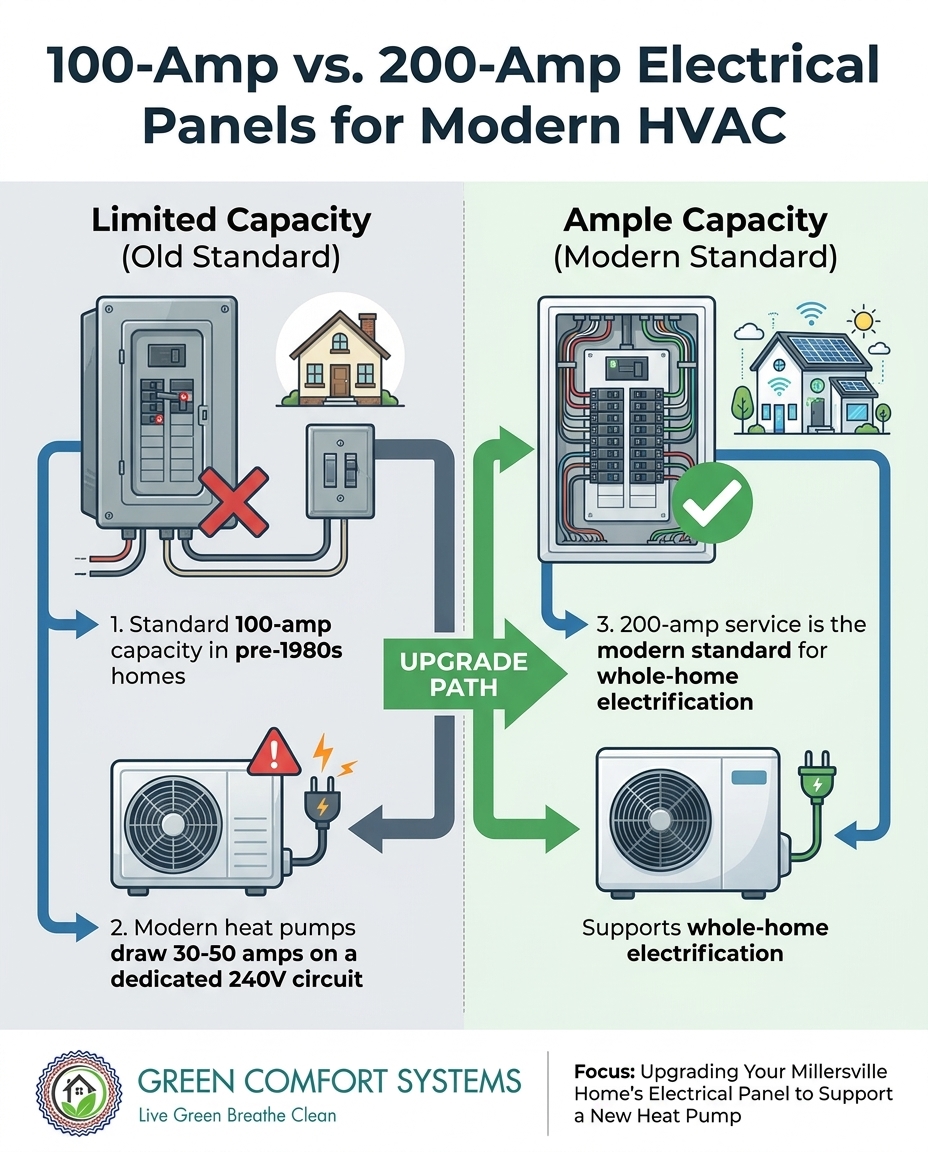
Older Millersville residential homes boast incredible charm and solid construction, but their original electrical systems were designed for a completely different era. If your home was built before the 1980s, there is a very high probability that it is equipped with a standard 100-amp electrical panel. At the time of construction, 100 amps provided more than enough power to run incandescent lighting, a refrigerator, a television, and perhaps a basic air conditioning unit.
Today, our households consume vastly more electricity. Adding a modern HVAC system to a nearly maxed-out older panel creates significant safety risks and operational inefficiencies. An overloaded panel acts as a severe bottleneck, preventing your new heat pump from drawing the power it needs to function correctly.
Competing Heavy-Draw Appliances
To understand why a 100-amp panel struggles, look at the other heavy-draw appliances competing for that limited power supply. A typical modern home runs several high-voltage devices simultaneously:
• Electric ranges and ovens: Often requiring dedicated 40-amp to 50-amp circuits.
• Electric clothes dryers: Typically pulling 30 amps while in use.
• Electric water heaters: Drawing continuous power to maintain water temperatures.
• Electric vehicle (EV) chargers: A growing addition that demands massive amperage.
When you attempt to run a new heat pump alongside these appliances on a 100-amp service, you push the electrical system beyond its safe operating limits. This can lead to frequently tripped breakers, flickering lights, and premature wear on the HVAC equipment itself.
For homes facing unique architectural challenges where upgrading the main panel is exceptionally difficult, alternative solutions are sometimes necessary. For instance, during a recent spring project, a homeowner was evaluating ductless versus ducted options for an older property. After a detailed consultation discussing the pros and cons of their home's infrastructure, they successfully opted for ductless mini splits to bypass extensive retrofitting while still achieving quiet, efficient cooling.
100-Amp vs. 200-Amp Service: What Modern HVAC Actually Requires
To fully grasp why an electrical upgrade is often necessary, you need to understand the technical differences between your current setup and modern standards. The 100-amp service limit versus modern 200-amp requirements comes down to basic electrical math. An "amp" (ampere) is a measure of the volume of electricity flowing through your home's circuits. Your main breaker dictates the absolute maximum volume of electricity your home can safely consume at any given second.
According to data from the U.S. Department of Energy, modern high-efficiency heat pumps typically require a dedicated 240-volt circuit and pull between 30 to 50 amps of power, depending on the size and model of the unit. If you have a 100-amp panel, dedicating up to half of your home's total electrical capacity to a single appliance leaves virtually no room for the rest of your household needs.
Comparing Panel Capacities
Upgrading to a 200-amp service is the modern standard for whole-home electrification. Here is a breakdown of how the two services compare:
• Total Capacity — 100-Amp Panel (Legacy Standard): Sufficient for basic lighting and minor appliances. — 200-Amp Panel (Modern Standard): Double the capacity; handles modern heavy-draw appliances.
• HVAC Support — 100-Amp Panel (Legacy Standard): Struggles to support a 30-50 amp heat pump safely. — 200-Amp Panel (Modern Standard): Easily accommodates a dedicated 240V heat pump circuit.
• Expansion Room — 100-Amp Panel (Legacy Standard): No room for future additions (EV chargers, hot tubs). — 200-Amp Panel (Modern Standard): Ample breaker space for future home improvements.
• Safety Margin — 100-Amp Panel (Legacy Standard): High risk of overloaded circuits and tripped breakers. — 200-Amp Panel (Modern Standard): Operates well below maximum capacity, ensuring safety.
By stepping up to a 200-amp panel, you provide your new heat pump with the clean, uninterrupted power it needs to operate at peak efficiency, while leaving plenty of overhead for the rest of your life.
How Maryland's Climate Drives Continuous High Amperage
The electrical demands of a heat pump are heavily influenced by the local environment. Maryland's specific climate extremes play a massive role in why a robust electrical panel is non-negotiable. Our region experiences intensely humid summers and freezing winters, both of which force cooling and heating systems to work exceptionally hard.
During a humid August heatwave, your heat pump doesn't just lower the air temperature; it must run continuously to extract heavy moisture from the indoor air. Dehumidification requires long, steady cooling cycles. Conversely, during a freezing January night, the heat pump must run continuously to extract ambient heat from the cold outdoor air and transfer it inside. This year-round, relentless operation translates to continuous high amperage draw on your electrical system.
The Danger of Continuous Electrical Loads
In electrical engineering terms, a heat pump running during extreme weather is considered a "continuous load." Continuous loads generate heat within the electrical panel itself. If you force a 100-amp panel to sustain a heavy, continuous load for hours on end, the internal components can overheat.
An overloaded panel during peak weather extremes can lead to tripped breakers, voltage drops, or even severe fire hazards. A voltage drop is particularly damaging to a new heat pump; if the compressor does not receive the full voltage it requires, it strains the motor, leading to premature failure. Upgrading your panel ensures that your system receives steady, safe power no matter how extreme the Maryland weather gets.
Navigating Electrical Codes and Local Compliance Safely
Upgrading an electrical panel and installing a high-voltage HVAC system is not a simple weekend project. It requires strict adherence to local building regulations and safety standards. Maryland enforces updated National Electrical Code (NEC) standards, which dictate exactly how much electrical load a home can safely carry based on its panel size.
Before installing a heavy-draw appliance like a modern heat pump, a formal load calculation must be performed. This calculation tallies the square footage of the home, the number of circuits, and the wattage of existing appliances to prove that the panel can handle the new addition. If a 100-amp panel fails this calculation, the code strictly prohibits the installation of the heat pump until the electrical service is upgraded.
The Professional Compliance Process
We bring deep local expertise in safely navigating Maryland's electrical and building codes to prevent unnecessary installation delays in older homes. The process of upgrading your panel for compliance involves several critical steps:
1. Initial Load Calculation: A licensed professional evaluates your current electrical usage to determine the exact capacity deficit.
2. Permitting: Proper permits are filed with the local municipality to ensure all work is documented and legal.
3. Utility Coordination: The local power company is scheduled to disconnect service temporarily while the new panel and meter base are installed.
4. Professional Installation: The old 100-amp panel is removed, and the new 200-amp panel is wired, grounded, and secured.
5. Final Inspection: A local electrical inspector verifies that all work meets NEC standards, protecting your property value and insurance coverage.
Reiterating the importance of hiring licensed professionals cannot be overstated. Proper permitting and inspections protect your investment, ensure your family's safety, and guarantee that your new heat pump operates exactly as the manufacturer intended.
Coordinating Your HVAC Upgrade and Electrical Improvements
Evaluating your electrical capacity during a late-summer AC replacement is the smartest way to prepare for the future. By identifying the need for a panel upgrade before winter heating demands begin, you prevent emergency delays when the temperatures drop. Coordinating the panel upgrade simultaneously with the heat pump installation is the most efficient path forward for your home.
Managing a dual HVAC and electrical project requires careful planning, but doing both at once minimizes disruption to your daily life. The installation teams can coordinate their schedules, ensuring the new 240-volt circuit is wired directly to the heat pump location while the panel is being upgraded. This unified approach gets your home back to comfortable temperatures faster.
Incentives and Project Planning
Upgrading your home's infrastructure is a significant investment, but there is good news regarding project funding. General federal energy tax credits and utility incentive programs are often available to encourage whole-home electrification. These generic programs frequently apply not only to qualifying high-efficiency heat pump installations but also to the necessary electrical panel upgrades required to support them. It is always wise to consult with a tax professional or check with your local utility provider to verify current programs and eligibility requirements.
Navigating the paperwork for these comprehensive upgrades can feel overwhelming, but professional guidance makes a difference. In a recent spring project, sales staff sat down with a homeowner to thoroughly explain the paperwork needed for financing your new HVAC system, ensuring they understood every step of the process. Properly coordinating the installation, compliance, and financing paperwork ensures a smooth transition to a safer, more comfortable, and highly efficient home.
Frequently Asked Questions
Does a heat pump require a 200 amp panel?
A 200-amp panel is generally required for modern whole-home heat pump systems. While a smaller unit might physically run on a 100-amp panel, the combined electrical draw of the heat pump and your other household appliances usually exceeds the safe capacity of a 100-amp service. Upgrading to 200 amps ensures you have enough power to run your HVAC system, electric oven, dryer, and lighting simultaneously without tripping breakers.
How many amps does a modern heat pump draw?
A modern, high-efficiency heat pump typically draws between 30 and 50 amps of power while operating. This requires a dedicated 240-volt circuit wired directly from the main electrical panel. The exact amperage depends on the size (tonnage) of the unit and its efficiency rating, which is why a professional load calculation is required before installation.
Can I run a heat pump on a 100 amp service?
Running a central heat pump on a 100-amp service is highly discouraged and often violates local electrical codes. Dedicating up to 50 amps to a single HVAC system leaves only 50 amps for the entire rest of the house. This almost guarantees overloaded circuits, tripped breakers, and potential fire hazards when multiple appliances run at the same time.
Why do I need an electrical panel upgrade for a new HVAC system?
An electrical panel upgrade is needed because older panels were not designed to handle the heavy, continuous electrical loads of modern HVAC equipment. Upgrading ensures your new system receives a steady, safe voltage supply, which prevents premature compressor failure. It also brings your home up to current National Electrical Code (NEC) safety standards.
What is the Maryland electrical code for heat pumps?
Maryland adheres to the National Electrical Code (NEC), which mandates that a strict electrical load calculation be performed before adding heavy-draw appliances. The code requires that the heat pump be placed on a dedicated circuit sized appropriately for the unit's maximum amperage. If the home's total calculated load exceeds the panel's capacity, an electrical service upgrade is legally required.
Can energy incentives apply to electrical panel upgrades?
Yes, general federal energy tax credits and certain utility incentives often apply to electrical panel upgrades when they are performed in conjunction with installing qualifying energy-efficient equipment. Because a panel upgrade is frequently required to support a new heat pump, these generic incentive programs help offset the combined cost of modernizing your home's infrastructure.
Book Expert Service Or Contact Us
Other Blogs


Get Financing Today
Get the comfort you deserve, without the financial stress.

Latest Blogs
Why Your Rosedale Home's Addition Is Always Colder Than the Rest of the House
Retrofitting Modern Heating Solutions into Mid-Century Perry Hall Homes
The Danger of Closing Vents in Unused Rooms During the Rosedale Heating Season
