





The Hidden Cost of Skipping Mid-Summer AC Maintenance in Rosedale

Why 'Still Blowing Cold' Isn't Enough in Peak Summer Heat
Before the worst of July's peak heat arrives, many homeowners overlook a critical truth about their air conditioning unit: just because it produces cool air does not mean it is healthy. In fact, understanding the hidden cost of skipping mid-summer AC maintenance in Rosedale often begins when a system seems to be working perfectly fine. Your vents still push out cold air, but underneath the metal casing, your equipment is working twice as hard to maintain that temperature. Most homeowners ignore longer run cycles, slight humming noises, or minor vibrations as long as the living room feels comfortable. This is a dangerous trap that leads directly to catastrophic equipment failure.
As summer progresses, cooling systems face their toughest operational tests. The longer your unit runs without a break, the more heat builds up inside the internal motors. Minor, cheap-to-fix issues in early June quickly snowball into total compressor failures by late July. When an air conditioner is forced to run continuously to overcome a hidden inefficiency, it loses the crucial resting cycles that allow the compressor to cool down. Addressing these early-warning signs with professional HVAC services is the only reliable way to prevent minor mechanical quirks from turning into total system breakdowns when you need cooling the most.
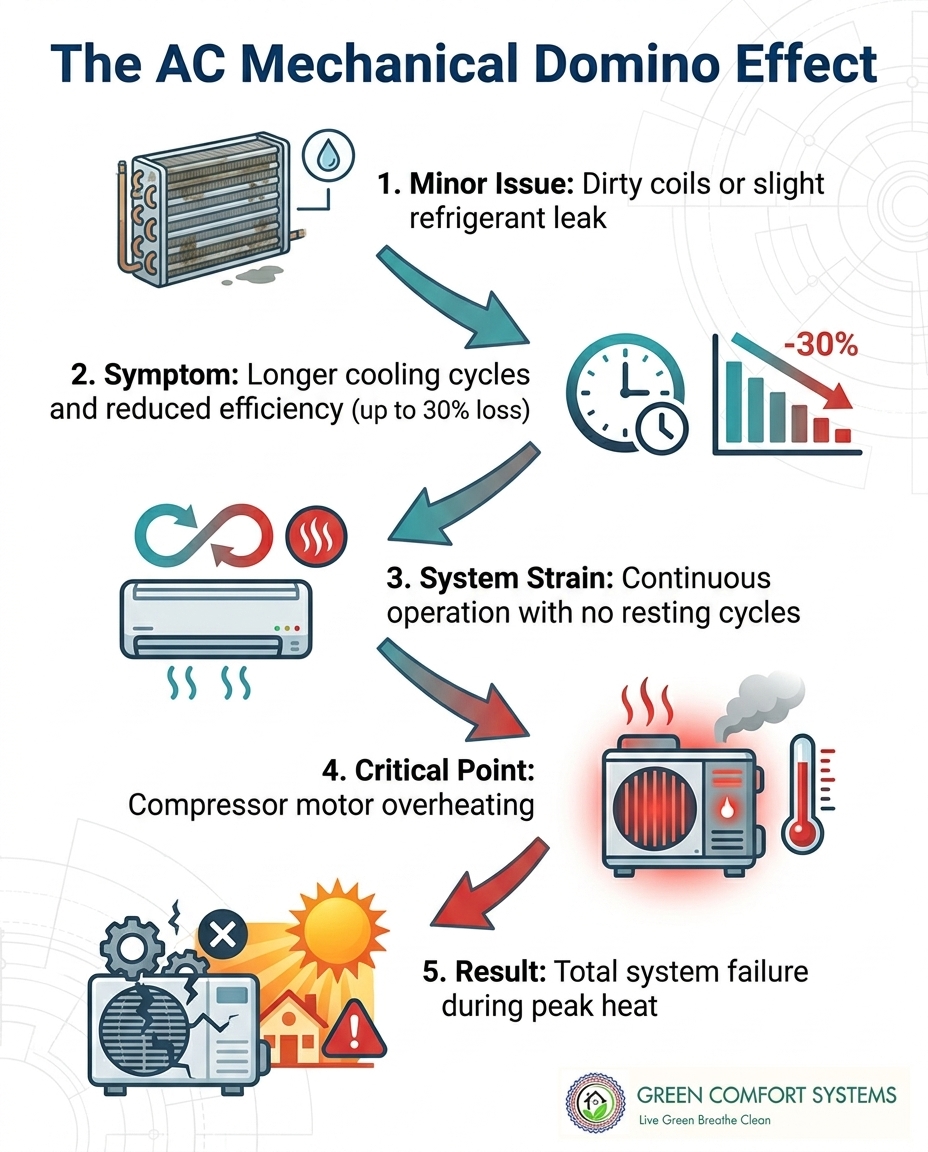
The Mechanical Domino Effect: From Minor Quirk to Major Failure
Air conditioning systems are complex machines built with tightly interdependent components. When one part underperforms, the rest of the system must work harder to compensate. This creates a mechanical domino effect where a tiny inefficiency compounds over weeks of heavy use, eventually crushing the most expensive component in your system: the compressor.
A typical pattern we see involves households with urgent cooling needs. For example, one family facing the summer heat in Rosedale MD with a new baby at home noticed their system struggling to keep up during the afternoon. A prompt diagnostic visit caught the underlying issue quickly, and a knowledgeable technician resolved the problem before the system failed entirely. Catching the domino effect early is what separates a routine service visit from an emergency replacement.
Stage 1: The Hidden Strain
During the first stage of the domino effect, your system begins to run longer to meet the thermostat setting. You might not notice a difference in the room temperature, but your energy consumption spikes silently. The unit is pulling more electricity to do the exact same amount of work. This hidden strain places unnecessary wear on the electrical contactors and the blower motor.
Stage 2: The Loss of Resting Cycles
If the hidden strain is ignored, the system enters a dangerous phase where it runs continuously without powering down. Air conditioners are designed to cycle on and off. When they run non-stop, intense heat builds up inside the compressor motor. This heat degrades the internal lubricants and damages the electrical windings. By the time the system finally stops, the compressor is often permanently damaged. Scheduling proactive air conditioning maintenance and repair interrupts this cycle before the damage becomes irreversible.
How Extreme Humidity Accelerates System Wear
Home cooling involves much more than simply lowering the temperature on a thermometer. In a humid subtropical climate like Rosedale MD, air conditioners are forced to manage extreme latent heat loads alongside normal temperature reductions. This dual workload causes systems to run continuously without normal resting cycles, rapidly accelerating mechanical wear and tear during the hottest months of the year.
To understand why humidity is so punishing on your equipment, you have to look at the two different types of heat your system battles every day:
• Sensible Heat — What It Measures: The actual temperature you read on a standard wall thermometer. — Impact on Your Air Conditioner: Forces the system to run until the indoor air reaches your desired thermostat set point.
• Latent Heat — What It Measures: The amount of invisible moisture (humidity) trapped in the indoor air. — Impact on Your Air Conditioner: Requires heavy energy use and long run times to extract water vapor before the air actually feels cool to your skin.
When outdoor moisture levels peak, your air conditioner acts primarily as a heavy-duty dehumidifier. The evaporator coil must extract gallons of water from your indoor air before the sensible temperature can drop. This heavy dehumidification workload means the system must run for hours at a time. Regional weather patterns make the margin of error for deferred maintenance dangerously thin. If your system is already compromised by dirty parts or low refrigerant, the added burden of high humidity will push the compressor past its breaking point.
The High Price of Dirty Condenser Coils
The outdoor portion of your air conditioning system, known as the condenser, is responsible for releasing the heat collected from inside your home into the outside air. The condenser relies on a series of delicate aluminum fins and copper coils to dissipate this heat. When these coils become clogged with grass clippings, dust, pollen, and dirt, the entire cooling process breaks down.
According to data from the U.S. Department of Energy, dirty condenser coils can reduce the energy efficiency of an air conditioning system by up to 30 percent. The physics behind this efficiency loss are straightforward. A layer of dirt acts as an insulating blanket over the coils. When the coils are insulated by debris, they cannot effectively release heat into the outdoor air. The heat remains trapped inside the refrigerant, which travels back inside your home, forcing the system to run longer to achieve the same cooling effect.
The compounding damage: Because the heat cannot escape, the compressor motor runs hotter than its designed specifications. Over weeks of July's peak heat, this trapped thermal energy breaks down the internal components of the compressor. Keeping these coils clean is not just about energy efficiency; it is a vital step in preventing premature failure. Furthermore, a clean system operates more effectively, which ties directly into better indoor air quality solutions by ensuring proper airflow and filtration throughout your living space.
Refrigerant Leaks: The Fastest Path to Compressor Burnout
A common misconception among homeowners is that air conditioners naturally "use up" or consume refrigerant over time, much like a car consumes gasoline. This is entirely false. Your cooling system operates on a closed-loop circuit. If your refrigerant levels are low, it means there is a physical leak somewhere in the copper lines or the coils that must be located and sealed.
Refrigerant plays a dual role in your system. Its primary job is absorbing heat from the indoor air. However, its secondary job is equally critical: the cold refrigerant gas returning to the outdoor unit is responsible for cooling the compressor motor during operation. When refrigerant levels drop, the compressor loses its primary source of cooling. Operating with inadequate refrigerant causes the compressor to rapidly overheat, which is a leading cause of premature system failure in Rosedale MD.
During a routine summer service call, a technician identified an AC unit with a slow leak that had been masking itself as a minor cooling drop. By punctually locating the leak and properly refilling the refrigerant, the system was saved from inevitable compressor burnout. Immediate, professional leak detection is vital. If you notice your system struggling, understanding what to do if your AC stops cooling can save you from a massive repair bill down the road.
Protecting Zoned Cooling: System Stress in Modern Setups
Alternative cooling setups, such as multi-zone ductless systems, provide excellent energy efficiency and customized comfort. However, they face the exact same compounding mechanical stress during heatwaves if routine care is ignored. Because these systems operate with compact, highly sensitive components, they require clean internal parts to function correctly.
One local homeowner experienced this firsthand during a recent summer heatwave when their ductless AC unit began throwing error codes. Because the need for cooling was urgent, a technician was dispatched promptly to perform a thorough diagnostic. The issue was pinpointed and resolved quickly by recharging the unit, preventing further stress on the equipment. Ignoring error codes or reduced output from wall-mounted units often leads to broader system malfunctions.
To protect zoned cooling systems, you must watch for specific warning signs:
• Reduced airflow: Clogged filters in the wall-mounted air handlers restrict the volume of air moving over the coils, leading to internal icing.
• Unusual odors: A musty smell indicates mold or mildew buildup on the blower wheel, which reduces efficiency and degrades air quality.
• Flashing error lights: Modern systems use blinking LED lights to indicate communication errors or mechanical faults that require immediate professional attention.
Keeping individual air handlers clean prevents airflow blockages and stops ice from forming on the evaporator coils. Timely professional diagnostics on ductless mini split systems resolve minor airflow and refrigerant issues before they escalate into expensive hardware failures during July's peak heat.
Interrupting the Cycle: The Value of Proactive Care
The key to surviving the hottest months in Rosedale MD is interrupting the mechanical wear cycle before it reaches the compressor. Waiting for a system to break down completely is the most expensive way to manage home comfort. Proactive care is about resetting the baseline of your equipment so it can handle the intense thermal load of late summer.
Scheduled, comprehensive inspections catch slight refrigerant leaks, failing capacitors, and dirty coils before they force a compressor failure. By addressing these minor points of friction, you restore the system's ability to take necessary resting cycles. This drastically reduces the heat buildup inside the outdoor unit.
The Green Guardian Club advantage: Positioned as a proactive, eco-friendly safeguard, a membership-based maintenance plan interrupts the mechanical domino effect before it results in total system failure. Regular inspections ensure your equipment operates at peak efficiency, lowering your monthly energy bills while extending the lifespan of the machinery. The long-term financial benefits of maintaining system efficiency consistently outweigh the heavy cost of paying for emergency mid-summer replacements.
Protect Your Cooling System Before the Next Heatwave
Ignoring a struggling air conditioner simply because it still produces a little bit of cold air is a gamble that rarely pays off. The mechanical strain placed on your equipment during July's peak heat compounds daily, turning minor inefficiencies into major mechanical failures. Resolving minor quirks now preserves the lifespan of your compressor and ensures your home remains comfortable.
Waiting for a complete breakdown leaves you vulnerable to emergency replacement costs and miserable indoor temperatures. Take control of your home comfort today. Explore professional maintenance options to ensure reliable, efficient cooling for the rest of the season, and secure the peace of mind that comes with a healthy, fully optimized air conditioning system.
Frequently Asked Questions
What happens if you skip AC maintenance?
Skipping AC maintenance allows minor issues like dirt buildup and slight wear to compound over time. This forces the system to run longer and harder to achieve the same cooling results, which drives up your energy bills. Eventually, this continuous strain leads to overheating and premature failure of major components like the compressor.
Is it too late to get AC maintenance in July?
It is never too late to schedule a professional inspection, even in the middle of summer. In fact, mid-summer maintenance is critical because your system is operating under maximum stress. Catching a clogged coil or a failing capacitor in July can prevent a total system breakdown during August's hottest days.
Can a dirty filter break an AC compressor?
Yes, a severely clogged air filter can ultimately destroy a compressor. When a filter blocks airflow, the indoor evaporator coil gets too cold and freezes over with ice. This frozen coil prevents refrigerant from absorbing heat, sending liquid refrigerant back to the compressor, which can cause catastrophic mechanical failure.
Why is my AC running constantly but not cooling?
If your system runs non-stop without lowering the indoor temperature, it usually indicates a severe airflow restriction or a refrigerant leak. The system is attempting to reach the thermostat set point but lacks the mechanical capacity to remove heat from the air. This requires immediate professional diagnostics to prevent the compressor from burning out.
How does a dirty condenser coil affect the compressor?
A dirty condenser coil acts like an insulating blanket, trapping heat inside the outdoor unit instead of releasing it into the air. Because the heat cannot escape, the compressor is forced to operate at much higher temperatures and pressures than it was designed for. Over time, this extreme heat degrades the motor windings and leads to total failure.
Can a slight refrigerant leak cause permanent AC damage?
Yes, even a minor refrigerant leak can cause permanent damage if left unaddressed. Refrigerant is responsible for cooling the compressor motor as it circulates through the system. When refrigerant levels drop, the compressor loses its cooling source, overheats rapidly, and sustains permanent internal damage.
How does high humidity impact air conditioning wear and tear?
High humidity forces your air conditioner to work as a heavy-duty dehumidifier before it can effectively lower the sensible temperature of the room. This dual workload requires the system to run for extended periods without resting cycles. The constant operation accelerates mechanical wear and increases the likelihood of overheating during peak summer months.
Book Expert Service Or Contact Us
Other Blogs


Get Financing Today
Get the comfort you deserve, without the financial stress.

Latest Blogs
Decoding the Clanking and Banging Noises from Your Rosedale Radiators This Fall
Addressing Drafty Windows and Heating Inefficiencies in Older Forest Hill Homes
Managing the September Swing: Keeping Your Rosedale Home Comfortable When Days Are Hot and Nights Are Cold
