




Managing Indoor Allergens Before the Fall Semester Begins in Maryland

Why the Back-to-School Transition Triggers an Indoor Air Quality Crisis
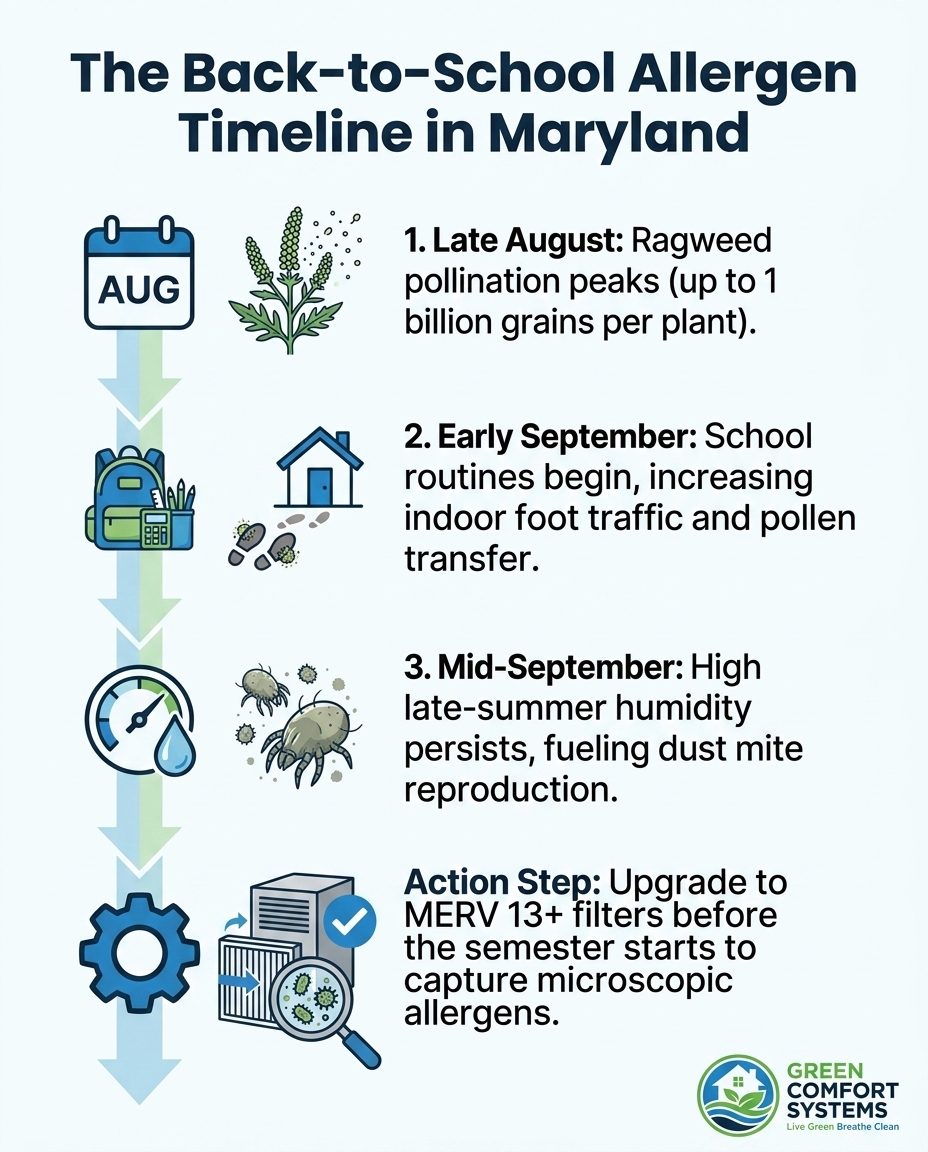
Here at Green Comfort Systems, we know firsthand that managing indoor allergens before the fall semester begins in Maryland is a time-sensitive task that catches many households off guard. As late August approaches, the shift from relaxed summer days to rigid school schedules coincides perfectly with a massive spike in outdoor pollen. Just as children start gathering at bus stops and sports fields, ragweed plants begin releasing billions of microscopic irritants into the air. This collision of natural seasonal cycles and busy family routines creates a significant indoor air quality challenge for homeowners.
The Environmental Protection Agency notes that indoor air can routinely be two to five times more polluted than outdoor air. During the late August back-to-school transition, homes become a trap for these seasonal triggers. Relying on a standard cooling system to filter out this sudden influx of particulates is rarely enough. Basic air conditioning is designed for temperature control, not microscopic filtration. To truly protect your household, transforming that standard cooling setup into a comprehensive health-conscious air management system requires professional HVAC services capable of addressing the specific biological load of the late summer season.
The Mechanics of Ragweed Infiltration During School Routines
Understanding how outdoor irritants breach your home's defenses is the first step in stopping them. A single ragweed plant can produce up to one billion pollen grains in a single season. These grains are exceptionally lightweight, allowing them to travel hundreds of miles on a gentle breeze. However, they do not need to blow through an open window to enter your living space; they are actively carried inside by the people who live there.
How Foot Traffic Defeats Passive Defenses
Consider the daily routine of a Maryland student during the late August back-to-school transition. They wait at a bus stop, walk across freshly cut athletic fields, and sit in crowded classrooms. Throughout the day, their clothing, shoes, hair, and backpacks act like magnets for microscopic pollen grains. When they walk through the front door, that accumulated allergen load is mechanically introduced directly into the home. Passive defenses, such as keeping windows tightly closed, are entirely insufficient when doors are opened dozens of times a day for kids, pets, and parents coming and going.
The Recirculation Problem in Modern Homes
Modern homes are built with tight envelopes to maximize energy efficiency. While this keeps conditioned air inside and lowers utility bills, it also means that whatever is brought indoors stays indoors. Once ragweed pollen is tracked inside, it settles into carpets, upholstery, and bedding. As family members move about the house, these particulates are kicked back up into the air and pulled into the return vents of your HVAC system. Without proactive indoor air quality solutions, the blower motor simply recirculates these allergens through the ductwork, distributing them into every room of the house continuously.
Compounding Factors: How High Humidity Fuels Mold and Dust Mites
Pollen is only one part of the equation. Maryland's specific late summer climate features sticky, high humidity levels that create a secondary, compounding threat. When indoor humidity rises above 50 percent, it creates the perfect breeding ground for biological contaminants like dust mites and mold spores. Dust mites do not drink water; they absorb moisture directly from the humid air. By failing to control the moisture levels inside your home, you inadvertently provide an optimal environment for these microscopic pests to thrive.
The Hidden Dangers in Unmaintained Systems
Unmaintained air conditioning systems—particularly ductless mini-splits or older central units—can quickly become amplifiers for this problem. If moisture is not properly managed and drained away from the evaporator coil, the dark, damp interior of the HVAC unit becomes a haven for biological growth. Our team at Green Comfort Systems saw this firsthand at a local rental property in the Rosedale, MD area, where two wall-mounted split units developed severe biological growth and unpleasant smells after years without cleaning. Our technicians had to perform a deep cleaning and partial disassembly to remove the buildup, replace compromised components, and restore healthy, clean airflow to the home.
When you combine ragweed pollen, active dust mite populations, and potential mold spores circulating through the air, the result is severe respiratory distress for sensitive family members. Taking steps to manage indoor humidity effectively starves dust mites of the moisture they need to survive and prevents mold from taking hold inside your expensive cooling equipment.
Evaluating Your Current HVAC Filtration Strategy
A pattern our team sees often across Maryland homes is the misconception that the standard one-inch fiberglass filter purchased at a hardware store is designed to protect a family's lungs. In reality, these highly porous filters exist solely to protect the HVAC equipment's internal blower motor from large debris like pet hair and heavy dust. They are entirely incapable of capturing microscopic ragweed pollen or mold spores.
Fiberglass vs. High-Efficiency Filters
To effectively manage the late August back-to-school transition, we recommend a filtration strategy that relies on tighter weaves and electrostatic properties. Filters are graded on the Minimum Efficiency Reporting Value (MERV) scale. Upgrading to a MERV 13 or higher is generally recommended for allergy management, as these filters can trap particles as small as 0.3 microns. However, there is a delicate balance between filtration efficiency and HVAC system strain. Filters with extremely dense media can restrict airflow, causing the blower motor to overheat and potentially freezing the evaporator coil. High Efficiency Particulate Air (HEPA) filtration systems are the gold standard for capturing fine pollen, but they often require dedicated bypass systems so they do not choke the main HVAC unit.
• 1-Inch Fiberglass — Primary Purpose: Protecting equipment from large debris — Allergen Capture Rate: Very Low (Misses pollen entirely) — System Airflow Impact: Minimal restriction
• Pleated MERV 8 — Primary Purpose: Basic dust and lint control — Allergen Capture Rate: Moderate (Captures larger pollen) — System Airflow Impact: Low to moderate restriction
• Pleated MERV 13 — Primary Purpose: Allergy and asthma management — Allergen Capture Rate: High (Captures microscopic ragweed) — System Airflow Impact: Requires system compatibility check
• Bypass HEPA System — Primary Purpose: Hospital-grade air purification — Allergen Capture Rate: Maximum (99.97% of fine particles) — System Airflow Impact: Zero impact (uses separate fan)
Eco-Friendly IAQ Upgrades for a Green, Healthy Home
Upgrading your home's air quality defenses does not have to mean increasing your carbon footprint. Today's advanced filtration solutions serve as a natural step toward creating an eco-friendly, health-conscious "green" home environment for the family, moving far beyond basic equipment protection. By integrating smart, low-power technologies, you can neutralize biological contaminants without relying on harsh chemical sprays or excessive electricity.
1. Electronic Air Cleaners: Unlike standard media filters that must be thrown into landfills every few months, electronic air cleaners use electrically charged plates to attract and trap microscopic pollen and dust. The collection cells can be washed and reused for years, significantly reducing household waste while providing superior allergen capture.
2. UV-C Light Purifiers: Installed directly inside the ductwork or over the evaporator coil, ultraviolet light systems disrupt the DNA of mold spores and bacteria. These systems consume about as much power as a standard light bulb, yet they provide continuous, chemical-free neutralization of biological threats that thrive in Rosedale, MD's humid late-summer climate.
3. Energy Recovery Ventilators (ERVs): An ERV system pulls fresh, filtered air into the home while exhausting stale, polluted indoor air. Crucially, it transfers the cooling energy from the outgoing air to the incoming air, ensuring your HVAC system does not have to work harder to cool the fresh air. This provides vital ventilation without spiking your energy bills. Additionally, federal tax credits or generic utility incentive programs may apply to qualifying high-efficiency installations, so we always advise readers to verify current programs with their utility or a tax professional.
Prioritizing these sustainable upgrades ensures that your family breathes easier throughout the fall semester while maintaining a strong commitment to environmental responsibility and long-term wellness.
Pre-Fall System Maintenance: Addressing Hidden Contaminants
Even the most advanced HEPA filtration system cannot compensate for a neglected HVAC infrastructure. If the pathways carrying air through your home are heavily contaminated, upgrading the filter at the air handler is only a partial solution. Preparing the broader system during the late August back-to-school transition ensures that your equipment is clean, sealed, and operating at peak efficiency before the semester demands your full attention.
The Role of Clean and Sealed Ductwork
The network of ducts running through your attic, basement, or crawlspace is the circulatory system of your home. Over time, temperature fluctuations and mechanical vibrations cause joints to separate, creating small leaks. Because attics and crawlspaces are unconditioned and unfiltered, leaky return ducts act like vacuums, pulling in fiberglass insulation dust, mold spores, and pest dander. This polluted air bypasses the main filter entirely and is blown directly into your living spaces. Inspecting, sealing, and cleaning your duct work is a vital step in preventing unconditioned, allergen-heavy air from compromising your indoor environment.
End-of-Summer AC Tune-Ups
Before transitioning to the heating season, our comprehensive end-of-summer tune-ups address the wear and tear your system accumulated during July and August. When our Green Comfort Systems technicians perform a maintenance visit, we focus on specific tasks that directly impact air quality:
• Clearing the condensate drain line: Removing algae and sludge to prevent water backups and subsequent mold growth.
• Deep-cleaning the evaporator coil: Removing the sticky layer of dust and biological film that restricts airflow and harbors odors.
• Calibrating blower motor speeds: Ensuring the fan pulls air through high-efficiency filters at the correct velocity for maximum allergen capture.
• Checking refrigerant levels: Ensuring the system cools effectively, which is intrinsically tied to its ability to dehumidify the air.
Protecting Your Family's Health This School Year
The late August back-to-school transition is stressful enough without the added burden of indoor allergy flare-ups. By taking a proactive, dual approach—managing indoor humidity to suppress dust mites while upgrading filtration to capture microscopic ragweed—you create a resilient barrier against seasonal triggers. Preparing your home now pays immediate dividends in family comfort, sleep quality, and overall health throughout the fall semester.
Every home's layout and existing HVAC infrastructure is unique. To determine the most effective, eco-friendly filtration upgrades for your specific situation, it is always best to consult with local indoor air quality experts. Scheduling comprehensive air conditioning maintenance and an IAQ assessment before the peak of the pollen bloom ensures your home remains a safe, breathable haven all season long.
Frequently Asked Questions
Does running the AC help with fall allergies?
Yes, running your air conditioner actively helps manage fall allergies by keeping windows closed and continuously circulating indoor air through a filter. Additionally, the cooling process naturally dehumidifies the air, which makes the environment inhospitable to dust mites and mold spores.
What MERV rating is best for capturing ragweed?
A filter with a rating of MERV 13 is generally considered the best residential standard for capturing microscopic ragweed pollen. MERV 13 filters are dense enough to trap particles as small as 0.3 microns, though you should always verify that your HVAC system's blower motor can handle the increased airflow resistance.
How do I get rid of allergens in my house during the back-to-school season?
Getting rid of allergens requires a combination of mechanical filtration and source control. Start by upgrading your HVAC filter to a high-efficiency pleated model, mandate a "shoes-off" policy at the door to reduce tracked-in pollen, and maintain indoor humidity below 50 percent to deter biological growth.
When exactly is ragweed season in Maryland?
Ragweed season in Maryland typically begins in mid-to-late August, peaks throughout September, and continues until the first hard frost of the late fall or early winter. This exact timing is why the back-to-school transition often coincides with severe allergy flare-ups.
Can high indoor humidity make my fall allergies worse?
Absolutely. High indoor humidity creates a compounding allergy problem because it provides the moisture that dust mites and mold spores need to reproduce rapidly. Even if you filter out outdoor pollen, failing to control indoor humidity leaves your family exposed to these powerful indoor biological triggers.
Book Expert Service Or Contact Us
Other Blogs


Get Financing Today
Get the comfort you deserve, without the financial stress.

Latest Blogs
Why Your Rosedale Home's Addition Is Always Colder Than the Rest of the House
Retrofitting Modern Heating Solutions into Mid-Century Perry Hall Homes
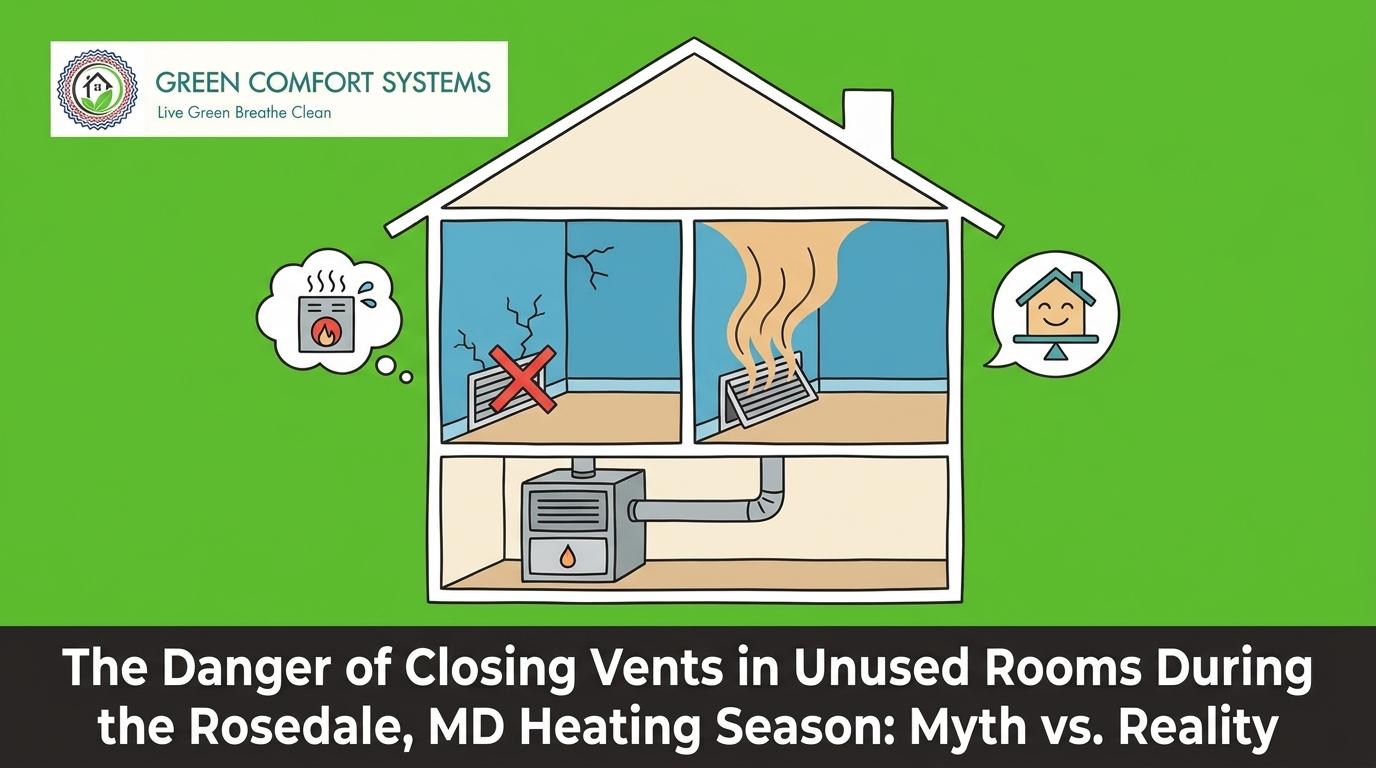
The Danger of Closing Vents in Unused Rooms During the Rosedale Heating Season
