





Decoding the Clanking and Banging Noises from Your Rosedale Radiators This Fall

Waking Up to a Racket: Why Early Fall Triggers Radiator Noise
Before the first true freeze hits Maryland, there is a distinct moment when September early fall startup routines begin, and decoding the clanking and banging noises from your Rosedale radiators this fall suddenly becomes a top priority. You switch on the thermostat expecting a quiet, gentle wave of warmth to fill your home. Instead, you are greeted by a series of aggressive clanks, loud bangs, and metallic hammering echoing through the walls and floorboards. For many homeowners, this sudden racket is jarring enough to cause immediate concern about a catastrophic system failure.
The short answer is that these disruptive sounds are incredibly common during the seasonal transition. After sitting dormant for months, your heating system is suddenly tasked with moving hot water or steam through cold, empty pipes. The sudden change in temperature and pressure often reveals minor imbalances that developed over the summer. The crucial decision point for any homeowner is determining whether that loud banging is simply a pocket of trapped air that needs to be released, or a symptom of a deeper pressure malfunction within the boiler itself.
Understanding exactly what is happening inside your pipes is the first step toward restoring quiet to your home. While a few initial ticks and pops are normal as metal expands, a violent hammering sound requires attention. By learning to distinguish between routine seasonal quirks and mechanical faults, you can safely decide when to attempt a basic radiator bleed and when it is time to call in professional heating services to protect your equipment.
The Physical Mechanics: Water Hammer and Trapped Air Explained
To understand why your heating system sounds like a construction zone, it helps to look closely at the physical mechanics of water and steam moving through a closed loop. For many Rosedale MD homes with boiler systems, the primary culprit behind aggressive banging is a phenomenon known as water hammer, closely followed by complications from trapped air. We will dive straight into how these physical forces interact inside your pipes.
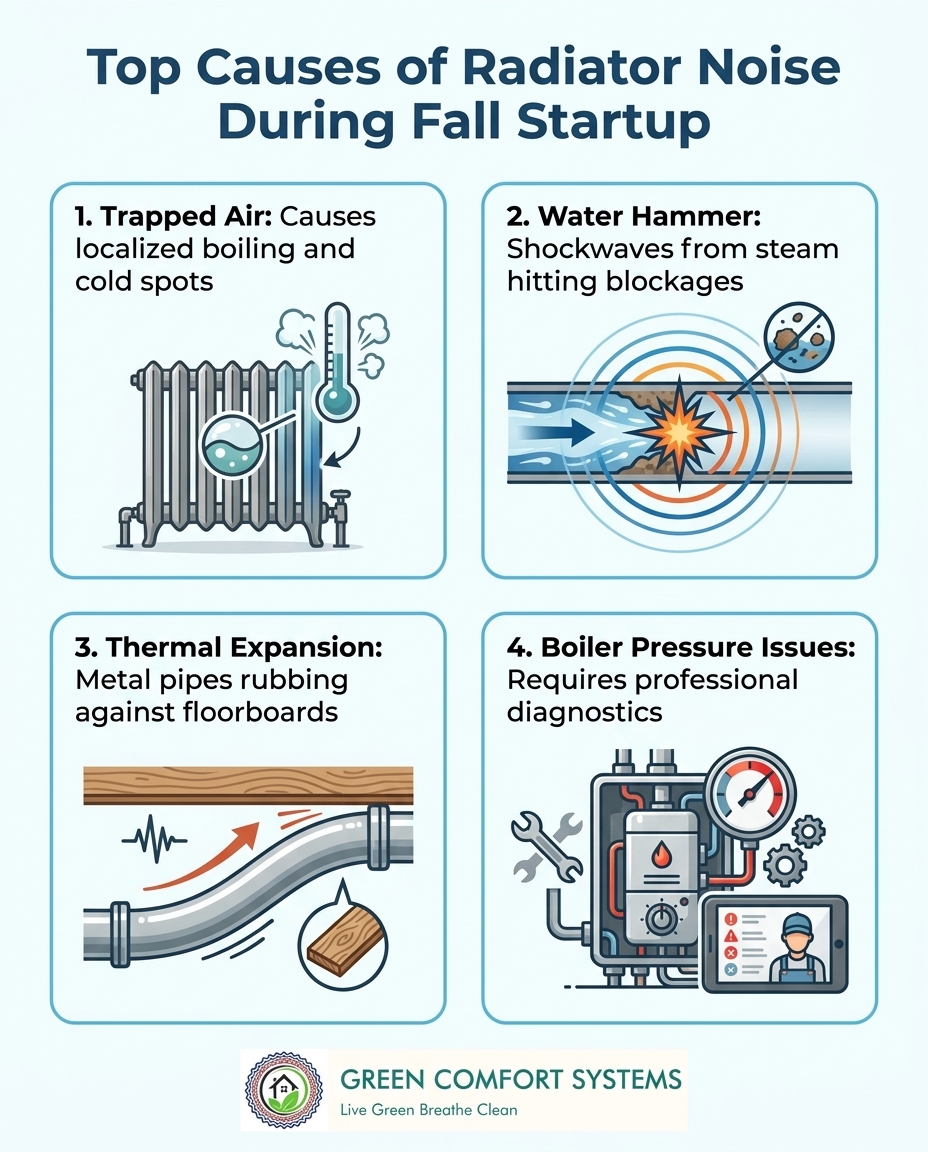
How Trapped Air Disrupts Water Flow
Over the long summer months, air slowly finds its way into the closed loop of your hydronic heating system. This happens through microscopic leaks, seasonal pressure changes, or the introduction of fresh makeup water from the municipal supply, which naturally contains dissolved oxygen. Because air is significantly lighter than water, these bubbles rise to the highest points in your system—typically the top sections of your radiators on the upper floors.
When the boiler fires up for that September early fall startup, the circulator pump pushes hot water through the pipes. When this pressurized water collides with a stationary pocket of trapped air, it creates turbulence and localized boiling. The result is a series of gurgling, bubbling, and clanking sounds. More importantly, this airlock physically prevents the hot water from circulating fully, leaving you with a radiator that is hot at the bottom but completely cold at the top.
The Physics of Water Hammer
Water hammer, or hydraulic shock, is a much more violent physical reaction. In steam systems, this occurs when high-velocity steam rushes through a pipe and suddenly hits a pool of cooler condensation that hasn't properly drained back to the boiler. The steam propels this slug of water forward at high speeds until it slams into a bend in the pipe or a closed valve.
Because water cannot be compressed, the kinetic energy of that impact has nowhere to go. It instantly converts into a massive shockwave that travels backward through the metal pipes. This is why the noise sounds exactly like a physical hammer striking the metal from the inside. Over time, repeated water hammer can weaken pipe joints, damage valves, and lead to significant leaks. If you are dealing with chronic, destructive hammering, upgrading to modern tankless boiler services can mitigate many of the traditional expansion and pressure noises associated with older, oversized cast-iron systems.
Why Crisp Autumn Weather Exacerbates Boiler Clanking
The specific transition to crisp autumn weather in Maryland plays a massive role in how loud your heating system gets. Your pipes, radiators, and baseboards have been sitting at room temperature—or even cooler, if you run central air conditioning—for nearly half the year. When the thermostat calls for heat on a chilly October evening, the boiler suddenly sends water heated to 180 degrees Fahrenheit (or hotter steam) rushing through those cold metal pathways.
The mechanics of thermal expansion:
• Rapid temperature shifts: Metal expands when heated. When the temperature of a pipe jumps by over 100 degrees in a matter of minutes, the metal physically grows in length and girth.
• Friction against the house: In older Rosedale homes, these expanding pipes are often routed tightly through wooden floor joists and wall studs. As the pipe lengthens, it rubs aggressively against the wood.
• The ticking sound: This metal-on-wood friction produces a rhythmic ticking, creaking, or pinging noise that speeds up as the system heats up and slows down as it cools off.
It is vital to distinguish between a rhythmic ticking and a violent bang. Thermal expansion ticking is a completely normal physical reaction to a September early fall startup. The wood and metal are simply adjusting to the sudden introduction of heat. While it can be annoying in the middle of the night, it is a known phenomenon in seasonal climates and does not indicate a mechanical failure. A violent, house-shaking bang, however, points directly to water hammer or severe pressure imbalances.
Radiator Bleeding: The First Line of Defense
When you are dealing with a noisy heating system, releasing trapped air is the most common and effective first step. This process, known as bleeding the radiator, allows the trapped air pockets to escape so that hot water can fully occupy the space inside the cast iron or baseboard fins. However, working with boiler systems involves extremely hot water and pressurized steam, meaning there are strict safety boundaries every homeowner must respect.
Identifying Air-Locked Radiators
Before touching any valves, you need to confirm that trapped air is actually the problem. If you notice that your boiler working but radiators aren't heating evenly, an airlock is highly likely. Here is what to look for:
• Radiator is hot at the bottom, cold at the top — What It Usually Means: A classic airlock. Air has risen to the top, preventing hot water from filling the upper chambers.
• Gurgling or bubbling sounds inside the unit — What It Usually Means: Water is struggling to push past a pocket of air, creating turbulence.
• The room takes hours to reach the target temperature — What It Usually Means: Reduced surface area for heat transfer due to the airlock is severely dropping the system's efficiency.
Safety Boundaries for Homeowners
While bleeding a radiator is a standard maintenance task, it comes with inherent risks. You are dealing with scalding temperatures and mechanical components that may have been untouched for decades in Rosedale MD homes with boiler systems. Always adhere to these safety boundaries:
1. Never work on an active system: The boiler must be completely turned off, and the system must be allowed to cool down entirely before you attempt to open any bleed valves. Opening a valve on a pressurized, active system can result in severe burns from spraying steam or boiling water.
2. Do not force a seized valve: Over time, the small bleed valves on older radiators can corrode and seize firmly in place. If the valve does not turn easily with a standard radiator key, stop immediately. Forcing it can snap the valve off entirely, causing a massive, uncontrollable leak in your living room.
3. Know when to step back: If you successfully bleed the air (hearing the hiss of air followed by a steady trickle of water) but the aggressive banging continues the next day, the issue is beyond a simple airlock. At this point, professional intervention is mandatory to prevent structural damage to the pipes.
Beyond the Radiator: Boiler Pressure and Whole-Home Comfort
Radiators do not operate in a vacuum; they are simply the endpoints of a much larger, complex system. When aggressive clanking persists despite bleeding, the root cause often lies down in the basement with the boiler itself. Improper boiler pressure is a massive contributor to system noise and overall inefficiency during a September early fall startup.
Every hot water boiler has a pressure gauge (often called a tridicator) that displays the internal pressure of the system. If the automatic fill valve is malfunctioning, it might allow too much water into the loop, pushing the pressure dangerously high. Conversely, if there is a hidden leak or a faulty expansion tank, the pressure might drop too low, allowing the water to boil into steam when it shouldn't, which creates severe hammering in a hydronic system.
A well-maintained heating system does more than just run quietly; it supports better overall home comfort. In older homes that rely on radiators, the heating season means windows are locked tight for months. Because radiator systems do not circulate air through ductwork, they do not naturally filter the air in your home. This closed-loop environment makes it incredibly important to consider comprehensive indoor air quality solutions to manage dust, dander, and stagnant air during the long winter months. Before calling for help with a noisy radiator, take a moment to check the boiler gauge. Noting whether the pressure is reading exceptionally high or practically at zero is a vital diagnostic step that will help your technician isolate the problem much faster.
When to Rely on a Licensed Professional in Rosedale
There is a distinct line between seasonal quirks and mechanical dangers. While thermal expansion ticking and minor airlocks are par for the course, certain symptoms demand immediate attention from a licensed expert. If you notice the pressure relief valve on your boiler weeping water onto the floor, or if the violent hammering shakes the physical structure of your walls, you have a dangerous pressure issue that requires professional diagnostics.
A professional technician looks far beyond the specific radiator making the noise. They evaluate the expansion tank to ensure its internal bladder hasn't failed. They check the circulator pump for worn bearings, and they test the aquastat to ensure the boiler isn't overheating the water. This level of systemic troubleshooting is critical for Rosedale MD homes with boiler systems, where older infrastructure requires careful, knowledgeable handling.
Highlighting local expertise, Green Comfort Systems prioritizes reliable troubleshooting to ensure safe, quiet heating without unnecessary emergency upsells. We understand the specific older housing stock common in the area and the unique challenges those systems present. One local customer reached out during the winter for routine heating system maintenance after experiencing operational issues. The technician performed a comprehensive evaluation, explaining all the steps beforehand so the homeowner understood exactly what was being adjusted and why. The maintenance was completed efficiently as explained, restoring the system to quiet, reliable operation. This transparent approach to pre-season maintenance is the best way to prevent midnight disruptions and keep your family safe all winter long.
Frequently Asked Questions About Radiator and Boiler Noises
Why is my radiator banging like a hammer?
Your radiator is banging because of a physical reaction called water hammer, which happens when fast-moving steam or water hits a blockage like trapped air or condensation. The impact creates a massive shockwave that travels through the metal pipes. This is most common during a September early fall startup when the system is adjusting to being active again. If the noise is violent and shakes the pipes, it requires mechanical troubleshooting to resolve the pressure imbalance.
Is a banging radiator dangerous?
While a mild ticking sound from thermal expansion is harmless, severe and persistent banging can be dangerous to your plumbing infrastructure. The physical shockwaves from water hammer can slowly loosen pipe joints, damage delicate valves, and eventually cause major water leaks inside your walls. Furthermore, if the banging is caused by a failing pressure relief valve or an overheated boiler, it poses a significant safety risk that should be addressed by a professional immediately.
How do you stop a radiator from clanking?
The most effective first step to stop a radiator from clanking is to bleed the trapped air from the system using a radiator key, ensuring the boiler is completely turned off and cool before you begin. If bleeding does not resolve the issue, you may need to adjust the pitch of the radiator (especially in steam systems) so condensation can drain properly. For persistent clanking, a licensed technician will need to check the boiler's expansion tank and circulator pump for faults.
Why does my boiler make loud noises when it turns on?
Your boiler makes loud noises when it turns on because it is rapidly heating cold water, causing the metal heat exchanger and surrounding pipes to expand quickly. If you hear a loud rumbling or kettling sound directly from the boiler tank, it usually indicates a buildup of mineral scale on the heat exchanger. This scale restricts water flow and causes the water trapped beneath it to boil aggressively, which requires a professional system flush to correct.
What are the symptoms of trapped air in boiler pipes?
The most obvious symptom of trapped air in boiler pipes is a radiator that is hot at the bottom but completely cold at the top. You will also likely hear gurgling, bubbling, or light clanking noises coming from the unit as water struggles to push past the air pocket. Additionally, you may notice that the room takes significantly longer to heat up than it did in previous years, as the airlock reduces the system's overall heating capacity.
Can you fix water hammer in an older Maryland home without replacing pipes?
Yes, you can almost always fix water hammer without tearing open your walls to replace the pipes. A professional technician can install water hammer arrestors, which act as shock absorbers to cushion the impact of the water. They will also verify that the boiler pressure is set correctly, check the health of the expansion tank, and ensure that steam radiators are pitched at the correct angle to allow condensation to drain freely back to the boiler.
Restore Quiet Comfort to Your Rosedale Home
Waking up to aggressive clanking and banging during a September early fall startup is undoubtedly a jarring experience, but these noises are usually solvable symptoms of trapped air or pressure imbalances. Understanding the physical mechanics behind water hammer and thermal expansion brings peace of mind, allowing you to distinguish between a routine seasonal adjustment and a mechanical fault. If your radiators remain noisy after a careful bleeding, or if you are dealing with violent hammering in older Rosedale MD homes with boiler systems, do not ignore the warning signs. Schedule a professional inspection to protect your pipes and ensure your equipment is operating safely. By decoding the clanking and banging noises from your Rosedale radiators this fall and relying on expert local diagnostics, you can restore quiet, reliable warmth to your home for the entire winter season.
Book Expert Service Or Contact Us
Other Blogs


Get Financing Today
Get the comfort you deserve, without the financial stress.

Latest Blogs
Decoding the Clanking and Banging Noises from Your Rosedale Radiators This Fall

Addressing Drafty Windows and Heating Inefficiencies in Older Forest Hill Homes

Managing the September Swing: Keeping Your Rosedale Home Comfortable When Days Are Hot and Nights Are Cold
